Blog

  • 3-Day Healthy Meal Plan with High Protein Healthy Recipes for Easy Weight Loss Meals

    3-Day Healthy Meal Plan with High Protein Healthy Recipes for Easy Weight Loss Meals

    Healthy recipes are easier to stick with when you have a simple plan. Instead of wondering what to cook every day, a structured meal plan helps you enjoy balanced meals, stay consistent with your nutrition goals, and reduce the stress of last-minute decisions. A three-day healthy meal plan featuring high-protein meals, fresh vegetables, whole grains, and nutritious snacks is an excellent way to build healthy eating habits without feeling overwhelmed.

    Whether your goal is eating cleaner, increasing protein intake, supporting an active lifestyle, or simply preparing meals ahead of time, focusing on wholesome ingredients creates a sustainable routine that works for busy schedules.

    Key Takeaways

    • Plan meals in advance to reduce daily decision fatigue.
    • Include lean protein in every meal to support fullness.
    • Balance each plate with vegetables, whole grains, and healthy fats.
    • Prepare ingredients ahead for faster weekday cooking.
    • Choose nutritious snacks to maintain steady energy throughout the day.

    Why a Healthy Meal Plan Makes Everyday Eating Easier

    Meal planning removes much of the guesswork from healthy eating. Instead of relying on convenience foods or skipping meals, you already know what is coming next. This saves time, minimizes food waste, and makes grocery shopping more efficient.

    Important: Consistency matters far more than perfection. Building a routine with balanced meals helps create lasting habits that are easier to maintain than restrictive diets.

    A simple three-day plan also serves as a practical starting point for anyone new to meal preparation. It introduces variety without becoming complicated, making healthy eating feel realistic rather than overwhelming.

    Building a Balanced Plate

    One of the easiest ways to create nutritious meals is by following a balanced plate approach. Instead of counting every calorie, focus on combining nutrient-rich food groups.

    Lean Protein

    Protein helps support muscle maintenance while keeping you satisfied between meals. Excellent choices include grilled chicken, turkey, salmon, eggs, Greek yogurt, cottage cheese, and lean beef.

    Vegetables

    Vegetables provide vitamins, minerals, antioxidants, and fiber while adding color and texture to every meal. Broccoli, leafy greens, cucumbers, carrots, tomatoes, peppers, and green beans are versatile additions.

    Whole Grains and Smart Carbohydrates

    Whole grains deliver lasting energy throughout the day. Brown rice, quinoa, whole grain bread, oats, and whole wheat pasta fit well into balanced meal plans.

    Healthy Fats

    Healthy fats contribute flavor while supporting overall wellness. Avocados, nuts, seeds, and olive oil are excellent choices when enjoyed in moderate portions.

    A Sample Three-Day Healthy Meal Plan

    Day One

    Start the morning with protein overnight oats topped with berries. Lunch can feature a grilled chicken salad filled with crisp vegetables. A serving of Greek yogurt with blueberries makes a satisfying afternoon snack. Finish the day with garlic chicken, brown rice, and steamed broccoli for a balanced dinner.

    Day Two

    Vegetable egg muffins paired with whole grain toast create a nutritious breakfast. A turkey wrap loaded with vegetables keeps lunch simple and portable. Cottage cheese with pineapple provides a refreshing snack before enjoying turkey meat sauce served over protein pasta for dinner.

    Day Three

    Greek yogurt parfait layered with fruit and granola offers a protein-rich start to the day. Lunch may include a salmon quinoa bowl packed with colorful vegetables. A protein snack box featuring nuts, cheese, and vegetables keeps energy levels steady. Dinner finishes with steak, roasted sweet potatoes, and green beans.

    Expert Insight

    Preparing meals with a combination of lean protein, fiber-rich vegetables, and complex carbohydrates helps create satisfying meals that can reduce unnecessary snacking while supporting consistent energy throughout the day.

    Smart Meal Prep Tips

    Meal prep does not have to take an entire weekend. Even one hour of preparation can simplify the week ahead.

    • Cook proteins in larger batches.
    • Prepare grains like brown rice or quinoa ahead of time.
    • Wash and chop vegetables immediately after grocery shopping.
    • Divide meals into containers for quick grab-and-go lunches.
    • Keep healthy snacks portioned and ready to enjoy.

    Pro Tip: Store prepared ingredients separately when possible. This helps maintain freshness while giving you flexibility to mix and match meals throughout the week.

    Choosing Nutritious Snacks

    Healthy snacks bridge the gap between meals without replacing them. Combining protein with fiber often creates the most satisfying options.

    • Greek yogurt with berries
    • Cottage cheese and fresh fruit
    • Mixed nuts
    • Vegetables with hummus
    • Cheese cubes with grapes
    • Boiled eggs

    Benefits of High-Protein Healthy Recipes

    High-protein recipes continue to grow in popularity because they fit many healthy lifestyles. They are versatile, filling, and easy to adapt for families or individuals.

    Combining protein with vegetables and whole grains supports balanced meals that feel satisfying without unnecessary complexity. The goal is not restriction but creating enjoyable meals that can become part of everyday life.

    Making Healthy Eating Sustainable

    Long-term success comes from developing routines you genuinely enjoy. Rotate favorite meals, experiment with seasonal vegetables, and adjust portion sizes according to your individual needs.

    Important: Healthy eating should feel flexible. Small improvements made consistently often produce better long-term results than dramatic short-lived changes.

    Keeping your kitchen stocked with wholesome ingredients also makes healthier choices the easiest choices. When nutritious foods are accessible, preparing balanced meals becomes much more convenient.

    Quick Points

    • Prioritize lean protein at every meal.
    • Fill half your plate with colorful vegetables.
    • Choose whole grains for lasting energy.
    • Prepare meals ahead to save time.
    • Keep healthy snacks available every day.

    Conclusion

    A simple healthy meal plan provides structure without sacrificing flexibility. By combining high-protein foods, fresh vegetables, whole grains, and healthy fats, you can create meals that are satisfying, flavorful, and easy to prepare. Whether you are meal prepping for a busy workweek or simply looking for healthier recipe ideas, thoughtful planning makes nutritious eating far more achievable.

    Start with a few balanced meals, prepare ingredients in advance, and gradually build a routine that fits your lifestyle. Healthy recipes do not need to be complicated. Consistent, simple choices often deliver the biggest benefits over time.

    Tags

    Healthy Recipes Meal Prep High Protein Meals Healthy Eating Balanced Diet Weekly Meal Plan Clean Eating Nutrition
  • 7 High-Protein Wrap Recipes for Easy Lunch Ideas and Meal Prep

    7 High-Protein Wrap Recipes for Easy Lunch Ideas and Meal Prep

    Finding easy lunch ideas that are filling, flavorful, and practical for busy days does not have to be complicated. High-protein wraps are a simple way to turn everyday ingredients into satisfying lunches that work for meal prep, quick weekday meals, or a relaxed weekend lunch. With a whole-wheat tortilla, a protein-rich filling, colorful vegetables, and a flavorful sauce, you can create endless combinations without spending hours in the kitchen.

    Key Takeaways

    • High-protein wraps make practical and satisfying lunch ideas.
    • Chicken, turkey, tuna, shrimp, steak, and cottage cheese offer plenty of variety.
    • Fresh vegetables add color, crunch, flavor, and texture.
    • Whole-wheat or high-fiber tortillas make a convenient wrap base.
    • Preparing several wraps in advance can simplify busy weekdays.
    • Light sauces and yogurt-based dressings can add flavor without making wraps overly heavy.

    Why High-Protein Wraps Make Great Lunch Ideas

    A good lunch should be convenient, enjoyable, and satisfying enough to carry you through the afternoon. Wraps check all three boxes. They are easy to assemble, simple to customize, and portable enough for work, school, meal prep, or a casual lunch at home.

    The combinations featured here focus on protein-rich ingredients paired with vegetables and flavorful additions. Instead of relying on one repetitive filling, you can rotate between chicken, turkey, tuna, shrimp, cottage cheese, and lean steak to keep your lunch routine interesting.

    Important: The easiest way to make a wrap more satisfying is to build it around a clear protein source, then add vegetables, a balanced base, healthy fats, and a flavorful sauce. This simple formula makes it much easier to create different lunch combinations without starting from scratch every day.

    7 High-Protein Wrap Ideas to Try

    1. Grilled Chicken Caesar Wrap

    A grilled chicken Caesar wrap is a classic lunch choice with a satisfying combination of tender chicken, crisp romaine lettuce, Parmesan, and light Caesar dressing. Using a whole-wheat tortilla gives the wrap a hearty foundation while keeping the familiar Caesar-inspired flavors front and center.

    This option is especially useful when you have leftover grilled chicken in the refrigerator. Slice the chicken, layer it with lettuce and Parmesan, add a modest amount of dressing, and roll everything tightly. It is a simple way to transform leftover protein into a completely different lunch.

    2. Turkey Avocado Wrap

    Turkey and avocado create a fresh, creamy combination that works beautifully for a quick lunch. Add spinach and tomato for extra freshness, color, and texture. The avocado provides a rich element that balances the lean turkey and crisp vegetables.

    For meal prep, keep the wrap tightly rolled and avoid adding excessive moisture. If you are preparing it well ahead of time, storing particularly wet ingredients separately can help maintain the tortilla’s texture.

    3. Southwest Chicken Wrap

    For a bolder lunch, try a Southwest-inspired chicken wrap with grilled chicken, black beans, corn, salsa, lettuce, and a whole-wheat tortilla. The combination delivers contrasting textures, from juicy chicken and creamy beans to crisp lettuce and sweet corn.

    Salsa is an easy way to bring plenty of flavor to this wrap. You can adjust the amount according to how fresh or spicy you want the finished lunch to taste. It is also a useful option when you want a wrap that feels more substantial than a basic sandwich.

    4. Cottage Cheese Veggie Wrap

    Cottage cheese brings a creamy, protein-rich element to a vegetable-focused wrap. Pair it with spinach, cucumber, bell peppers, tomatoes, and everything bagel seasoning for a colorful lunch that is fresh and crunchy.

    This combination is a great reminder that high-protein lunch ideas do not always need meat. A variety of vegetables can provide plenty of texture, while cottage cheese serves as the central filling.

    5. Tuna Crunch Wrap

    Tuna is a convenient protein option for quick lunches because it requires little preparation. In this wrap, tuna is combined with Greek yogurt, celery, and lettuce to create a creamy filling with plenty of crunch.

    Greek yogurt can be used to create a lighter, creamy texture while celery adds a crisp contrast. If you enjoy tuna salad, this wrap is an easy portable version that can be assembled quickly.

    6. Buffalo Shrimp Wrap

    Buffalo shrimp adds a flavorful twist to the usual lunch wrap. Grilled shrimp, light buffalo sauce, lettuce, tomatoes, and a Greek yogurt ranch-style dressing create a combination that is spicy, creamy, fresh, and satisfying.

    Shrimp cooks quickly, making it a useful choice when you want a protein-packed lunch without a long cooking process. Keep the sauce controlled so the tortilla remains sturdy and easy to handle.

    7. Steak Fajita Wrap

    Lean steak turns a simple tortilla into a hearty fajita-inspired lunch. Add sautéed bell peppers and onions, spinach, and a whole-wheat tortilla for a combination that is packed with savory flavor and colorful vegetables.

    This wrap is also a smart way to use leftover steak. Slice the meat thinly, warm it with the peppers and onions, then layer everything into the tortilla. A little seasoning can bring the fajita flavors together without requiring a complicated recipe.

    Expert Insight

    Think of your wrap as a flexible formula rather than a fixed recipe. Start with protein, choose a sturdy tortilla, add two or three vegetables, include a healthy fat when desired, and finish with a flavorful sauce or seasoning.

    • Rotate your protein to prevent lunch fatigue.
    • Use colorful vegetables for contrast and crunch.
    • Choose sauces that complement the main filling instead of overpowering it.

    How to Build the Perfect High-Protein Wrap

    The best lunch ideas are often built from a simple structure. Once you know the basic formula, you can create new combinations using whatever ingredients you already have available.

    1. Choose your protein. Aim for a generous serving of chicken, turkey, tuna, shrimp, steak, cottage cheese, or another protein-rich filling.
    2. Pick a sturdy base. Whole-wheat or high-fiber tortillas are practical choices for a hearty lunch wrap.
    3. Add vegetables. Lettuce, spinach, cucumber, tomatoes, peppers, onions, corn, and other colorful vegetables can add freshness and crunch.
    4. Include a healthy fat. Avocado or hummus can add creaminess and richness.
    5. Finish with sauce. Greek yogurt-based dressings, salsa, light Caesar dressing, buffalo sauce, or ranch-style sauces can completely change the character of the wrap.

    Meal Prep Tips for Easy Lunches

    Wraps are particularly useful for meal prep because many of the components can be prepared ahead of time. Cook several portions of your chosen protein, wash and chop vegetables, and portion sauces into small containers. Then assemble wraps as needed throughout the week.

    For the best texture, keep ingredients that release a lot of moisture under control. Wet fillings can soften tortillas if they sit for too long. Using sturdy greens as a barrier between juicy ingredients and the tortilla can also help.

    • Prep proteins in batches so several lunches are ready to assemble.
    • Chop vegetables in advance and store them properly.
    • Keep sauces separate when you are preparing wraps far ahead.
    • Roll wraps tightly to make them easier to pack and eat.
    • Prepare a few different flavor combinations instead of eating the same wrap every day.

    How to Keep Wraps Fresh and Flavorful

    Freshness comes down to ingredient selection, preparation, and storage. Crisp lettuce, fresh vegetables, and properly prepared proteins can make a wrap taste much better than one assembled with ingredients that have lost their texture.

    If you are packing a wrap for later, allow cooked ingredients to cool appropriately before assembling. Avoid overfilling the tortilla because a tightly packed wrap can become difficult to roll and may split while you eat it.

    A good wrap should have enough filling to feel satisfying without becoming unwieldy. Spread sauces evenly rather than concentrating them in one spot, and place ingredients in layers so every bite contains a balanced combination.

    Pro Tip: Prepare the protein and vegetables in advance, but assemble wraps closer to mealtime when possible. This small change can make a noticeable difference in tortilla texture and vegetable crunch.

    Easy Ways to Customize Your Lunch Wraps

    One of the biggest advantages of wraps is their flexibility. You can adjust the ingredients based on your preferences, what is already in your kitchen, or the flavors you are craving that day.

    For a Mediterranean-inspired variation, try chicken with cucumber, tomato, spinach, hummus, and a yogurt-based dressing. For a spicy option, combine grilled chicken or shrimp with lettuce, peppers, and a buffalo or salsa-based sauce. If you prefer something fresh and mild, turkey, avocado, spinach, and tomato make an easy combination.

    You can also experiment with seasonings. Everything bagel seasoning works nicely with creamy cottage cheese and vegetables, while fajita seasoning can bring peppers, onions, and steak together. The goal is not to follow a complicated formula, but to combine complementary flavors and textures.

    At a Glance

    • Choose a protein-rich centerpiece for a satisfying lunch.
    • Add colorful vegetables for crunch and freshness.
    • Use different sauces and seasonings to create variety.
    • Prep components ahead to make weekday lunches easier.
    • Keep moisture under control for wraps that stay fresh and easy to eat.

    Conclusion

    These high-protein wrap ideas prove that easy lunch ideas can be both practical and exciting. From classic grilled chicken Caesar and turkey avocado wraps to Southwest chicken, tuna crunch, buffalo shrimp, and steak fajita combinations, there are plenty of ways to keep your lunch routine varied.

    The key is to start with a satisfying protein, add fresh vegetables, choose a sturdy tortilla, and finish with a sauce or seasoning that brings everything together. With a little meal prep, these wraps can become a reliable option for busy weekdays, packed lunches, and quick meals at home.

    Save these combinations as inspiration, then mix and match your favorite ingredients to create your own signature high-protein lunch wraps.

    Tags

    Lunch Ideas High Protein Lunch Healthy Lunch Recipes Wrap Recipes Meal Prep Ideas Easy Lunch Ideas Protein Wraps span style=”display:inline-block;background:#eef4e8;color:#315b24;border:1px solid #d3dec9;border-radius:20px;padding:7px 13px;font-size:14px;”>Healthy Meal Prep
  • 7 High-Protein Pasta Recipes for Easy, Healthy Weeknight Dinners

    7 High-Protein Pasta Recipes for Easy, Healthy Weeknight Dinners

    When you want a dinner that is comforting, filling, and easy to prepare, pasta is hard to beat. These high-protein pasta recipes take a familiar favorite and give it a more satisfying twist with lean proteins, protein-rich pasta, vegetables, and flavorful sauces. From creamy garlic chicken pasta to lemon garlic shrimp pasta, there are plenty of options for busy weeknights and simple meal prep.

    Key Takeaways

    • High-protein pasta meals can be simple, flavorful, and satisfying.
    • Chicken, shrimp, steak, salmon, turkey, cottage cheese, and chickpeas offer versatile protein options.
    • Adding spinach, tomatoes, mushrooms, broccoli, and other vegetables brings color and variety to every bowl.
    • Protein or chickpea pasta can make an everyday pasta dinner more filling.
    • Most of these combinations work beautifully for weeknight dinners and meal prep.

    7 High-Protein Pasta Recipes to Try

    The beauty of these pasta ideas is their variety. Instead of relying on one sauce or protein, you can rotate through creamy, tomato-based, lemony, savory, and Mediterranean-inspired combinations. That makes it easier to keep healthy dinner routines interesting without making cooking complicated.

    1. Garlic Chicken Protein Pasta

    Garlic chicken pasta is a classic combination for good reason. Tender grilled chicken breast pairs naturally with pasta, spinach, Parmesan, and garlic for a meal that feels both comforting and fresh.

    For an easy version, cook your preferred protein pasta until tender, then toss it with cooked chicken, sautéed spinach, garlic, and a light Parmesan-based sauce. Sliced chicken placed over the top makes the bowl especially appealing and gives every serving a generous portion of protein.

    Best for: quick weeknight dinners, meal prep lunches, and anyone who enjoys creamy garlic flavors without complicated ingredients.

    2. Turkey Meat Sauce Pasta

    Lean ground turkey transforms ordinary pasta into a hearty dinner with a rich tomato flavor. A simple marinara sauce, Italian herbs, and grated Parmesan are enough to create a satisfying bowl that tastes like comfort food.

    Brown the turkey thoroughly, season it with Italian-inspired herbs, then add marinara sauce and let the flavors come together. Toss the finished sauce with protein pasta for an especially filling meal.

    This is also one of the easiest recipes to prepare in bulk. Make a larger batch of turkey sauce, portion it into containers, and add freshly cooked pasta when you are ready to eat.

    3. Creamy Cottage Cheese Alfredo

    If you love Alfredo but want a protein-focused alternative, cottage cheese can create a surprisingly creamy sauce. Blended cottage cheese provides a smooth base that pairs beautifully with Parmesan, garlic, black pepper, and pasta.

    Blend cottage cheese until smooth, then combine it with Parmesan, garlic, and seasonings. Warm the sauce gently and toss it with cooked pasta. Avoid overheating the sauce, especially if you want to maintain a smooth texture.

    Freshly cracked black pepper adds a simple finishing touch, while parsley or another fresh herb can brighten the dish. This is an excellent option when you want a creamy pasta dinner without depending entirely on heavy cream.

    Expert Insight

    A balanced pasta bowl does not need to be complicated. Start with a protein source, choose a satisfying pasta, add colorful vegetables, and finish with a flavorful sauce or cheese. This simple formula makes it easy to create countless combinations.

    4. Lemon Garlic Shrimp Pasta

    Lemon garlic shrimp pasta brings a lighter, brighter flavor to the dinner table. Juicy shrimp, spinach, cherry tomatoes, lemon, and garlic create a combination that feels fresh while still being satisfying.

    Cook the shrimp with garlic until just done, then set them aside while preparing the pasta. Toss the pasta with spinach, halved cherry tomatoes, lemon juice, and a little of your preferred cooking liquid or sauce. Add the shrimp at the end so they remain tender.

    The lemon is especially useful here because its acidity balances the richness of the pasta and makes the vegetables taste brighter. A little lemon zest can provide even more fresh citrus flavor.

    5. Steak and Mushroom Pasta

    For a more substantial dinner, steak and mushroom pasta is a delicious choice. Thinly sliced lean steak combines with mushrooms, spinach, Parmesan, and pasta for a savory meal with plenty of texture.

    Cook the steak separately so it can develop a flavorful exterior, then allow it to rest before slicing. Sauté the mushrooms until golden and tender, add spinach, and combine everything with cooked pasta. Finish with Parmesan and freshly ground pepper.

    The mushrooms bring a deep savory quality that works particularly well with steak. If you are preparing this for meal prep, keep the steak slightly less cooked than your preferred final doneness because it will continue to warm when reheated.

    6. Mediterranean Chickpea Pasta

    For a colorful meat-free option, Mediterranean chickpea pasta is packed with fresh ingredients. Chickpea pasta, spinach, cherry tomatoes, feta cheese, and olives create a flavorful combination with a distinctly Mediterranean feel.

    The contrast between creamy feta, juicy tomatoes, briny olives, and tender greens gives every bite plenty of variety. Chickpea pasta also makes the dish a useful option when you want to build a meal around a plant-based protein source.

    Keep the preparation simple by tossing the cooked pasta with the vegetables and finishing with feta. A squeeze of lemon and a sprinkle of dried or fresh herbs can add another layer of brightness.

    7. Salmon Spinach Pasta

    Salmon and pasta make a satisfying pairing, especially when combined with spinach, garlic, and a touch of lemon zest. The rich salmon adds a flavorful protein component while the greens provide freshness and color.

    Season and cook the salmon until it flakes easily, then prepare the pasta and spinach separately. Flake the salmon into large pieces and gently fold it through the pasta. Garlic and lemon zest help balance the richness of the salmon.

    This recipe works especially well when you have leftover cooked salmon. Instead of starting dinner from scratch, flake the leftovers into a freshly prepared pasta bowl and add vegetables for an easy second meal.

    How to Build the Perfect High-Protein Pasta Bowl

    You do not need to follow a recipe every time you want a protein-rich pasta dinner. Once you understand the basic formula, it becomes much easier to create your own combinations using whatever ingredients you already have.

    1. Choose your protein: Try chicken, turkey, shrimp, salmon, lean steak, cottage cheese, or chickpeas.
    2. Pick your pasta: Protein pasta and chickpea pasta are convenient choices when you want to increase the protein content of the meal.
    3. Add vegetables: Spinach, tomatoes, mushrooms, broccoli, peppers, and zucchini can all work well.
    4. Choose a flavor direction: Garlic Parmesan, marinara, lemon garlic, creamy cheese, or Mediterranean flavors can completely change the character of the bowl.
    5. Finish with something fresh: Lemon zest, fresh herbs, black pepper, or a small amount of Parmesan can bring the whole dish together.

    Important: Cook pasta just until tender and save a little cooking water before draining. A small splash can help loosen sauces and create a smoother coating without requiring a large amount of additional ingredients.

    Easy Meal Prep Tips for Pasta Dinners

    These pasta combinations are especially useful for meal prep because the main components can be prepared ahead of time. Cook your protein in batches, prepare several portions of vegetables, and store sauces separately when possible.

    • Cook pasta until just tender so it holds up better when reheated.
    • Prepare chicken, turkey, steak, or salmon in larger batches.
    • Keep sauce separate when you want the pasta to maintain a better texture.
    • Add fresh herbs shortly before serving for a brighter flavor.
    • Portion meals into individual containers for convenient lunches.
    • Include vegetables in every portion for more color, texture, and variety.

    Pro Tip: Meal prep does not have to mean eating the exact same pasta every day. Prepare a basic batch of pasta and vegetables, then change the protein and sauce throughout the week. One base can become garlic chicken, lemon shrimp, turkey marinara, or Mediterranean chickpea pasta.

    Smart Ingredient Swaps for More Variety

    One of the easiest ways to keep pasta dinners interesting is to swap ingredients instead of completely changing your cooking routine. Chicken can replace turkey, shrimp can replace salmon, and chickpeas can replace meat when you want a different style of meal.

    Spinach is another versatile ingredient because it cooks quickly and works with creamy sauces, tomato sauces, seafood, and grilled meats. Cherry tomatoes add sweetness and freshness, while mushrooms provide a more savory and hearty element.

    For creamy recipes, cottage cheese and Parmesan can create a rich-tasting sauce. For lighter recipes, lemon, garlic, herbs, and vegetables can provide plenty of flavor without making the dish feel heavy.

    How to Make Pasta Dinners More Balanced

    A satisfying pasta meal is about more than the noodles. Building the bowl around several complementary components can make dinner feel more complete. Think of pasta as one part of the plate rather than the entire meal.

    Pair a reasonable serving of pasta with a clear protein source and a generous portion of vegetables. Then use sauce, cheese, herbs, citrus, or seasonings to bring everything together. This approach gives you plenty of room to personalize your meals according to your preferences.

    It is also helpful to pay attention to texture. Tender pasta becomes much more interesting when paired with crisp vegetables, juicy tomatoes, flaky salmon, sautéed mushrooms, or browned chicken. Small changes can make simple ingredients feel completely different from one meal to the next.

    At a Glance

    • Choose protein first, then build the pasta around it.
    • Add colorful vegetables for flavor and texture.
    • Use lemon, garlic, herbs, or Parmesan to finish each bowl.
    • Prepare ingredients in batches to simplify busy weeknights.

    Conclusion

    High-protein pasta recipes make it easy to turn a familiar comfort food into a satisfying dinner with plenty of variety. Whether you prefer garlic chicken, turkey meat sauce, creamy cottage cheese Alfredo, lemon garlic shrimp, steak and mushrooms, Mediterranean chickpeas, or salmon and spinach, there is a combination for almost every craving.

    The best part is how flexible these meals can be. Swap proteins, change vegetables, experiment with sauces, and use different pasta varieties to create new bowls without reinventing your entire cooking routine. With a few dependable ingredients and a little meal prep, delicious high-protein pasta dinners can become a simple part of your weekly menu.

    Save these ideas for your next grocery trip and use them as inspiration whenever you need an easy, flavorful weeknight dinner that feels both comforting and satisfying.

    Tags

    Pasta Recipes High Protein Recipes Healthy Pasta Easy Dinner Recipes Protein Pasta Meal Prep Ideas Weeknight Dinners Healthy Dinner Ideas

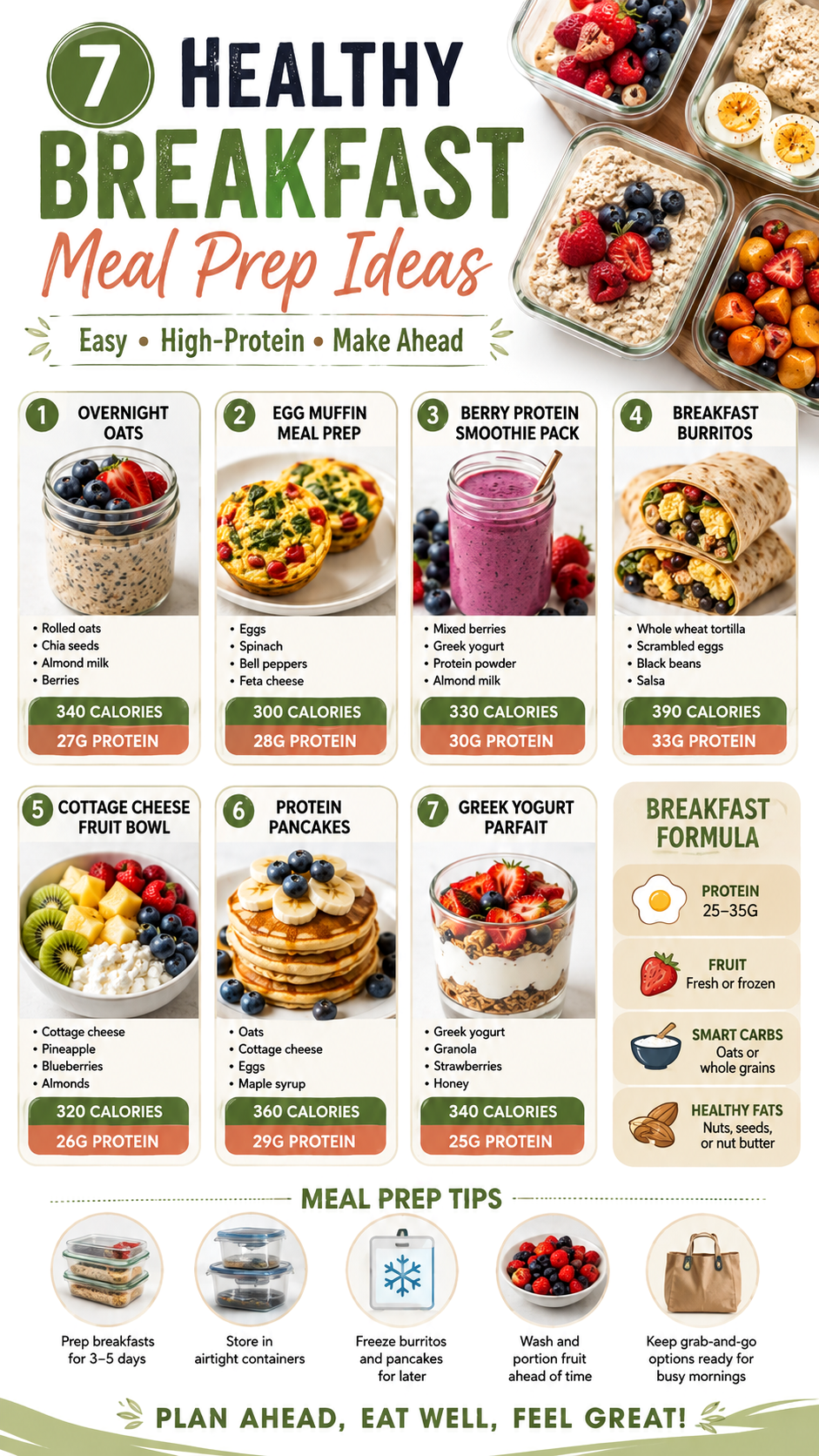
  • 7 Healthy Breakfast Meal Prep Ideas for High-Protein Make-Ahead Breakfasts

    7 Healthy Breakfast Meal Prep Ideas for High-Protein Make-Ahead Breakfasts

    Healthy breakfasts do more than satisfy morning hunger. They create structure, support energy levels, and make it easier to maintain nutritious eating habits throughout the day. Yet many people struggle to prepare balanced meals before work, school, or family responsibilities begin. That challenge explains why breakfast meal prep has become one of the most popular healthy eating strategies.

    Preparing nutritious breakfasts in advance eliminates rushed decisions and replaces them with convenient, protein-rich meals that are ready whenever you need them. From overnight oats and breakfast burritos to yogurt parfaits and smoothie packs, there are countless ways to create delicious make-ahead breakfasts that fit almost any lifestyle.

    Key Takeaways

    • Breakfast meal prep saves time during busy mornings.
    • High-protein breakfasts can support longer-lasting fullness.
    • Simple ingredients often create the most sustainable routines.
    • Preparing meals in advance reduces reliance on processed convenience foods.
    • Balanced breakfasts combine protein, fruit, healthy fats, and smart carbohydrates.

    Why Breakfast Meal Prep Is Transforming Morning Routines

    Modern schedules leave very little room for preparing nutritious meals from scratch every morning. As a result, breakfast often becomes an afterthought. Many people either skip it entirely or rely on foods that lack nutritional balance.

    Meal prepping changes that pattern. Spending just one hour preparing several breakfasts can create an entire week of healthy options.

    Important: Consistency is often more valuable than complexity. A simple, protein-rich breakfast prepared ahead of time can establish healthier habits more effectively than elaborate recipes that are difficult to maintain.

    Prepared breakfasts also reduce decision fatigue. Instead of wondering what to eat every morning, you simply open the refrigerator and enjoy a meal that’s already portioned and ready.

    The Formula Behind a Balanced Breakfast

    The most satisfying breakfasts usually follow a simple formula that combines several nutritional components. This approach creates meals that deliver flavor, variety, and longer-lasting energy.

    Protein: The Foundation of Lasting Energy

    Protein should be the centerpiece of every breakfast meal prep strategy. It supports muscle maintenance and contributes to feelings of fullness.

    Excellent breakfast protein sources include:

    • Greek yogurt
    • Eggs
    • Cottage cheese
    • Protein powder
    • Reduced-fat cheese
    • Turkey sausage
    • Chia seeds

    Aim for a substantial protein serving to create more balanced meals that keep hunger under control throughout the morning.

    Fruit: Natural Sweetness and Nutrients

    Berries, pineapple, and other fruits add freshness, fiber, and natural sweetness. They also introduce important vitamins and antioxidants without requiring complicated preparation.

    Fresh fruit works well in parfaits, smoothies, oatmeal, and cottage cheese bowls.

    Smart Carbohydrates for Sustainable Fuel

    Complex carbohydrates provide a steady source of energy. Instead of relying on highly processed ingredients, focus on nutrient-dense carbohydrate sources such as:

    • Rolled oats
    • Whole grains
    • Whole wheat tortillas
    • Fresh fruit

    Healthy Fats Complete the Meal

    Healthy fats add flavor while contributing to overall meal satisfaction.

    Nutritious fat sources include:

    • Almonds
    • Seeds
    • Nut butter
    • Chia seeds

    Seven Breakfast Ideas Worth Adding to Your Meal Prep Rotation

    1. Protein Overnight Oats

    Overnight oats remain one of the easiest make-ahead breakfasts available.

    Combining rolled oats, Greek yogurt, chia seeds, and mixed berries creates a nutritious meal that requires very little effort. Everything can be assembled the night before and stored in individual containers.

    Why People Love It

    • No cooking required
    • Easy portion control
    • Simple customization
    • Excellent refrigerator storage

    2. Egg Muffin Meal Prep

    Egg muffins transform traditional breakfast ingredients into portable meals.

    Eggs combined with vegetables such as spinach and peppers create nutrient-rich portions that can be prepared in batches.

    These muffins reheat quickly and travel well, making them ideal for busy professionals and students.

    3. Berry Protein Smoothie Packs

    Smoothie preparation becomes much easier when ingredients are portioned in advance.

    Freeze fruit combinations in individual bags or containers. When it’s time for breakfast, simply blend the frozen fruit with yogurt, protein powder, and additional ingredients.

    Expert Insight

    Freezing ingredients ahead of time not only saves preparation time but also helps preserve flavor and reduces food waste. This simple habit can dramatically improve meal prep efficiency.

    4. Breakfast Burritos

    Breakfast burritos offer a combination of convenience and flexibility.

    Scrambled eggs, vegetables, lean protein, and whole wheat tortillas create a complete meal that can be frozen for future use.

    Many meal prep enthusiasts prepare multiple burritos at once and store them individually for quick reheating.

    5. Cottage Cheese Breakfast Bowls

    Cottage cheese has experienced renewed popularity because of its impressive nutritional profile and versatility.

    Combining cottage cheese with pineapple, almonds, and cinnamon creates a breakfast that balances sweet flavors with satisfying texture.

    6. Protein Pancakes

    Pancakes can absolutely be part of a healthy breakfast routine.

    Adding ingredients such as cottage cheese, oats, and eggs creates a more balanced version that can be prepared in larger batches.

    Pro Tip: Cook extra pancakes and freeze them individually. Reheating them during the week creates a homemade breakfast in just a few minutes.

    7. Greek Yogurt Parfaits

    Greek yogurt parfaits combine creamy textures with fresh fruit and crunchy toppings.

    Layering yogurt, berries, and granola creates an attractive breakfast that’s easy to prepare and enjoyable to eat.

    Parfaits also offer endless opportunities for customization based on seasonal ingredients and personal preferences.

    Meal Prep Strategies That Actually Work

    Prepare Multiple Servings

    Creating several breakfasts at once reduces preparation time throughout the week.

    Many breakfast recipes maintain excellent quality for several days when stored correctly.

    Invest in Storage Containers

    Airtight containers help preserve freshness while making organization much easier.

    Glass containers are especially useful because they transition easily between refrigeration and reheating.

    Freeze Selected Recipes

    Not every breakfast needs to remain in the refrigerator.

    Burritos, pancakes, and smoothie ingredients often freeze exceptionally well, extending meal preparation flexibility.

    Wash Produce Ahead of Time

    Cleaning and preparing fruit in advance removes another barrier to healthy eating.

    Ready-to-use ingredients encourage better choices when time is limited.

    At a Glance

    • Prioritize protein in every breakfast.
    • Prepare meals for several days at once.
    • Use whole food ingredients whenever possible.
    • Freeze recipes that reheat well.
    • Keep grab-and-go options readily available.

    Building a Breakfast Routine You Can Maintain

    The best breakfast routine isn’t necessarily the most complicated one. It’s the routine you can realistically maintain every week.

    Experiment with different recipes, rotate ingredients, and discover combinations that fit your schedule and taste preferences. Variety prevents boredom while helping you maintain healthy eating habits over the long term.

    Important: Successful meal preparation doesn’t require perfection. Even preparing two or three breakfasts ahead of time can create meaningful improvements in nutrition and daily productivity.

    Conclusion

    Healthy breakfast meal prep combines convenience with nutrition in a practical and sustainable way. Whether you prefer overnight oats, protein pancakes, breakfast burritos, or yogurt parfaits, preparing meals ahead of time can transform rushed mornings into organized and enjoyable experiences.

    Small changes often produce remarkable results. Start with one recipe, build consistency, and gradually develop a breakfast routine that supports your health goals while fitting naturally into your daily life.

    Tags

    Breakfast Ideas Healthy Breakfast Breakfast Meal Prep High Protein Breakfast Overnight Oats Easy Breakfast Recipes Make Ahead Meals

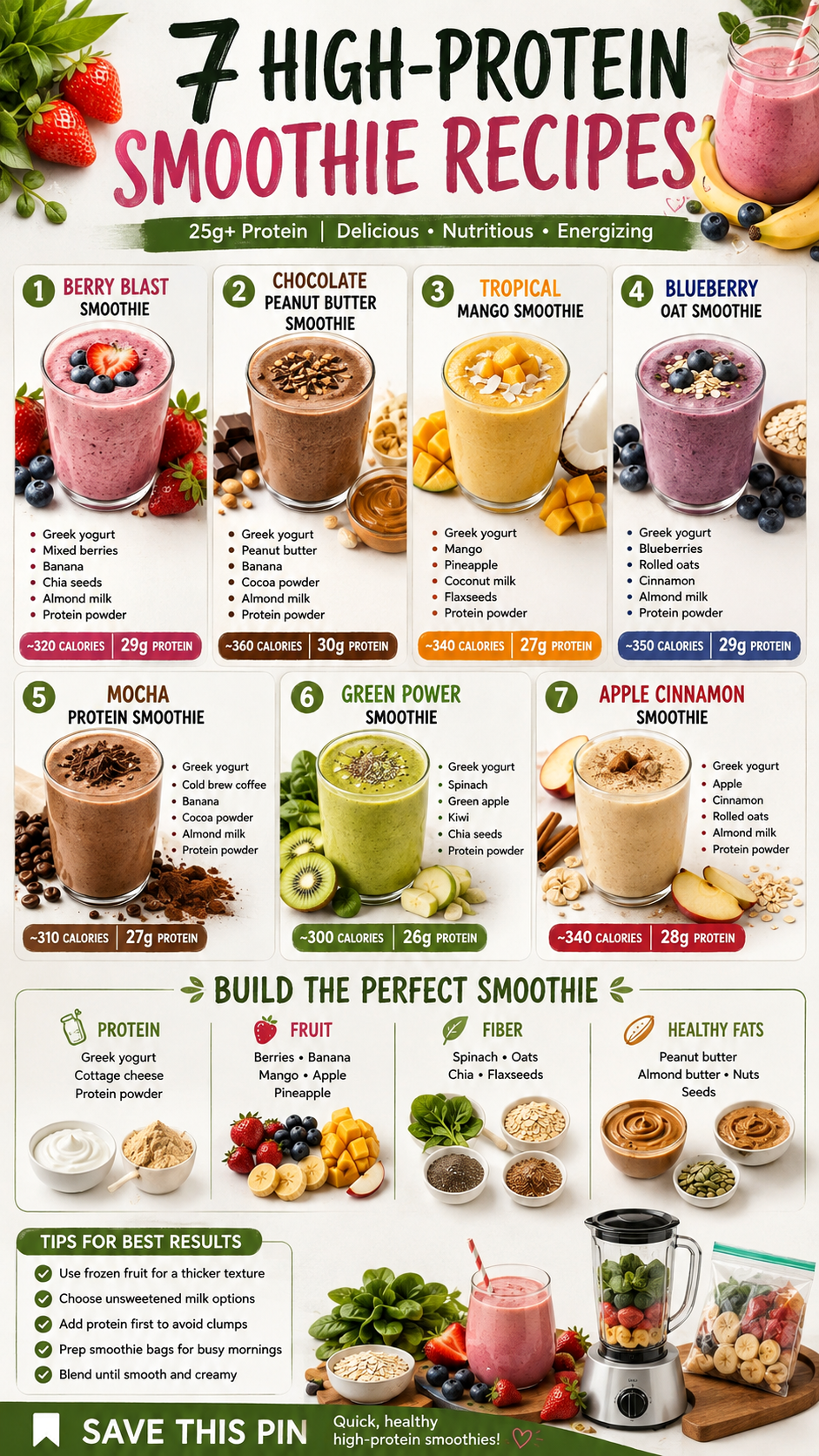
  • High Protein Breakfast Smoothie Recipes for Healthy Mornings  Post-Workout Energy

    High Protein Breakfast Smoothie Recipes for Healthy Mornings Post-Workout Energy

    Busy mornings do not have to mean skipping breakfast or settling for something that leaves you hungry an hour later. High-protein smoothies are one of the easiest ways to enjoy a balanced breakfast packed with nutrients, flavor, and lasting energy. Whether you’re fueling up before work, recovering after a workout, or simply looking for healthier breakfast ideas, a protein-rich smoothie can deliver everything you need in one convenient glass. With endless combinations of fruits, yogurt, protein powder, healthy fats, and fiber-rich ingredients, these smoothies are simple to customize for your taste and nutrition goals.

    Key Takeaways

    • High-protein smoothies support lasting energy and fullness.
    • Fresh fruits provide natural sweetness and important vitamins.
    • Healthy fats and fiber help create a balanced breakfast.
    • Most recipes can be prepared in under 10 minutes.
    • Simple ingredient swaps make smoothies suitable for different dietary preferences.

    Why High-Protein Smoothies Make Excellent Breakfast Ideas

    A healthy breakfast sets the tone for the rest of your day. Protein helps keep you satisfied longer than meals that rely mostly on refined carbohydrates, while fruits and vegetables contribute vitamins, minerals, and antioxidants that support overall wellness. Combining these ingredients into a smoothie creates a quick meal that is both nutritious and delicious.

    Important: Choosing a breakfast that combines protein, healthy fats, fiber, and natural carbohydrates can help reduce mid-morning hunger while providing steady energy for work, school, or exercise.

    Unlike sugary breakfast drinks, protein smoothies offer a more balanced nutritional profile. They are also incredibly versatile, allowing you to use ingredients already available in your kitchen while adjusting flavors throughout the year with seasonal produce.

    Essential Ingredients for a Balanced Smoothie

    Protein Sources

    The foundation of every satisfying smoothie is a quality protein source. Popular options include Greek yogurt, cottage cheese, protein powder, or plant-based alternatives. These ingredients improve texture while increasing the protein content, making your smoothie more filling.

    • Greek yogurt for creaminess and probiotics
    • Protein powder for convenience
    • Cottage cheese for extra creaminess
    • Unsweetened soy yogurt for dairy-free alternatives

    Fresh and Frozen Fruits

    Fruits add natural sweetness without relying heavily on refined sugars. Berries are packed with antioxidants, bananas contribute creaminess, mangoes provide tropical flavor, while apples create a refreshing seasonal twist.

    Healthy Fats

    Nut butters, chia seeds, flaxseeds, hemp seeds, and avocado help increase satiety while supplying beneficial fats. A small amount goes a long way toward creating a smooth texture.

    Fiber-Rich Additions

    Spinach, oats, flaxseed, and chia seeds are excellent choices for adding fiber without dramatically changing flavor. These ingredients help support digestion and make smoothies even more satisfying.

    Expert Insight

    Blending protein, fiber, healthy fats, and fruit together creates a breakfast that is both convenient and nutritionally balanced. This combination supports fullness while delivering a wide range of essential nutrients in every serving.

    Popular High-Protein Smoothie Flavor Combinations

    Berry Protein Smoothie

    A berry smoothie made with Greek yogurt, strawberries, blueberries, chia seeds, and milk creates a refreshing breakfast loaded with antioxidants and protein.

    Chocolate Peanut Butter Smoothie

    Chocolate protein powder, peanut butter, banana, and almond milk come together to create a rich breakfast that feels indulgent while remaining balanced.

    Tropical Mango Smoothie

    Mango, pineapple, coconut milk, Greek yogurt, and flaxseed create a bright tropical blend that tastes like vacation while supplying valuable nutrients.

    Blueberry Oat Smoothie

    Blueberries, rolled oats, cinnamon, yogurt, and almond milk produce a hearty breakfast that’s perfect for busy mornings.

    Green Power Smoothie

    Spinach, kiwi, Greek yogurt, chia seeds, and fruit combine to create a nutrient-packed smoothie that delivers vitamins without sacrificing flavor.

    Apple Cinnamon Smoothie

    Apples, oats, cinnamon, cottage cheese, and almond milk provide comforting flavors that work especially well during cooler months.

    Pro Tip: Freeze ripe bananas, berries, and mango chunks in advance. Frozen fruit naturally thickens smoothies without needing ice, resulting in a creamier texture and richer flavor.

    Simple Tips for Better Smoothies

    1. Add liquid first for smoother blending.
    2. Use frozen fruit for a thicker consistency.
    3. Blend leafy greens thoroughly before adding frozen ingredients.
    4. Taste before serving and adjust sweetness naturally with extra fruit if needed.
    5. Drink smoothies shortly after blending for the freshest flavor.

    Meal Prep for Busy Mornings

    One of the greatest advantages of smoothie recipes is how easy they are to prepare ahead of time. Portion fruits, vegetables, seeds, and other ingredients into freezer bags. When breakfast arrives, simply empty one bag into the blender, add your preferred liquid and protein source, then blend until smooth.

    This simple habit reduces preparation time while making healthy breakfast choices much easier during hectic mornings.

    Customizing Smoothies for Your Goals

    For More Protein

    Add extra Greek yogurt, cottage cheese, or an additional scoop of protein powder.

    For More Fiber

    Mix in oats, flaxseed, chia seeds, or spinach.

    For Natural Sweetness

    Choose ripe bananas, mangoes, dates, or berries instead of processed sweeteners.

    For Dairy-Free Options

    Replace dairy ingredients with almond milk, oat milk, coconut yogurt, or soy-based products while maintaining a creamy texture.

    Common Smoothie Mistakes to Avoid

    • Adding too many sweeteners.
    • Skipping protein sources.
    • Ignoring healthy fats.
    • Using only fruit without fiber.
    • Overfilling the blender.
    • Not measuring calorie-dense ingredients like nut butter.

    Quick Points

    • Balance protein, fruit, fiber, and healthy fats.
    • Frozen fruit creates the best texture.
    • Prep smoothie packs for faster mornings.
    • Customize ingredients to fit your nutrition goals.

    Conclusion

    High-protein smoothies are one of the simplest breakfast ideas for anyone looking to eat well without spending a lot of time in the kitchen. With countless ingredient combinations, they can easily fit different tastes, dietary preferences, and wellness goals. From fruity berry blends and tropical favorites to rich chocolate creations and green smoothies filled with vegetables, there is a recipe for every morning.

    Experiment with fresh ingredients, prepare smoothie packs ahead of time, and discover combinations that keep you energized throughout the day. A thoughtfully made smoothie offers a delicious balance of protein, fiber, healthy fats, and natural sweetness, making breakfast something to look forward to every single morning.

    Tags

    Breakfast Ideas High Protein Smoothies Healthy Breakfast Smoothie Recipes Meal Prep Protein Breakfast Healthy Recipes Morning Nutrition

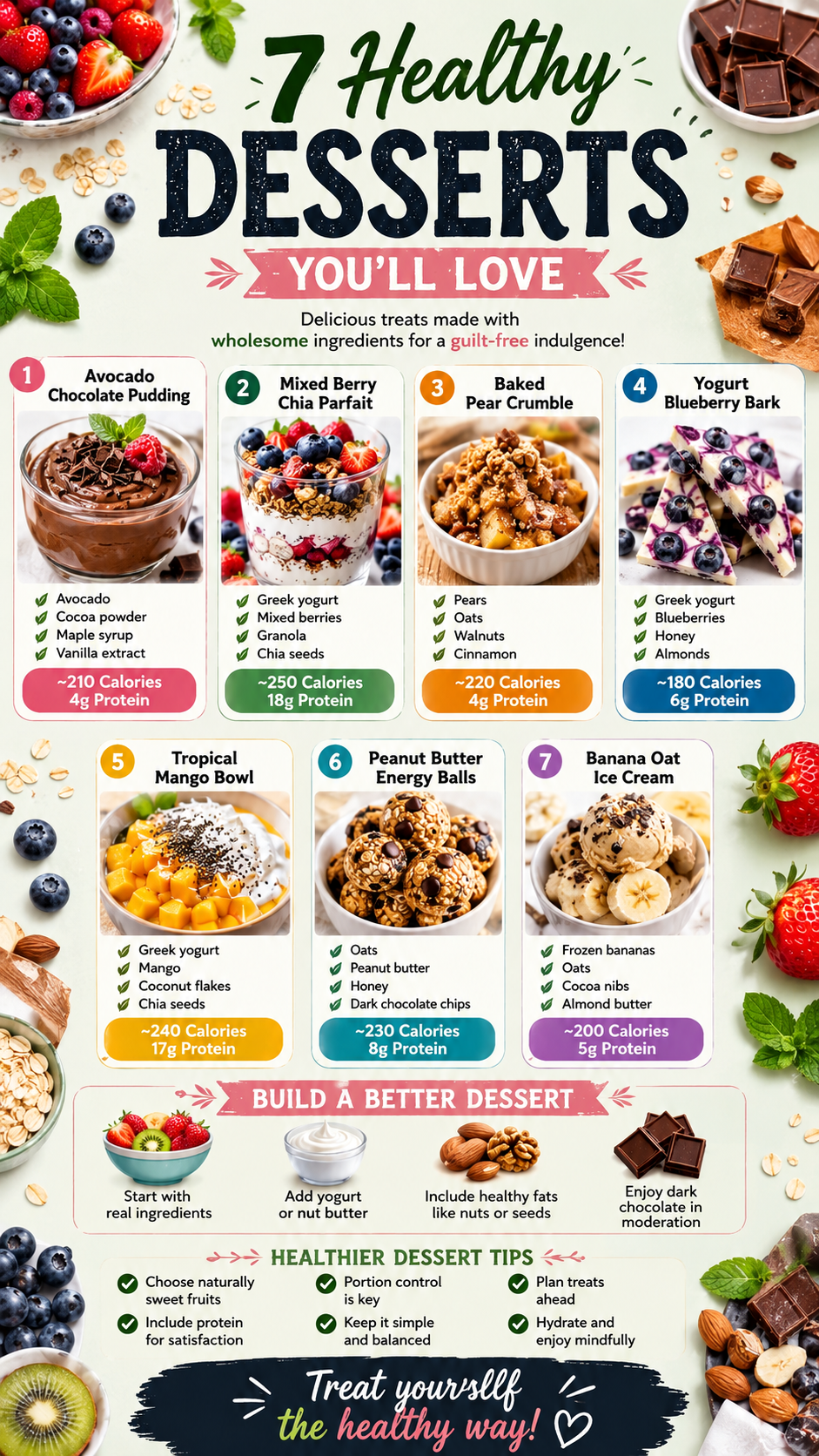
  • Healthy Dessert Recipes 7 Easy  Healthy Snacks to Satisfy Your Sweet Tooth

    Healthy Dessert Recipes 7 Easy Healthy Snacks to Satisfy Your Sweet Tooth

    Craving something sweet does not mean you have to skip your healthy eating goals. The right combination of fruit, protein, wholesome grains, and satisfying ingredients can turn dessert into a snack you genuinely look forward to. From creamy Greek yogurt mousse and colorful berry parfaits to baked cinnamon apples and peanut butter energy bites, there are plenty of easy healthy snacks that feel like a treat.

    Key Takeaways

    • Fruit adds natural sweetness, color, and texture to simple snacks.
    • Greek yogurt and cottage cheese can make desserts more satisfying.
    • Oats, chia seeds, nuts, and nut butter add substance to quick treats.
    • Simple ingredient combinations make healthy snacks easier to prepare.
    • Portion-friendly desserts can help satisfy sweet cravings without feeling complicated.

    7 Healthy Dessert Ideas for Everyday Snacking

    A good healthy snack should be easy enough to make on a busy day and enjoyable enough that you actually want to eat it. The ideas featured here focus on familiar ingredients and simple combinations rather than complicated recipes. They are especially useful when you want a sweet afternoon snack, a lighter dessert, or something convenient to enjoy between meals.

    Important: A nutritious snack does not have to taste boring. Combining naturally sweet fruit with creamy dairy, crunchy seeds, oats, nuts, or a small amount of dark chocolate can create satisfying contrasts in flavor and texture.

    1. Chocolate Greek Yogurt Mousse

    If you love chocolate desserts, a chocolate Greek yogurt mousse is an easy place to start. The visual combination of creamy chocolate, fresh berries, and a little mint makes this snack feel much more indulgent than its simple ingredient list suggests.

    Plain Greek yogurt provides a creamy base, while cocoa powder brings rich chocolate flavor. A little honey can add sweetness, and vanilla extract helps round everything out. For extra texture, top the mousse with a few fresh berries or a small amount of shaved dark chocolate.

    • Plain Greek yogurt
    • Unsweetened cocoa powder
    • Honey or another preferred sweetener
    • Vanilla extract
    • Fresh berries or a small dark chocolate topping

    Mix the ingredients until smooth and creamy, then chill before serving if you prefer a colder, thicker texture. It is a particularly useful option when you want a chocolate snack with a creamy consistency.

    2. Berry Yogurt Parfait

    A berry yogurt parfait is one of the easiest healthy snacks to customize. Layer creamy Greek yogurt with mixed berries, granola, and chia seeds for a snack that combines several textures in every spoonful.

    Strawberries, blueberries, raspberries, and other berries work beautifully together. Their bright colors also make the finished parfait naturally appealing, making this a great option for breakfast, an afternoon snack, or a lighter dessert.

    For a simple presentation, alternate layers of yogurt and fruit in a clear glass. Sprinkle granola and chia seeds between layers or reserve them for the top so they stay crisp.

    Pro Tip: Prepare the yogurt and fruit portions ahead of time, but add crunchy granola shortly before eating. This helps preserve the contrast between creamy and crisp textures.

    3. Baked Cinnamon Apples

    When you want something warm and comforting, baked cinnamon apples are a naturally sweet choice. Chopped apples become soft and fragrant as they bake, while cinnamon gives them the familiar flavor of a cozy dessert.

    For extra crunch, add a small amount of chopped walnuts. A touch of maple syrup can be used when you want additional sweetness, although the apples themselves can provide plenty of flavor.

    • Fresh apples
    • Cinnamon
    • Chopped walnuts
    • A small amount of maple syrup, if desired

    Cut the apples into bite-sized pieces, season with cinnamon, and bake until tender. Serve them warm on their own or spoon them over Greek yogurt for an especially satisfying combination.

    4. Frozen Banana Bites

    Frozen banana bites are a fun way to transform a simple piece of fruit into a snack that feels like a mini dessert. Banana slices can be paired with natural peanut butter and finished with a light drizzle of dark chocolate.

    The creamy banana and peanut butter contrast nicely with the firm frozen texture. Because the pieces are small, they are also convenient to keep in the freezer for moments when you want a quick sweet bite.

    Slice bananas into rounds, add a small amount of peanut butter, and finish with a dark chocolate drizzle. Freeze until firm and store the bites in an airtight container.

    5. Cottage Cheese Cheesecake Bowl

    A cottage cheese cheesecake bowl is another simple idea for turning a protein-rich dairy ingredient into a dessert-inspired snack. Cottage cheese provides a creamy base, while strawberries and graham cracker crumbs add sweetness, crunch, and familiar cheesecake-style flavor.

    Vanilla extract can help create a dessert-like aroma without requiring a long ingredient list. Fresh strawberries make an especially colorful topping, but other fruits can be used depending on what you have available.

    For the best texture, stir or blend the cottage cheese until it reaches your preferred level of creaminess. Add the fruit and a modest sprinkle of graham cracker crumbs just before serving.

    6. Mango Coconut Yogurt Bowl

    If you prefer tropical flavors, a mango coconut yogurt bowl is a refreshing alternative to heavier desserts. Sweet mango pairs naturally with creamy Greek yogurt, unsweetened coconut flakes, and chia seeds.

    Fresh or prepared mango can be cut into small cubes and arranged over the yogurt. Sprinkle coconut and chia seeds over the top for added texture. The result is colorful, creamy, and easy to assemble.

    This combination also works well as a quick breakfast when you want something more dessert-like in the morning. Keeping yogurt, mango, and toppings ready in the refrigerator makes this snack especially convenient.

    7. Peanut Butter Energy Bites

    Peanut butter energy bites are ideal when you want a snack that can be prepared in advance. Rolled oats create a hearty base, while natural peanut butter brings creamy richness. Honey adds sweetness, and chia seeds provide a small, nutrient-dense topping or mix-in.

    Combine the ingredients until they form a mixture that can be shaped easily. Roll the mixture into small bite-sized balls and refrigerate until firm. They are convenient for keeping on hand when an afternoon craving appears.

    • Rolled oats
    • Natural peanut butter
    • Honey
    • Chia seeds

    These bites can also be customized with small additions such as unsweetened coconut, chopped nuts, or a little cocoa powder. Keep the additions simple so the snack remains easy to prepare.

    Why This Matters

    The easiest healthy snacks are often built from a few dependable food groups. Pairing fruit with protein-rich yogurt or cottage cheese, or combining oats with nut butter and seeds, can make a small snack feel more substantial.

    • Start with a naturally sweet ingredient such as fruit.
    • Add a creamy or protein-rich component.
    • Finish with a crunchy topping for satisfying texture.

    How to Build a Better Healthy Dessert

    You do not need a complicated recipe every time you want a satisfying sweet snack. A simple formula can help you create combinations from ingredients already in your kitchen.

    Start With Fruit

    Fruit is an easy foundation because it naturally adds sweetness, freshness, color, and texture. Berries, bananas, apples, and mango are particularly versatile. Choose one fruit as the main flavor, then build around it.

    Add Protein-Rich Ingredients

    Greek yogurt and cottage cheese can turn a simple fruit snack into something creamy and more substantial. They also work as versatile bases for parfaits, bowls, and dessert-inspired combinations.

    Include Healthy Fats and Crunch

    Nut butter, walnuts, almonds, chia seeds, and other seeds can add richness and texture. A small amount can make a simple snack feel much more complete without requiring elaborate preparation.

    Use Dark Chocolate Thoughtfully

    Dark chocolate can be a useful finishing touch when you are craving something rich. A small drizzle or a few pieces can add intense chocolate flavor without making it the main ingredient of the snack.

    Healthy Snack Prep for Busy Weeks

    Preparation can make healthy snacking much easier. Instead of waiting until you are hungry to decide what to eat, prepare a few basic ingredients in advance. Wash and portion berries, cut fruit when appropriate, prepare yogurt bowls, or make a batch of peanut butter energy bites.

    Small containers can keep individual snack portions organized in the refrigerator. For frozen treats such as banana bites, prepare several portions at once and store them in a freezer-safe container.

    Keep a few dependable ingredients available, including Greek yogurt, fresh fruit, oats, chia seeds, natural peanut butter, nuts, and dark chocolate. With these staples, you can create many combinations without needing a special grocery trip.

    Important: Portion size still matters, even when ingredients are nutritious. Think of these ideas as flexible snack templates rather than strict recipes, and adjust portions according to your hunger, routine, and overall meals.

    Easy Ways to Keep Healthy Snacks Interesting

    Eating the same snack every day can quickly become repetitive. The easiest solution is to rotate flavors and textures. Try berries with yogurt one day, baked cinnamon apples another day, and frozen banana bites when you want something colder.

    You can also change the toppings. Add walnuts to baked apples, chia seeds to yogurt bowls, coconut to mango, or a small amount of dark chocolate to banana slices. These small changes create variety without requiring completely new recipes.

    1. Choose one fruit as your starting point.
    2. Pick a creamy base such as Greek yogurt or cottage cheese.
    3. Add oats, chia seeds, nuts, or nut butter for texture.
    4. Use cinnamon, vanilla, cocoa, or coconut to change the flavor profile.
    5. Prepare a few portions ahead so healthy snacks are ready when you need them.

    At a Glance

    • Choose fruit for naturally sweet flavor.
    • Pair creamy ingredients with crunchy toppings.
    • Keep easy staples such as yogurt, oats, and nut butter available.
    • Make small batches of snacks ahead of time.
    • Rotate flavors to keep healthy snacking enjoyable.

    Conclusion: Make Healthy Snacking Feel Like a Treat

    Healthy snacks do not need to be complicated, bland, or repetitive. A handful of simple ingredients can become a creamy chocolate yogurt mousse, a colorful berry parfait, warm cinnamon apples, frozen banana bites, a cheesecake-inspired cottage cheese bowl, a tropical mango yogurt bowl, or convenient peanut butter energy bites.

    The best approach is to focus on ingredients and combinations you genuinely enjoy. Keep fruit, yogurt, oats, seeds, nuts, and nut butter within easy reach, then experiment with different flavors and textures. When wholesome snacks are convenient and delicious, it becomes much easier to reach for them when a sweet craving strikes.

    Whether you are looking for easy healthy snacks, lighter dessert ideas, high-protein snack inspiration, or simple meal-prep treats, these combinations offer an approachable starting point. Save your favorite ideas, prepare a few in advance, and make your next sweet snack something you can enjoy with confidence.

    Tags

    Healthy Snacks Healthy Desserts Easy Snack Ideas High Protein Snacks Healthy Treats Fruit Snacks Snack Prep Wholesome Recipes

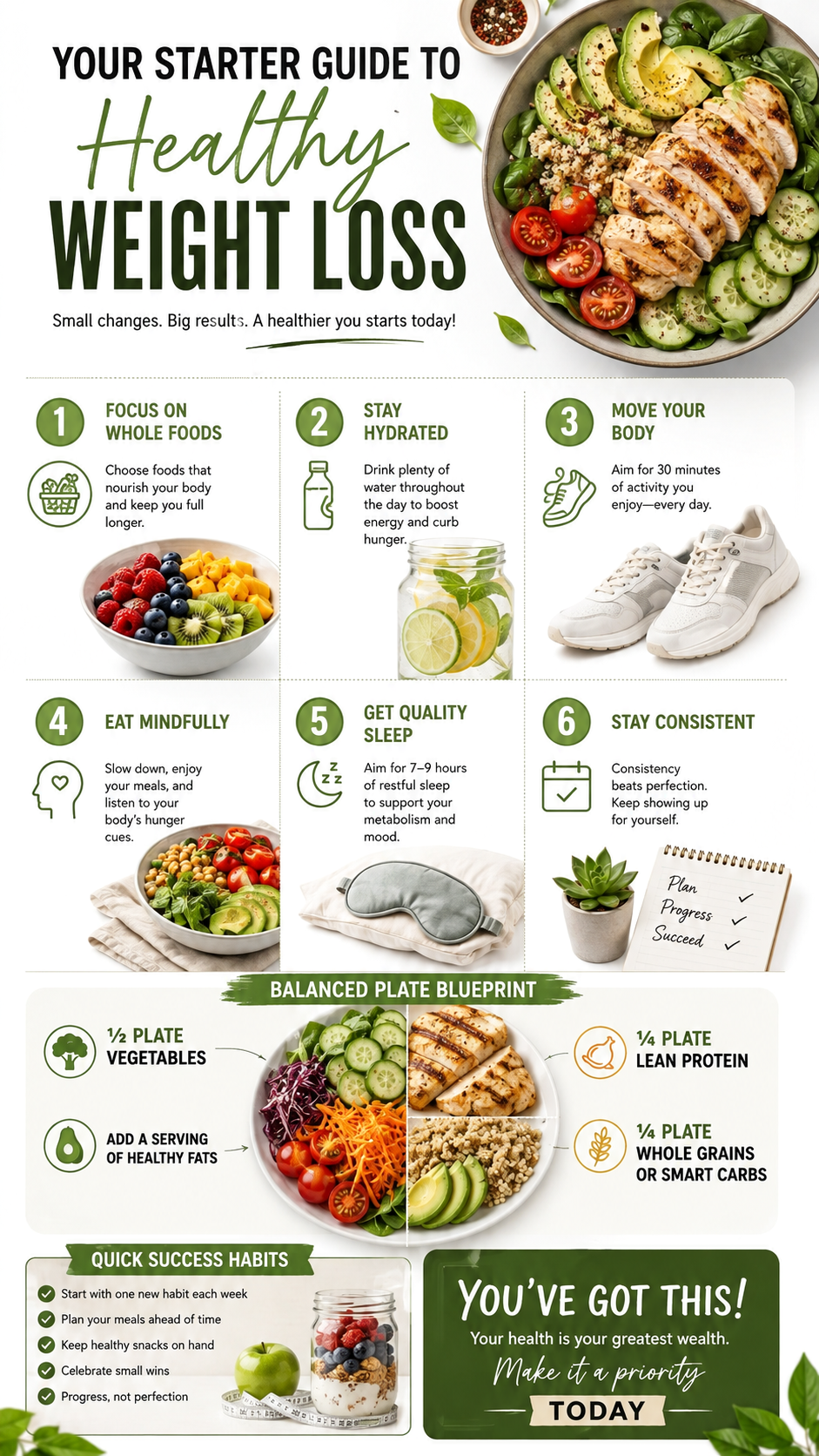
  • Healthy Weight Loss Recipes for Beginners Easy Meal Ideas for Healthy Eating

    Healthy Weight Loss Recipes for Beginners Easy Meal Ideas for Healthy Eating

    Healthy recipes are often associated with complicated meal plans, strict diets, and endless rules. In reality, building a healthier lifestyle usually begins with a few simple choices that become consistent habits over time. Small adjustments such as increasing protein intake, adding more vegetables to meals, drinking more water, and staying active can create meaningful changes that feel both achievable and sustainable.

    Instead of chasing perfection, many people are discovering the value of practical nutrition. Balanced meals, realistic expectations, and everyday movement are becoming the foundation of modern healthy eating. This approach not only supports weight management but also promotes long-term wellness and a more positive relationship with food.

    Key Takeaways

    • Prioritize protein to improve meal satisfaction.
    • Fill half of your plate with nutrient-rich vegetables.
    • Stay hydrated throughout the day.
    • Focus on consistency rather than perfection.
    • Build healthy habits one step at a time.

    Healthy Recipes Begin With Healthy Habits

    Healthy recipes are much more than collections of ingredients. They represent a daily opportunity to nourish the body while enjoying satisfying meals. Whether your goal is weight management, increased energy, or improved overall wellness, healthy recipes work best when they support habits that are easy to maintain.

    Many nutrition experts emphasize behavior over restriction. Preparing balanced meals at home, learning portion awareness, and choosing whole foods can transform eating patterns without creating unnecessary stress.

    Important: Sustainable weight loss and healthy eating rarely happen because of dramatic changes. The most effective strategies often involve small daily improvements that become automatic over time.

    Prioritize Protein for Better Meal Satisfaction

    Protein is one of the most important components of a healthy meal. It supports muscle maintenance, contributes to satiety, and helps reduce unnecessary snacking between meals.

    Simple Sources of Lean Protein

    • Chicken breast
    • Fish
    • Eggs
    • Greek yogurt
    • Cottage cheese
    • Beans and legumes

    Including a quality protein source in every meal can make healthy recipes more filling and enjoyable. A simple grilled chicken salad, a bowl of Greek yogurt with fruit, or a vegetable omelet can provide balanced nutrition without requiring complicated preparation.

    Protein and Meal Planning

    When creating weekly menus, start by choosing your primary protein source. This strategy simplifies grocery shopping and helps organize meals around nutritious ingredients.

    Expert Insight

    • Build meals around protein first.
    • Add vegetables second.
    • Choose healthy carbohydrates to complete the plate.

    Why Vegetables Should Fill Half of Your Plate

    Vegetables provide vitamins, minerals, antioxidants, and dietary fiber that support overall health. They also add color, texture, and variety to healthy recipes.

    Filling half of your plate with vegetables creates a visual guide that simplifies portion control. This approach encourages balanced eating without requiring calorie counting.

    Color Matters

    Different vegetables contribute different nutrients. Adding a variety of colors to your meals creates both nutritional diversity and visual appeal.

    1. Leafy greens provide essential nutrients and fiber.
    2. Orange vegetables contribute valuable vitamins.
    3. Red vegetables contain powerful antioxidants.
    4. Cruciferous vegetables support a healthy diet with additional nutrients.

    Pro Tip: Keep prewashed vegetables in your refrigerator so healthy choices are always convenient. Accessibility often determines whether nutritious foods become part of your routine.

    The Simple Healthy Plate Formula

    One of the easiest ways to create healthy recipes is to follow a balanced plate formula. Rather than focusing on strict dietary rules, this method emphasizes appropriate proportions.

    An Easy Plate Structure

    • Half the plate: Vegetables
    • One-quarter of the plate: Lean protein
    • One-quarter of the plate: Whole grains or smart carbohydrates
    • Additional serving: Healthy fats

    Healthy fats such as avocado, nuts, seeds, and olive oil provide flavor while supporting nutrient absorption. Combining these food groups creates meals that feel complete and satisfying.

    Healthy Recipe Ideas Using the Plate Formula

    • Grilled chicken with roasted vegetables and brown rice
    • Salmon with broccoli and quinoa
    • Vegetable bowls topped with eggs and avocado
    • Greek yogurt paired with berries and nuts
    • Mixed salads with lean proteins and whole grains

    Hydration Is an Essential Part of Healthy Eating

    Water plays an important role in digestion, energy levels, and appetite regulation. Yet hydration is often overlooked when discussing healthy recipes.

    Drinking water throughout the day can help support better eating habits. Many people also find that having water before meals encourages greater awareness of hunger and fullness.

    Practical Hydration Tips

    • Carry a reusable water bottle.
    • Add fresh fruit for natural flavor.
    • Drink water consistently instead of waiting until you feel thirsty.
    • Include hydrating foods such as cucumbers, tomatoes, and leafy greens.

    Movement and Sleep Complete the Wellness Picture

    Healthy recipes work best when they are part of a broader lifestyle. Nutrition, physical activity, and quality sleep are closely connected.

    Daily movement does not require an intensive fitness routine. Walking for 20 to 30 minutes each day can become a practical starting point for many people.

    Sleep is equally important. Adults generally benefit from seven to nine hours of quality sleep each night. Rest influences energy levels, recovery, and daily food choices.

    Important: Healthy eating should support your lifestyle instead of controlling it. Pairing nutritious meals with regular movement and consistent sleep creates a stronger foundation for lasting wellness.

    Consistency Is More Powerful Than Perfection

    One of the biggest obstacles to healthy eating is the belief that every meal must be perfect. This mindset often leads to frustration and unrealistic expectations.

    Consistency allows room for flexibility. Missing a workout, enjoying a favorite dessert, or having an occasional restaurant meal does not erase progress.

    Beginner Success Strategies

    • Introduce one new habit each week.
    • Plan meals ahead of time.
    • Keep healthy snacks available.
    • Celebrate small achievements.
    • Track progress beyond the scale.

    Healthy recipes should make life easier, not more stressful. Creating systems that support your goals can help healthy choices become natural parts of your everyday routine.

    At a Glance

    • Choose lean proteins for every meal.
    • Fill half of your plate with vegetables.
    • Drink water consistently throughout the day.
    • Move your body every day.
    • Focus on progress and consistency.

    Conclusion

    Healthy recipes are not about following temporary trends or adopting restrictive eating patterns. They are practical tools that help create a healthier lifestyle through balanced meals and sustainable habits.

    By prioritizing protein, increasing vegetable intake, staying hydrated, moving regularly, and getting enough sleep, you can create routines that support long-term success. The journey toward healthier eating does not begin with perfection. It begins with one simple choice repeated consistently.

    Tags

    Healthy Recipes Weight Loss Healthy Eating Meal Prep Balanced Diet Nutrition Tips Healthy Lifestyle

  • Healthy Weight Loss Tips 10 Daily Habits for a Healthier Lifestyle

    Healthy Weight Loss Tips 10 Daily Habits for a Healthier Lifestyle

    Healthy weight loss is not about following extreme diets or making drastic changes overnight. The most sustainable approach is to build simple daily habits that support balanced nutrition, regular movement, quality sleep, and consistency. When these habits become part of your routine, healthy choices can feel much easier and more natural.

    The key is to focus on practical actions you can repeat every day. From eating enough protein and filling your plate with vegetables to drinking more water, walking regularly, planning meals, and practicing mindful eating, small improvements can add up over time.

    Key Takeaways

    • Include a good source of protein in balanced meals.
    • Make vegetables a major part of your plate.
    • Stay hydrated throughout the day.
    • Combine daily walking with regular strength training.
    • Prioritize sleep and practice mindful eating.
    • Focus on consistency instead of perfection.

    10 Daily Habits That Support Healthy Weight Loss

    Healthy weight management is influenced by many everyday choices. Rather than relying on one particular food or workout, consider creating a routine that supports your overall lifestyle. The following habits are simple enough to adapt to different schedules and can help you make more intentional choices each day.

    1. Eat Protein at Every Meal

    Protein is an important part of a balanced eating pattern, and including it in meals can make them more satisfying. Foods such as chicken, fish, eggs, Greek yogurt, beans, lentils, tofu, and other protein-rich options can fit into a variety of healthy meals.

    Instead of building meals primarily around refined carbohydrates or highly processed foods, try pairing protein with vegetables, whole grains, or other nutrient-dense ingredients. This simple combination can make meals more balanced and satisfying.

    Important: A healthy meal does not need to be complicated. A protein source, plenty of vegetables, and a sensible serving of carbohydrates or healthy fats can create a practical foundation for everyday meals.

    2. Fill Half Your Plate With Vegetables

    Vegetables can add color, texture, fiber, vitamins, minerals, and volume to meals. Making vegetables a large part of your plate is an easy way to create more balanced portions without making every meal feel restrictive.

    Try rotating different vegetables throughout the week. Broccoli, leafy greens, peppers, tomatoes, carrots, cucumbers, zucchini, cauliflower, and other seasonal choices can keep meals interesting. Raw, roasted, steamed, grilled, or sautéed vegetables can all work depending on the dish.

    A colorful plate can also make healthy eating more enjoyable. Combine several colors and textures rather than relying on the same vegetable every day.

    3. Drink More Water

    Staying hydrated is a basic part of supporting overall health. Keep water available during the day and consider drinking regularly rather than waiting until you feel extremely thirsty.

    Water can also be a useful alternative to sugary beverages. If plain water feels boring, add slices of lemon, lime, cucumber, or fresh fruit for a little natural flavor.

    One practical habit is to keep a reusable water bottle nearby at work, at home, or while running errands. Making water convenient can make hydration easier to remember.

    4. Walk Every Day

    Walking is one of the simplest ways to add more movement to your daily routine. You do not necessarily need a complicated exercise program to become more active. A brisk walk, an evening stroll, walking during a break, or choosing to walk for short errands can all contribute to a more active lifestyle.

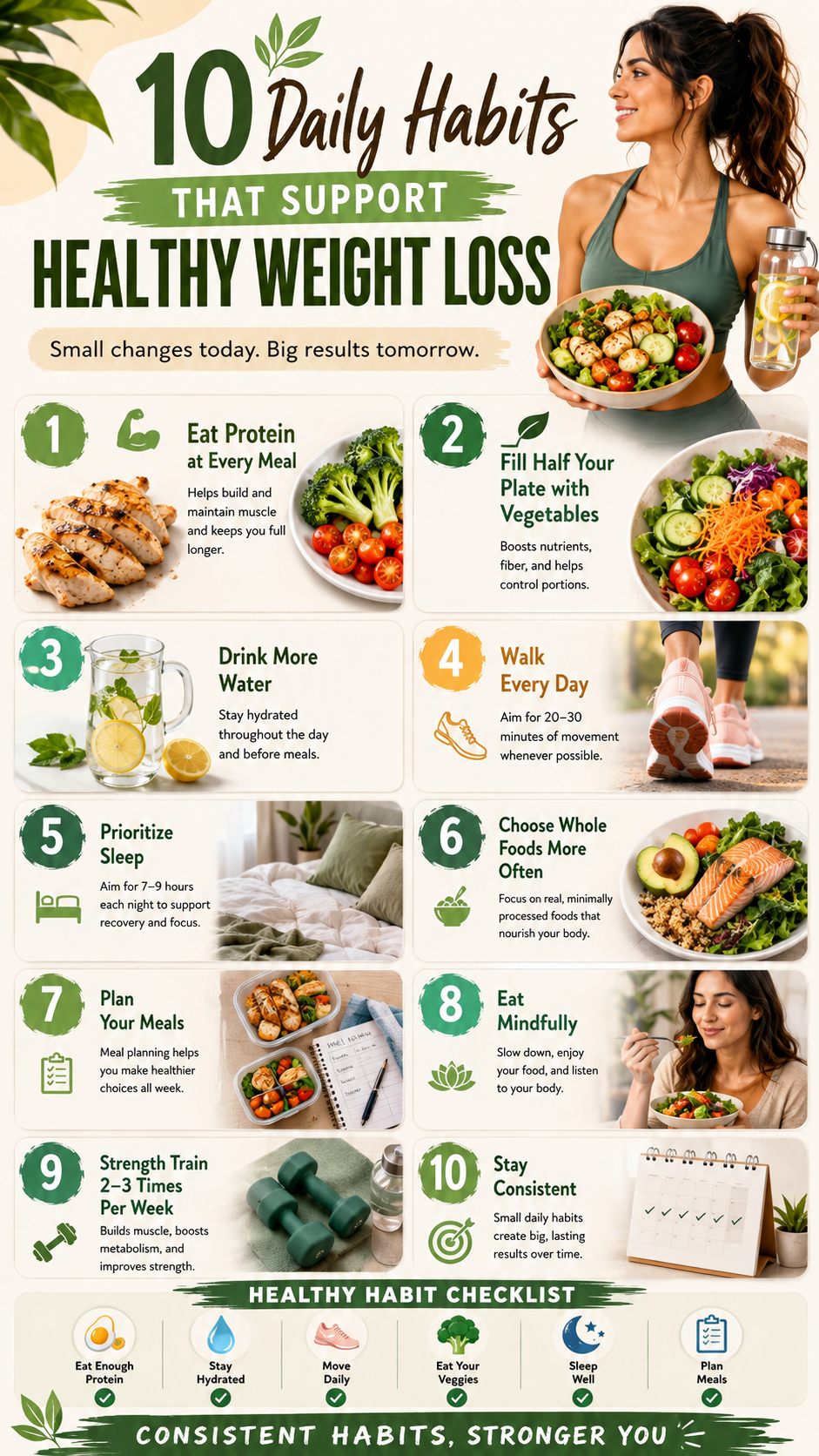
    The visual guide highlights aiming for around 20 to 30 minutes of movement whenever possible. The exact amount that works for you can vary, so focus on building a routine you can maintain consistently.

    5. Prioritize Quality Sleep

    Sleep is an often-overlooked part of a healthy lifestyle. A consistent sleep routine can support overall well-being and make it easier to maintain good habits during the day.

    The guide recommends aiming for 7 to 9 hours of sleep each night. Creating a relaxing bedtime routine, keeping regular sleep and wake times, and reducing unnecessary distractions before bed can help make quality sleep a greater priority.

    Think of sleep as part of your wellness routine rather than something to sacrifice whenever life becomes busy.

    6. Choose Whole Foods More Often

    Whole and minimally processed foods can make it easier to build nutrient-dense meals. Fresh vegetables, fruits, fish, lean proteins, beans, whole grains, nuts, seeds, and healthy fats can all contribute to a varied eating pattern.

    This does not mean every food you eat needs to be completely unprocessed. A balanced approach is more practical. Focus on adding nutritious foods more often instead of creating a long list of foods you can never enjoy.

    Why This Matters

    • Simple habits are easier to repeat than extreme routines.
    • Balanced meals can support a more satisfying approach to eating.
    • Movement, sleep, hydration, and nutrition work best as part of the same lifestyle.

    7. Plan Your Meals Ahead

    Meal planning can remove some of the guesswork from healthy eating. When you already know what you are going to prepare, you may be less likely to rely on last-minute food choices when you are hungry or short on time.

    Start with a simple weekly plan. Choose a few protein sources, vegetables, fruits, whole grains, and convenient ingredients. You can then mix and match them into different meals rather than preparing something completely different every day.

    Even planning just a few dinners can make a noticeable difference in how organized your week feels. Keep healthy snacks available too, especially for busy days.

    8. Eat Mindfully

    Mindful eating means slowing down and paying attention to your meal instead of eating automatically while distracted. Put away unnecessary screens when possible, take time to enjoy the flavors, and notice how the food makes you feel.

    Eating more slowly can also give you an opportunity to recognize when you are comfortably satisfied. Rather than rushing through a meal, try taking smaller bites and pausing occasionally.

    Pro Tip: Give your meals your full attention whenever possible. A few distraction-free minutes can turn an ordinary meal into a more intentional part of your daily wellness routine.

    9. Strength Train 2 to 3 Times Per Week

    Strength training can complement walking and other forms of movement by helping support muscle strength and an active lifestyle. The image highlights two to three strength-training sessions per week as a practical goal.

    Beginners can start with simple movements that match their current fitness level. Bodyweight exercises, resistance bands, dumbbells, or supervised gym exercises can all be options depending on your experience and available equipment.

    Consistency matters more than trying to do an intense workout immediately. Start at a manageable level and gradually build your routine as you become more comfortable.

    10. Stay Consistent

    Perhaps the most important habit is consistency. Healthy lifestyle changes rarely depend on having a perfect day every day. Instead, progress comes from returning to your routine again and again.

    If one meal does not go according to plan, you do not need to abandon the entire day. If you miss a workout, simply continue with your next opportunity. If your schedule becomes hectic, return to the basics: balanced meals, water, movement, sleep, and mindful choices.

    Remember: Small habits become powerful when they are repeated consistently. The goal is not to create a perfect routine, but to develop healthy behaviors that can realistically fit into your everyday life.

    How to Turn These Habits Into a Daily Routine

    Trying to change all ten habits at once can feel overwhelming. Instead, begin with two or three actions that seem realistic for your current lifestyle. Once they become familiar, gradually introduce additional habits.

    1. Start the day with water and a balanced breakfast if breakfast fits your routine.
    2. Build meals around protein and plenty of vegetables.
    3. Keep nutritious ingredients ready for quick meals and snacks.
    4. Schedule a daily walking opportunity, even if it is divided into shorter periods.
    5. Set aside specific days for strength training.
    6. Create a consistent evening routine that gives sleep a higher priority.
    7. Review your progress weekly and adjust your routine when necessary.

    The goal is to make healthy choices convenient. Keep water visible, prepare vegetables ahead of time, store protein-rich foods where they are easy to reach, and plan workouts around the times when you are most likely to follow through.

    Build Balanced Meals Without Overcomplicating Them

    A healthy meal can be surprisingly simple. Start with a protein source, add a generous portion of vegetables, and include an appropriate amount of whole grains, starchy foods, or healthy fats based on your needs and preferences.

    For example, grilled chicken with broccoli and avocado can create a simple meal, while salmon with vegetables and whole grains offers another combination. Plant-based meals can use beans, lentils, tofu, nuts, or seeds as protein-rich components.

    Variety is useful because it keeps your meals enjoyable. Experiment with different herbs, spices, cooking methods, and seasonal ingredients so healthy food does not become repetitive.

    A Simple Healthy Habit Checklist

    Use the following checklist as a quick reminder throughout the week. You do not have to complete everything perfectly every single day. The purpose is to keep your attention on the habits that support a healthier lifestyle.

    • ✓ Eat enough protein
    • ✓ Include plenty of vegetables
    • ✓ Stay hydrated
    • ✓ Walk or move every day
    • ✓ Prioritize quality sleep
    • ✓ Choose whole foods more often
    • ✓ Plan meals ahead
    • ✓ Practice mindful eating
    • ✓ Strength train regularly
    • ✓ Stay consistent

    At a Glance

    • Build meals around nutritious, satisfying foods.
    • Make vegetables and hydration everyday priorities.
    • Combine walking with regular strength training.
    • Protect your sleep and reduce distracted eating.
    • Choose sustainable consistency over short-term perfection.

    Conclusion: Focus on Habits You Can Keep

    Healthy weight loss habits do not need to be complicated. Eating balanced meals, choosing whole foods more often, drinking enough water, walking regularly, strength training, sleeping well, planning meals, and eating mindfully can create a strong foundation for a healthier lifestyle.

    Most importantly, give yourself room to be human. There will be busy days, restaurant meals, missed workouts, and moments when your routine does not go as planned. What matters is returning to your healthy habits rather than expecting perfection.

    Choose a few habits from this list and start today. As they become part of your routine, add another. Over time, these small daily decisions can help create a lifestyle that feels balanced, practical, and sustainable.

    Tags

    Healthy Recipes Healthy Eating Healthy Weight Loss Meal Planning Healthy Habits Clean Eating Nutritious Meals Wellness Tips

  • 10 Healthy Dinner Bowl Recipes for High Protein Meal Prep  Easy Weeknight Dinners

    10 Healthy Dinner Bowl Recipes for High Protein Meal Prep Easy Weeknight Dinners

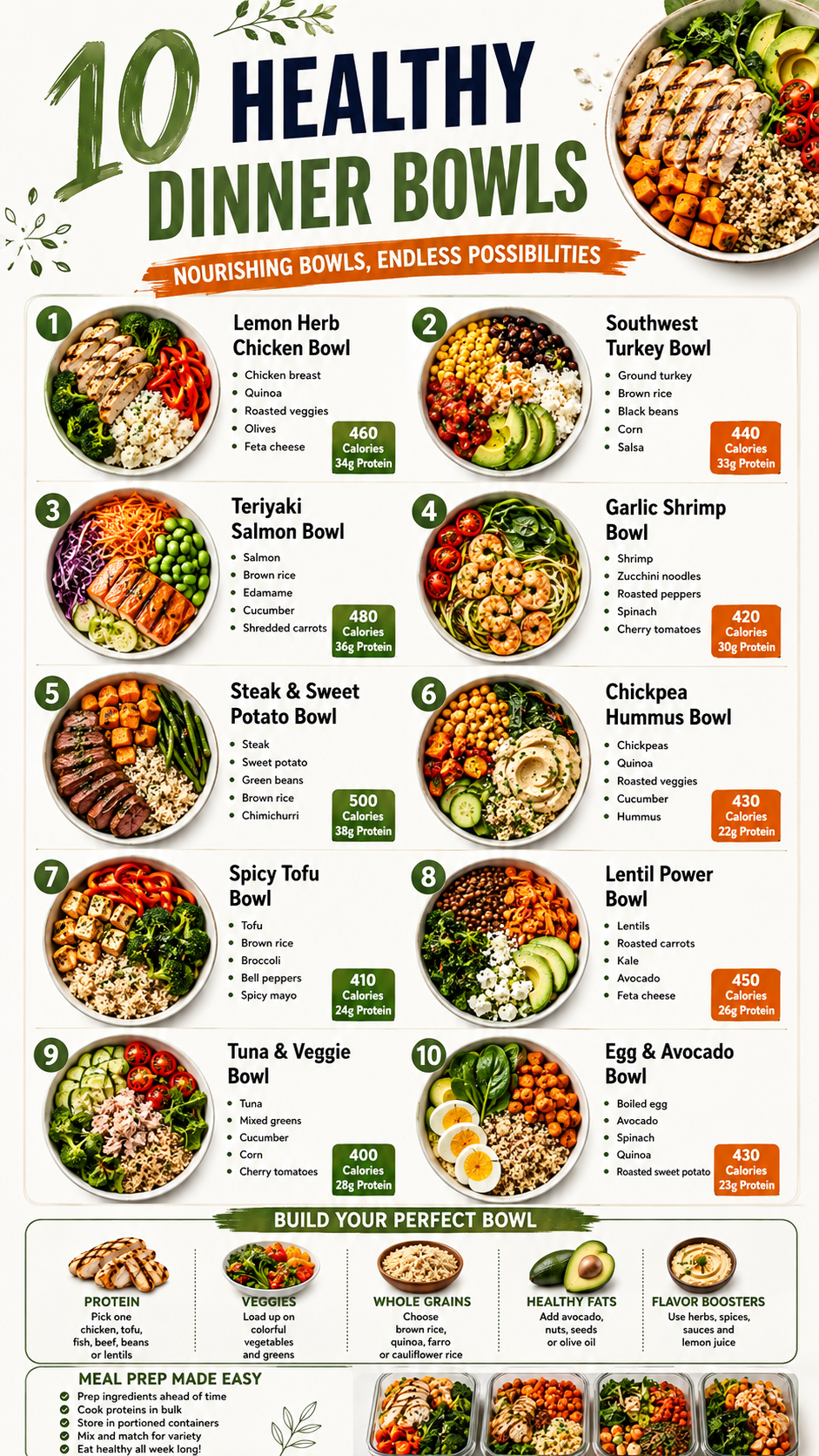
    Healthy dinner recipes are one of the easiest ways to enjoy delicious meals while supporting a balanced lifestyle. Whether you are cooking for yourself, feeding a family, or preparing meals ahead for a busy week, nutrient-rich dinner bowls offer the perfect combination of flavor, convenience, and nutrition. By combining lean proteins, colorful vegetables, wholesome carbohydrates, and healthy fats, you can create satisfying meals that keep you energized without spending hours in the kitchen.

    From grilled chicken and salmon to hearty vegetarian bowls packed with chickpeas and quinoa, healthy dinner bowls provide endless variety. They are easy to customize, simple to prepare, and ideal for anyone looking to make healthier food choices without sacrificing taste.

    Key Takeaways

    • Healthy dinner bowls combine protein, vegetables, smart carbs, and healthy fats.
    • Meal prep saves time and reduces weeknight cooking stress.
    • Balanced dinners help support energy, fullness, and nutrition.
    • Simple ingredient swaps keep meals interesting all week.
    • Most recipes can be customized for different dietary preferences.

    Why Healthy Dinner Bowls Are So Popular

    Dinner bowls have become a favorite because they make healthy eating incredibly simple. Instead of worrying about complicated recipes, you simply build your meal using nutritious ingredients that work well together. Everything is served in one bowl, making preparation, serving, and cleanup much easier.

    They are also highly adaptable. Whether you enjoy grilled chicken, seafood, lean beef, turkey, eggs, or plant-based proteins, there is a dinner bowl combination that fits your preferences. Adding seasonal vegetables and whole grains creates a complete meal that satisfies both hunger and nutrition goals.

    Important: Consistency is often more valuable than perfection. Building balanced meals with simple ingredients makes healthy eating easier to maintain over the long term than relying on restrictive diets.

    The Four Building Blocks of a Balanced Dinner Bowl

    1. Lean Protein

    Protein is the foundation of many healthy dinner recipes because it helps create satisfying meals. Popular choices include:

    • Grilled chicken breast
    • Baked salmon
    • Lean ground turkey
    • Shrimp
    • Lean steak
    • Eggs
    • Chickpeas and beans
    • Cottage cheese

    Including a quality protein source in each meal can help keep you feeling full while supporting muscle maintenance and recovery.

    2. Colorful Vegetables

    Vegetables add nutrients, fiber, texture, and vibrant color to every bowl. Mixing several varieties keeps meals exciting while providing a wide range of vitamins and minerals.

    • Broccoli
    • Carrots
    • Spinach
    • Bell peppers
    • Green beans
    • Tomatoes
    • Cucumbers
    • Roasted vegetables

    3. Smart Carbohydrates

    Healthy carbohydrates provide lasting energy. Instead of heavily processed options, choose whole foods that complement the other ingredients.

    • Brown rice
    • Quinoa
    • Jasmine rice
    • Sweet potatoes
    • Whole grain pasta

    4. Healthy Fats

    Healthy fats complete a balanced meal while adding creaminess and flavor.

    • Avocado
    • Olive oil
    • Nuts
    • Seeds
    • Tahini drizzle

    Expert Insight

    Building your dinner around vegetables and protein first naturally creates a more balanced meal. Once those are in place, adding smart carbohydrates and healthy fats becomes much easier without overcomplicating portion sizes.

    Healthy Dinner Bowl Ideas to Inspire Your Week

    Garlic Chicken Bowl

    A classic combination of grilled chicken, brown rice, broccoli, and carrots delivers plenty of flavor while remaining easy to prepare for meal prep.

    Turkey Taco Bowl

    Lean turkey, black beans, lettuce, salsa, and brown rice create a satisfying dinner inspired by taco flavors without requiring tortillas.

    Teriyaki Salmon Bowl

    Salmon pairs beautifully with rice, broccoli, and edamame for a colorful meal rich in protein and healthy fats.

    Shrimp Stir Fry Bowl

    Shrimp cooks quickly, making it perfect for busy evenings. Combine it with mixed vegetables, rice, and a light sesame-inspired sauce.

    Steak and Sweet Potato Bowl

    Lean steak with roasted sweet potatoes and green beans offers a hearty dinner that feels comforting while remaining balanced.

    Southwest Chicken Bowl

    Chicken, corn, black beans, avocado, and fresh salsa create a fresh, colorful meal packed with texture.

    Mediterranean Bowl

    Quinoa, cottage cheese, cucumbers, tomatoes, olives, and feta cheese deliver fresh Mediterranean-inspired flavors.

    Chickpea Power Bowl

    Plant-based eaters can enjoy roasted chickpeas, spinach, quinoa, roasted vegetables, and tahini for a filling vegetarian dinner.

    Protein Pasta Bowl

    Protein-rich pasta with lean meat sauce, spinach, and parmesan offers comfort food with a nutritious twist.

    Egg Fried Rice Bowl

    Eggs, vegetables, brown rice, and green onions make a quick dinner using everyday pantry ingredients.

    Pro Tip: Prepare several proteins and grains at the beginning of the week. Mixing them with different vegetables and sauces creates multiple unique dinners without cooking from scratch every night.

    Simple Meal Prep Strategies

    Meal preparation makes healthy dinners easier to maintain throughout the week. Even one hour of preparation can significantly reduce daily cooking time.

    1. Cook proteins in larger batches.
    2. Prepare grains ahead of time.
    3. Roast multiple vegetables together.
    4. Store ingredients separately for freshness.
    5. Mix and match combinations throughout the week.

    Easy Ways to Add More Flavor

    Healthy meals never have to be boring. Fresh herbs, citrus juice, garlic, spices, and homemade sauces can completely transform simple ingredients.

    Seasoning Ideas

    • Garlic and herbs
    • Lemon pepper
    • Paprika and cumin
    • Italian seasoning
    • Fresh cilantro
    • Black pepper and chili flakes

    Healthy Sauce Options

    • Greek yogurt dressing
    • Tahini sauce
    • Homemade salsa
    • Light teriyaki sauce
    • Lemon vinaigrette

    Customizing Dinner Bowls for Every Lifestyle

    The beauty of healthy dinner recipes lies in their flexibility. Families can personalize bowls according to individual preferences while sharing the same meal base.

    • Choose vegetarian proteins when desired.
    • Swap rice for quinoa or sweet potatoes.
    • Add extra vegetables for more volume.
    • Use different seasonings to create new flavors.
    • Adjust portions to suit personal goals.

    Quick Points

    • Prioritize lean protein in every meal.
    • Fill at least half your bowl with vegetables.
    • Choose whole grain carbohydrates whenever possible.
    • Include healthy fats for balance and flavor.
    • Meal prep helps maintain healthy eating habits.

    Conclusion

    Healthy dinner recipes do not need to be complicated to be satisfying. A well-balanced dinner bowl combines nutritious ingredients into one convenient meal that is easy to prepare, simple to customize, and enjoyable to eat. Whether you prefer chicken, salmon, turkey, shrimp, steak, eggs, or plant-based ingredients, building balanced bowls allows you to enjoy delicious dinners while supporting your everyday wellness goals.

    Start with fresh vegetables, add a quality protein, include wholesome carbohydrates, and finish with healthy fats for a meal that looks vibrant, tastes incredible, and fits effortlessly into your weekly routine. Small, consistent choices in the kitchen can make healthy eating feel natural and enjoyable every day.

    Tags

    Healthy Dinner Recipes Dinner Bowls Meal Prep High Protein Meals Healthy Eating Easy Dinner Ideas Balanced Meals Weeknight Dinners

  • 15 Healthy Grocery Finds for Easy, Nutritious Meals All Week

    15 Healthy Grocery Finds for Easy, Nutritious Meals All Week

    Healthy eating becomes much easier when your grocery cart is filled with simple, versatile ingredients you can use throughout the week. A well-planned shopping trip can give you the building blocks for balanced breakfasts, satisfying lunches, easy dinners, and nutritious snacks without making healthy meals feel complicated.

    The best approach is not about buying every trendy health food on the shelf. It is about choosing a practical mix of protein-rich foods, colorful produce, smart carbohydrates, and healthy fats. With a few dependable staples on hand, you can create plenty of wholesome meals while spending less time wondering what to cook.

    Key Takeaways

    • Build your cart around protein, vegetables, fruit, whole grains, and healthy fats.
    • Choose versatile ingredients that can work across several meals.
    • Keep fresh and freezer-friendly produce available for convenience.
    • Compare nutrition labels when choosing packaged staples.
    • Plan your grocery list before shopping to make healthier choices easier.
    • Use simple ingredients to create balanced meals without unnecessary complexity.

    15 Healthy Grocery Finds to Keep in Your Cart

    A healthy grocery list does not need to be long or expensive. The foods highlighted in this collection focus on everyday ingredients that are easy to recognize, combine, and store. Think of them as a flexible foundation rather than a strict meal plan.

    1. Chicken Breast

    Chicken breast is a versatile protein choice for simple meals. It can be baked, grilled, pan-cooked, or sliced into salads and grain bowls. Keeping cooked chicken available can also make quick lunches and dinners much easier to assemble.

    2. Lean Ground Turkey

    Lean ground turkey works well in tacos, bowls, lettuce wraps, stuffed vegetables, and homemade meatballs. It is especially useful when you want a protein option that can be seasoned differently for several meals.

    3. Eggs

    Eggs are one of the easiest foods to keep in the refrigerator for breakfast and beyond. Scrambled eggs, omelets, egg sandwiches, and vegetable-packed egg bowls can turn a handful of ingredients into a satisfying meal.

    4. Greek Yogurt

    Plain Greek yogurt is a convenient addition to a healthy grocery list. Enjoy it with berries and oats for breakfast, use it as a creamy base for sauces, or pair it with fruit for a simple snack. Choosing plain yogurt also gives you more control over the sweetness of your meal.

    5. Cottage Cheese

    Cottage cheese can add variety to breakfasts and snacks. Serve it with fruit, add it to a savory bowl, or pair it with vegetables for a simple high-protein option. Its mild flavor makes it easy to combine with both sweet and savory ingredients.

    Fresh and Frozen Vegetables for Everyday Meals

    Vegetables are an easy way to add color, texture, and variety to your meals. A smart grocery cart can include both fresh and frozen options. Fresh vegetables are excellent for salads and quick cooking, while frozen vegetables can be especially useful when convenience matters.

    6. Broccoli

    Broccoli is a dependable side dish and a great addition to bowls, stir-fries, pasta, and roasted vegetable trays. Roast it until tender, steam it for a quick dinner, or chop it finely into salads.

    7. Spinach

    Spinach can be used in salads, omelets, smoothies, soups, and cooked dishes. Because it wilts quickly when heated, it is an easy way to add leafy greens to meals without significantly changing the overall preparation.

    8. Bell Peppers

    Colorful bell peppers make meals more appealing while adding a crisp texture. Slice them for snacks, roast them with chicken, add them to scrambled eggs, or use them in grain bowls and wraps.

    9. Frozen Mixed Vegetables

    A bag of frozen mixed vegetables can be one of the most convenient items in a busy household. They can be added to rice dishes, soups, stir-fries, or quick skillet meals with very little preparation.

    10. Cauliflower Rice

    Cauliflower rice offers another flexible vegetable option for bowls and side dishes. It can be paired with seasoned protein, vegetables, and a flavorful sauce for a quick meal that feels substantial without requiring complicated cooking.

    Why This Matters

    The most useful healthy grocery items are the ones you will actually use. Prioritize ingredients that can appear in multiple meals, then mix and match them throughout the week. This approach can make healthy meal planning feel much more manageable.

    Fruit Favorites for Naturally Sweet Choices

    Fruit is another simple category to include when building a balanced grocery cart. Keeping several varieties available gives you easy options for breakfast, snacks, smoothies, yogurt bowls, and desserts.

    11. Blueberries

    Blueberries are convenient to keep on hand and work beautifully with Greek yogurt, oats, smoothies, or breakfast bowls. Fresh berries can be enjoyed immediately, while frozen berries are useful when you want a longer-lasting option.

    12. Apples

    Apples make an easy grab-and-go snack. Pair one with natural peanut butter or a handful of almonds when you want a more substantial snack with complementary flavors and textures.

    13. Bananas

    Bananas are particularly useful for breakfast recipes and smoothies. Slice them over oatmeal, blend them into a smoothie, or enjoy them with yogurt and nuts for a quick snack.

    14. Frozen Berries

    Frozen berries are a practical freezer staple for smoothies, oatmeal, yogurt bowls, and quick sauces. They also make it easier to keep fruit available when fresh produce is running low.

    Smart Carbohydrates for Satisfying Meals

    Carbohydrates can be part of a balanced eating pattern, especially when you choose filling staples and combine them with protein, vegetables, and healthy fats. The key is creating meals with variety rather than relying on one food group alone.

    15. Old-Fashioned Oats, Brown Rice, Quinoa, Sweet Potatoes, and Whole Grain Bread

    These versatile staples can form the base of countless healthy meals. Old-fashioned oats are useful for breakfast, while brown rice and quinoa can anchor lunch and dinner bowls. Sweet potatoes work well roasted or baked, and whole grain bread can turn eggs, chicken, vegetables, or cottage cheese into a quick meal.

    Pro Tip: Rather than thinking of carbohydrates as a separate part of the meal, pair them with protein and produce. A bowl with quinoa, chicken, vegetables, and a simple dressing is a practical example of how several grocery staples can work together.

    Healthy Fats That Add Flavor and Variety

    Healthy fats can make meals more enjoyable and help add richness to otherwise simple foods. Avocados, natural peanut butter, almonds, chia seeds, and olive oil are versatile ingredients that can be used in different ways across the week.

    Avocados

    Avocado is an easy addition to toast, salads, bowls, wraps, and eggs. Its creamy texture can make simple meals feel more satisfying without requiring a complicated sauce.

    Natural Peanut Butter and Almonds

    Natural peanut butter and almonds are convenient pantry staples for snacks and breakfasts. Spread peanut butter on whole grain toast, pair it with fruit, or add almonds to yogurt and oatmeal for extra crunch.

    Chia Seeds and Olive Oil

    Chia seeds can be stirred into oatmeal, yogurt, and smoothies, while olive oil can be used for cooking, dressings, and roasted vegetables. Small additions like these can make everyday meals more varied and flavorful.

    How to Build a Better Healthy Grocery List

    Smart shopping starts before you walk into the store. A little planning can help you avoid impulse purchases and make sure you have the ingredients needed for meals you genuinely want to eat.

    1. Plan a few meals first. Think about breakfasts, lunches, dinners, and snacks you expect to make.
    2. Choose versatile ingredients. Look for foods that can appear in at least two or three different meals.
    3. Mix fresh and frozen produce. This gives you freshness as well as convenient backup options.
    4. Compare nutrition labels. When choosing packaged foods, compare similar products and look at serving information and ingredient lists.
    5. Shop with a list. A written list keeps your trip focused and makes it easier to remember staple foods.

    Important: Healthy grocery shopping does not have to mean completely changing the way you eat. Start by adding more useful foods to your routine, such as vegetables, fruit, protein sources, whole grains, and simple healthy fats. Small, consistent choices can make everyday meals easier to balance.

    Simple Meal Ideas From Your Grocery Cart

    Once your kitchen is stocked, combining these ingredients becomes much easier. For breakfast, try Greek yogurt with blueberries, bananas, oats, and chia seeds. Eggs with spinach and bell peppers can create another quick option, especially when served with whole grain toast.

    For lunch, build a simple bowl with chicken, brown rice or quinoa, broccoli, bell peppers, and avocado. For dinner, roasted chicken or lean ground turkey can be paired with sweet potatoes and mixed vegetables. Snacks can be as simple as an apple with natural peanut butter, Greek yogurt with berries, or cottage cheese with fruit.

    The goal is flexibility. You do not need a different recipe for every meal. A small collection of dependable ingredients can be rearranged into many combinations, making healthy eating easier to maintain during busy weeks.

    Quick Shopping Tips for Healthier Choices

    • Shop with a grocery list based on meals you actually plan to prepare.
    • Buy seasonal produce when it fits your budget and meal plans.
    • Keep freezer-friendly vegetables and fruit available for busy days.
    • Choose simple ingredient lists when comparing packaged foods.
    • Keep protein staples visible and easy to reach in the refrigerator.
    • Store healthy snack options where they are convenient to grab.

    At a Glance

    • Prioritize protein and colorful produce.
    • Keep whole grains and versatile carbohydrates stocked.
    • Use healthy fats to add flavor and variety.
    • Combine simple staples instead of relying on complicated recipes.
    • Keep frozen foods available for convenient backup meals.

    Conclusion: Make Healthy Eating Easier With Smart Staples

    A nutritious grocery cart starts with practical choices you can use again and again. Protein sources such as chicken, eggs, lean ground turkey, Greek yogurt, and cottage cheese provide versatile foundations, while vegetables and fruit bring color and variety to everyday meals. Whole grains, oats, sweet potatoes, and healthy fats round out the selection with plenty of possibilities.

    The biggest advantage of this approach is simplicity. When your refrigerator, freezer, and pantry contain useful staples, putting together a balanced meal becomes less of a daily challenge. You can mix ingredients according to your schedule, preferences, and available time.

    Before your next grocery trip, make a short list, choose a few versatile foods from each category, and think about how they can work together. A little preparation can turn healthy recipes and meal ideas into a much more manageable weekly routine.

    Tags

    Healthy Recipes Healthy Grocery List Healthy Eating Meal Prep Ideas Healthy Food Grocery Shopping Tips Easy Meal Ideas Nutritious Meals