Blog

  • 30-Day Walking Challenge for Weight Loss, Fitness Motivation  Healthy Lifestyle Tips

    30-Day Walking Challenge for Weight Loss, Fitness Motivation Healthy Lifestyle Tips

    Building healthy habits does not have to feel overwhelming. One of the easiest ways to improve your overall well-being is by combining nutritious eating with regular walking. A simple daily walking routine paired with healthy recipes can help you feel more energized, support your fitness goals, and create sustainable lifestyle changes that last. Whether you are just beginning your wellness journey or looking to refresh your routine, focusing on realistic daily actions often leads to the biggest long-term results.

    Walking is accessible to nearly everyone, requires minimal equipment, and fits into almost any schedule. When you fuel your body with wholesome meals and stay active through consistent movement, you create a balanced approach to healthy living that feels achievable instead of restrictive.

    Key Takeaways

    • Healthy recipes provide lasting energy for daily activities.
    • Walking consistently supports overall fitness and heart health.
    • Small daily improvements often produce long-term success.
    • Meal planning makes healthy eating easier to maintain.
    • Consistency matters more than perfection.

    Why Walking and Healthy Recipes Make the Perfect Pair

    Food and movement naturally complement one another. Nutritious meals provide the fuel your body needs, while walking helps your body use that energy efficiently. Together, they support a healthy lifestyle without requiring expensive memberships or complicated fitness plans.

    Important: Healthy living is built through consistent daily choices rather than occasional extreme efforts. A balanced meal and a short walk each day can have a meaningful impact over time.

    Benefits of Walking Every Day

    Walking offers numerous physical and mental benefits while remaining one of the easiest forms of exercise to begin.

    • Supports cardiovascular wellness.
    • Helps maintain a healthy weight.
    • Boosts daily energy.
    • Improves mood and reduces stress.
    • Strengthens muscles and endurance.
    • Fits easily into busy schedules.

    Fuel Your Walks with Healthy Recipes

    Your body performs best when it receives quality nutrition. Instead of focusing on restrictive diets, prioritize meals that include vegetables, lean proteins, whole grains, healthy fats, and fresh fruit.

    Simple Breakfast Ideas

    • Greek yogurt with berries and nuts.
    • Overnight oats with chia seeds.
    • Whole grain toast topped with avocado and eggs.
    • Fruit smoothie blended with spinach and protein.

    Balanced Lunch Options

    • Grilled chicken salad with mixed vegetables.
    • Quinoa bowls with roasted vegetables.
    • Turkey and avocado wraps.
    • Lentil soup with whole grain bread.

    Healthy Dinner Inspiration

    1. Baked salmon with roasted vegetables.
    2. Grilled chicken with brown rice and broccoli.
    3. Vegetable stir fry with tofu.
    4. Whole wheat pasta with tomato sauce and lean turkey.

    Expert Insight

    Preparing nutritious meals in advance makes it much easier to stay consistent throughout the week. Even one or two meal prep sessions can reduce unhealthy last-minute food choices.

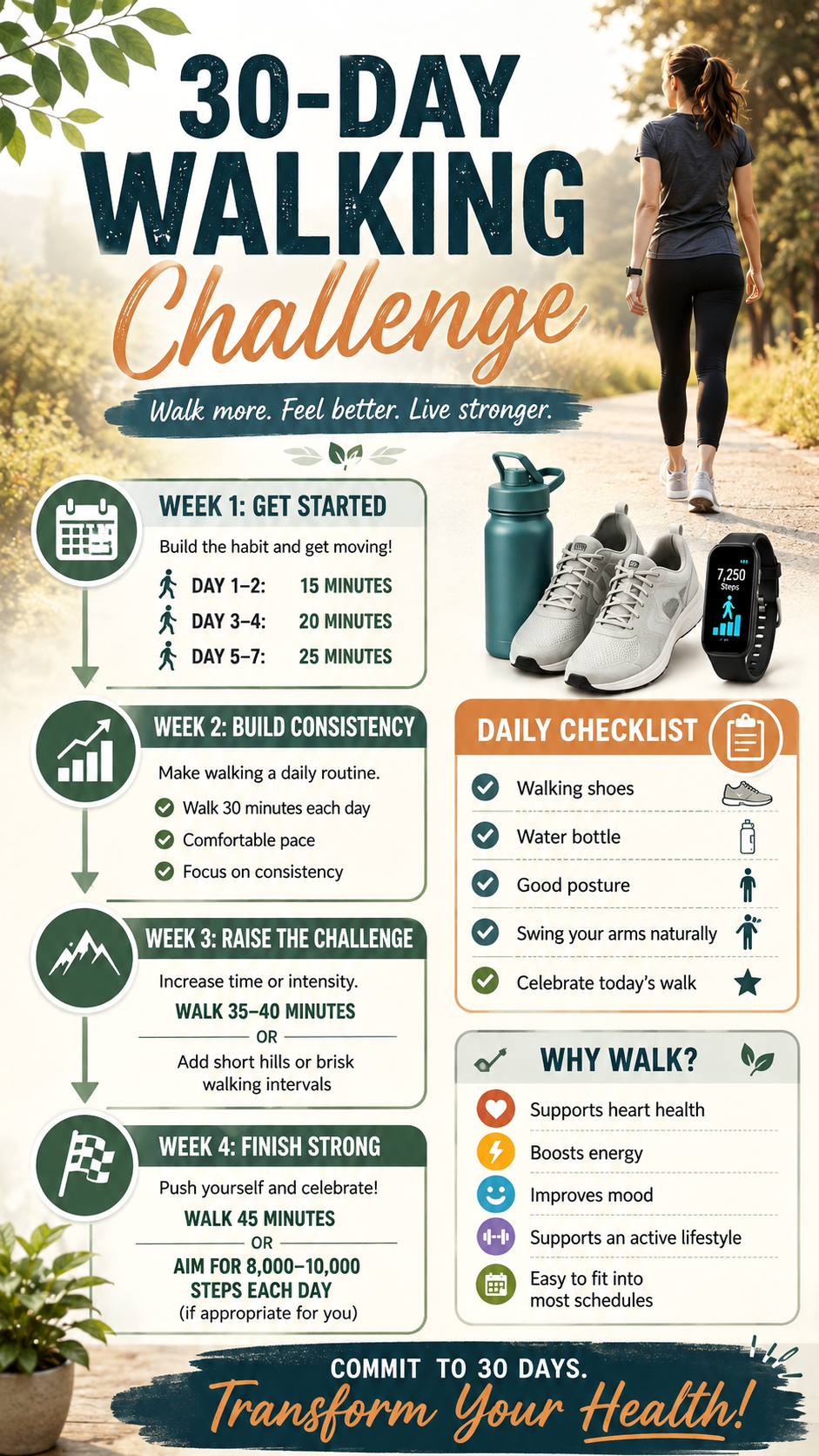
    A Simple 30 Day Walking Routine

    Starting gradually helps your body adapt while building confidence.

    Week One

    Begin with shorter walks lasting around 15 to 25 minutes. Focus on creating the habit rather than increasing speed.

    Week Two

    Increase your walks to approximately 30 minutes while maintaining a comfortable pace.

    Week Three

    Add gentle hills or brief periods of faster walking if you feel comfortable doing so.

    Week Four

    Aim for around 45 minutes of walking or gradually work toward a higher daily step count that suits your fitness level.

    Pro Tip: Pair every walk with a water bottle, supportive walking shoes, and a nutritious snack afterward to make recovery easier and maintain consistent energy.

    Healthy Habits That Keep You Motivated

    Long-term success comes from habits that fit naturally into everyday life. Instead of chasing perfection, celebrate progress and recognize every healthy decision you make.

    • Plan meals before grocery shopping.
    • Keep healthy snacks available.
    • Schedule walks on your calendar.
    • Track your progress weekly.
    • Celebrate milestones without guilt.

    Create an Environment for Success

    Keep walking shoes near the door, prepare ingredients ahead of time, and fill a reusable water bottle each morning. Small environmental changes remove barriers and make healthy decisions feel automatic.

    Common Mistakes to Avoid

    • Trying to change everything at once.
    • Skipping meals before long walks.
    • Ignoring hydration.
    • Comparing your progress to others.
    • Giving up after missing a day.

    Remember that healthy lifestyles are flexible. Missing a workout or enjoying an occasional treat does not erase your progress. Simply return to your routine with your next meal or next walk.

    Healthy Living Is About Consistency

    Rather than searching for quick fixes, focus on routines you genuinely enjoy. Healthy recipes, regular walking, quality sleep, hydration, and stress management all work together to support lasting wellness.

    Quick Points

    • Choose whole, nutrient-rich foods most of the time.
    • Walk consistently, even if sessions are short.
    • Stay hydrated throughout the day.
    • Build habits gradually for lasting success.
    • Celebrate steady progress instead of perfection.

    Conclusion

    Healthy recipes and daily walking create a practical foundation for better living. You do not need an extreme workout plan or complicated meal strategy to see positive changes. Every balanced meal, every walk around the neighborhood, and every healthy choice contributes to a stronger body and a healthier mindset. By focusing on simple routines that fit your lifestyle, you can build momentum that continues for months and years to come. Start with one nutritious meal today, lace up your walking shoes, and enjoy the benefits of steady, sustainable progress.

    Tags

    Healthy Recipes Walking Challenge Healthy Lifestyle Weight Management Meal Prep Fitness Motivation Wellness Tips Daily Walking
  • 10 Healthy Snacks That Keep You Full Longer for Weight Loss and Smart Eating

    10 Healthy Snacks That Keep You Full Longer for Weight Loss and Smart Eating

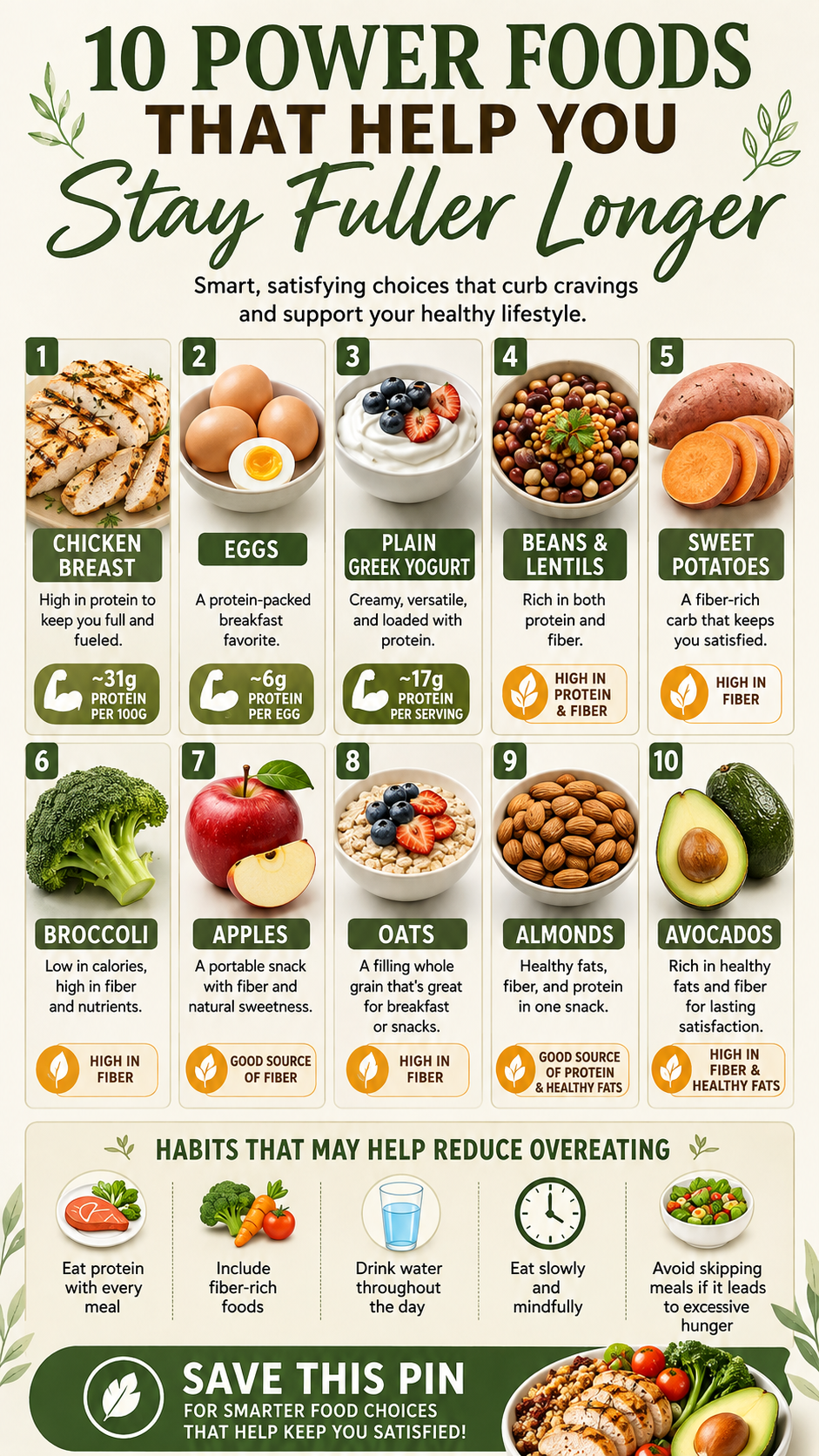
    Healthy snacks can do much more than satisfy hunger between meals. The right choices help maintain steady energy, support balanced nutrition, and reduce the urge to overeat later in the day. Foods that combine protein, fiber, and healthy fats are especially effective because they digest more slowly, helping you feel fuller for longer. Whether your goal is weight management, better eating habits, or simply making smarter food choices, building a list of satisfying snacks is a simple step that can make a lasting difference.

    Key Takeaways

    • Choose snacks rich in protein and fiber for longer-lasting fullness.
    • Healthy fats help improve satisfaction after eating.
    • Whole foods provide more nutrients than heavily processed snacks.
    • Balanced snacks can help reduce unnecessary cravings.
    • Simple daily habits support healthier eating patterns.

    Why Healthy Snacks Matter

    Snacking often gets a bad reputation, but it is not the habit itself that causes problems. The quality of the snack makes the biggest difference. Nutrient-dense foods help bridge the gap between meals while supporting energy, concentration, and appetite control.

    Important: Snacks that combine protein, fiber, and healthy fats help slow digestion, making you feel satisfied for a longer period while reducing the temptation to reach for sugary treats.

    Instead of relying on highly processed foods loaded with refined sugars, choosing wholesome ingredients provides vitamins, minerals, antioxidants, and long-lasting fuel that benefits your body throughout the day.

    The Best Foods That Help You Stay Full Longer

    A variety of everyday foods naturally support fullness while delivering excellent nutrition. Incorporating these into your snack routine makes healthy eating easier and more enjoyable.

    1. Chicken Breast

    Lean chicken breast is packed with high-quality protein, making it one of the most filling foods available. Small portions can easily become part of meal prep, wraps, salads, or protein snack boxes.

    2. Eggs

    Eggs provide complete protein along with essential nutrients. Hard-boiled eggs are portable, convenient, and ideal for busy schedules. Pair them with vegetables or fruit for an even more satisfying snack.

    3. Plain Greek Yogurt

    Greek yogurt contains significantly more protein than regular yogurt while remaining creamy and versatile. Add fresh berries or a sprinkle of nuts for extra fiber and healthy fats.

    4. Beans and Lentils

    Beans and lentils are rich in both protein and fiber, creating an excellent combination for appetite control. They also provide slow-digesting carbohydrates that support consistent energy.

    Expert Insight

    Combining protein with fiber is one of the simplest ways to improve satiety. Rather than focusing on calorie counting alone, prioritize foods that naturally keep you satisfied for longer.

    5. Sweet Potatoes

    Sweet potatoes contain fiber, complex carbohydrates, and valuable nutrients that support fullness. They make a delicious snack when roasted and paired with Greek yogurt or cottage cheese.

    6. Broccoli

    Broccoli is naturally low in calories while offering plenty of fiber, vitamins, and antioxidants. It pairs well with hummus or yogurt-based dips for a balanced snack.

    7. Apples

    Apples contain natural sweetness along with dietary fiber that supports digestion. Eating the skin provides the highest fiber content, making this fruit an easy everyday snack.

    8. Oats

    Oats contain soluble fiber that helps promote fullness. Overnight oats or small oatmeal bowls with fruit create satisfying breakfasts or afternoon snacks.

    9. Almonds

    Almonds deliver protein, healthy fats, vitamin E, and fiber in one convenient package. Because they are calorie-dense, moderate portions are usually the best approach.

    10. Avocados

    Avocados are rich in heart-healthy fats and fiber. Their creamy texture makes them an excellent addition to toast, salads, wraps, or vegetable platters.

    Simple Habits That Help Reduce Overeating

    Healthy eating extends beyond food choices. Daily habits also influence hunger and satisfaction throughout the day.

    • Include a source of protein with every meal.
    • Eat plenty of fiber-rich vegetables, fruits, legumes, and whole grains.
    • Drink water consistently throughout the day.
    • Eat slowly and pay attention to hunger signals.
    • Avoid skipping meals, which often leads to excessive hunger later.

    Pro Tip: Preparing healthy snacks ahead of time makes nutritious choices much easier during busy days. Keeping fruits, boiled eggs, yogurt, or portioned nuts readily available helps prevent impulsive eating.

    Building Balanced Snack Combinations

    Pairing different food groups creates more satisfying snacks than eating carbohydrates alone. Balanced combinations provide better nutrition while extending fullness.

    • Greek yogurt with fresh berries.
    • Apple slices with almonds.
    • Boiled eggs with broccoli.
    • Oatmeal topped with berries.
    • Avocado spread on whole grain toast.
    • Beans mixed into fresh vegetable salads.

    Common Snacking Mistakes to Avoid

    Even healthy foods can become less effective when eaten mindlessly. Portion awareness and balanced nutrition remain important.

    1. Choosing snacks high in added sugar.
    2. Ignoring protein and fiber.
    3. Eating directly from large packages.
    4. Skipping water throughout the day.
    5. Using snacks as a replacement for balanced meals.

    Important: Consistency matters more than perfection. Making small improvements to your snack choices each day can support healthier eating habits and make it easier to maintain long-term wellness goals.

    Making Healthy Snacking a Daily Habit

    Healthy snacking does not require expensive specialty products or complicated recipes. Simple whole foods often provide the greatest nutritional value while helping you stay energized throughout the day.

    Creating a weekly shopping list, preparing snacks in advance, and keeping nutritious options visible at home or work can significantly improve your eating routine. Small, sustainable habits often deliver the biggest long-term results.

    At a Glance

    • Prioritize protein, fiber, and healthy fats.
    • Choose whole foods whenever possible.
    • Stay hydrated throughout the day.
    • Prepare snacks before hunger strikes.

    Conclusion

    Healthy snacks are an important part of a balanced lifestyle. Choosing nutrient-rich foods like eggs, Greek yogurt, beans, sweet potatoes, broccoli, apples, oats, almonds, avocados, and lean protein helps support fullness, steady energy, and smarter eating habits. Combined with mindful eating, proper hydration, and consistent meal timing, these simple choices can make it easier to reduce cravings and enjoy satisfying nutrition every day. Focus on building sustainable habits, and healthy snacking will naturally become part of your routine.

    Tags

    Healthy Snacks High Protein Foods High Fiber Foods Healthy Eating Weight Management Nutrition Tips Smart Snacking Balanced Diet

  • 10 Healthy Frozen Foods for Healthy Recipes and Smart Freezer Meal Prep

    10 Healthy Frozen Foods for Healthy Recipes and Smart Freezer Meal Prep

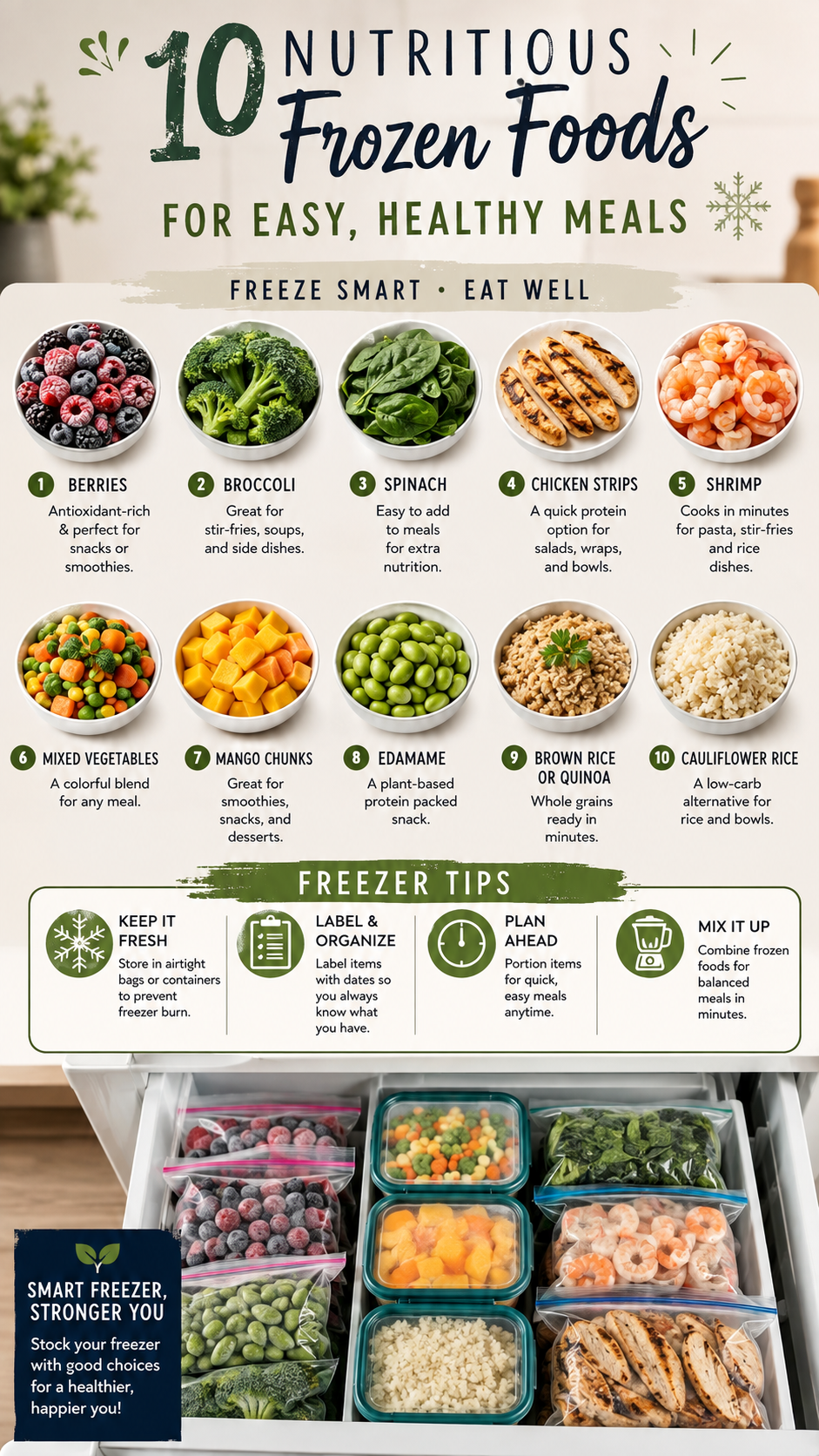
    Keeping a well-stocked freezer is one of the easiest ways to make healthy recipes more convenient without sacrificing nutrition or flavor. Frozen fruits, vegetables, lean proteins, and whole grains offer incredible flexibility for busy households, helping you prepare balanced meals in minutes while reducing food waste. Whether you are planning weekly meal prep, looking for quick dinner ideas, or simply trying to eat more nutritious foods, smart freezer staples can become the foundation of countless delicious meals.

    Key Takeaways

    • Frozen produce retains nutrients and is available year-round.
    • Lean frozen proteins simplify healthy meal preparation.
    • Whole grains make balanced meals more filling.
    • Keeping a variety of freezer staples reduces food waste.
    • Meal prep becomes faster and more convenient with a stocked freezer.

    Why Frozen Foods Deserve a Place in Healthy Recipes

    Many people assume fresh ingredients are always the healthiest option, but frozen foods can be just as nutritious. Fruits and vegetables are typically frozen soon after harvest, helping preserve vitamins, minerals, and natural flavor. This makes them an excellent choice for anyone who wants to enjoy healthy recipes throughout the year without worrying about seasonal availability.

    Important: A thoughtfully stocked freezer makes healthy eating easier every day. Instead of relying on last-minute takeout, you can quickly combine frozen vegetables, lean proteins, and whole grains into balanced meals in less time.

    Another major advantage is convenience. Frozen ingredients require minimal preparation, making them perfect for busy mornings, quick lunches, and weeknight dinners. Because they have a longer shelf life, you can buy them in advance and always have nutritious options available.

    Essential Frozen Foods to Keep on Hand

    Frozen Mixed Berries

    Frozen berries are incredibly versatile. Blend them into smoothies, stir them into oatmeal, top yogurt bowls, or use them in homemade desserts. They provide natural sweetness and vibrant color while adding fiber and antioxidants to your meals.

    Frozen Broccoli

    Broccoli is one of the easiest vegetables to include in healthy recipes. Steam it, roast it, add it to pasta dishes, or toss it into stir-fries for extra texture and nutrition.

    Frozen Spinach

    Frozen spinach works beautifully in soups, casseroles, omelets, smoothies, pasta sauces, and rice dishes. It is an effortless way to increase your vegetable intake without extra chopping or preparation.

    Frozen Lean Proteins

    Items such as grilled chicken strips, shrimp, or plant-based protein options can dramatically reduce cooking time. They pair well with vegetables, grains, salads, wraps, and pasta for balanced meals.

    Expert Insight

    Choosing frozen proteins with minimal added sauces or seasonings gives you greater control over flavor, sodium, and overall nutrition while allowing each meal to suit your personal preferences.

    Mixed Vegetables

    A colorful vegetable blend can instantly transform fried rice, soups, casseroles, pasta dishes, and sheet pan meals. Since everything is already prepared, cooking becomes significantly easier.

    Frozen Mango

    Sweet frozen mango adds tropical flavor to smoothies, breakfast bowls, fruit salads, and refreshing snacks. It is also delicious blended into homemade frozen treats.

    Shelled Edamame

    Edamame is a simple plant-based ingredient that works well in salads, grain bowls, noodle dishes, and snack plates. It also adds satisfying texture and protein to vegetarian meals.

    Frozen Brown Rice or Quinoa

    Pre-cooked whole grains save valuable time while providing a hearty base for bowls, stir-fries, grilled proteins, and roasted vegetables.

    Cauliflower Rice

    Cauliflower rice is an easy way to add extra vegetables to meals. Use it as a side dish, mix it with regular rice, or create lighter versions of classic recipes.

    Building Balanced Meals from Freezer Staples

    One of the simplest approaches to healthy recipes is combining three basic components:

    • A quality protein source.
    • A colorful vegetable.
    • A whole grain or vegetable alternative.

    For example, grilled chicken with broccoli and brown rice creates a satisfying dinner in minutes. Shrimp with mixed vegetables over quinoa offers another quick and nutritious option. Smoothie bowls made with frozen berries and mango provide an energizing breakfast packed with fruit.

    Pro Tip: Store a variety of freezer staples instead of buying large amounts of one ingredient. A diverse freezer gives you countless meal combinations while preventing boredom.

    Tips for Choosing the Best Frozen Foods

    • Read ingredient labels carefully.
    • Choose products with little or no added sauces.
    • Select vegetables without unnecessary seasoning.
    • Look for lean protein options.
    • Keep a variety of fruits, vegetables, proteins, and grains available.
    • Rotate older items to the front of the freezer to reduce waste.

    Easy Healthy Recipe Ideas

    Breakfast

    • Berry and mango smoothie.
    • Greek yogurt topped with frozen berries.
    • Spinach omelet with whole grain toast.

    Lunch

    • Quinoa bowl with edamame and mixed vegetables.
    • Chicken and broccoli rice bowl.
    • Shrimp salad with colorful vegetables.

    Dinner

    • Vegetable stir-fry with brown rice.
    • Grilled chicken with roasted broccoli.
    • Cauliflower rice topped with shrimp and vegetables.

    Meal Prep Made Simple

    Healthy meal prep becomes much easier when freezer staples are always available. You can portion ingredients into containers, prepare multiple lunches at once, or quickly assemble dinners after a busy day. This approach reduces stress, saves money, and encourages more consistent healthy eating habits.

    Important: Healthy eating is not about having every ingredient fresh every day. Consistency matters most, and frozen staples make it much easier to maintain nutritious habits throughout the week.

    Quick Points

    • Stock fruits, vegetables, proteins, and whole grains.
    • Choose products with simple ingredient lists.
    • Mix freezer staples for endless meal combinations.
    • Use frozen foods to reduce waste and save time.

    Conclusion

    A well-organized freezer can become one of the most valuable tools for creating healthy recipes every day. Frozen fruits, vegetables, proteins, and whole grains provide convenience, flexibility, and excellent nutrition while helping you prepare delicious meals with minimal effort. By choosing quality freezer staples and combining them creatively, you can simplify meal planning, reduce food waste, and enjoy balanced dishes whenever inspiration strikes. Small changes to your freezer today can make healthy cooking easier for weeks to come.

    Tags

    Healthy Recipes Frozen Foods Meal Prep Healthy Eating Freezer Staples Easy Meals Clean Eating Healthy Meal Ideas

  • 7 Easy Rotisserie Chicken Meals for Healthy Dinner Recipes and High Protein Meal Prep

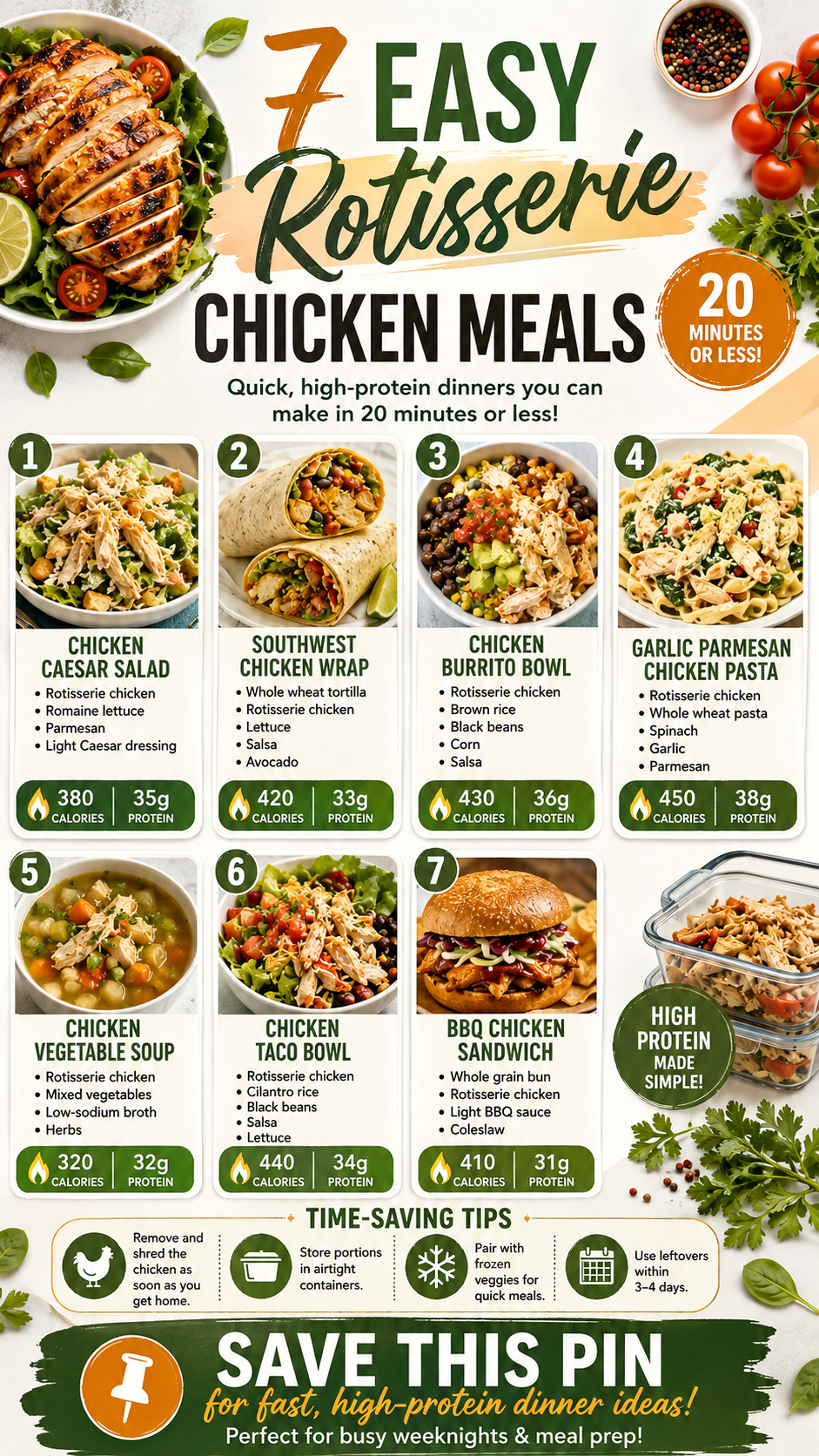
    7 Easy Rotisserie Chicken Meals for Healthy Dinner Recipes and High Protein Meal Prep

    Healthy dinner recipes do not have to be complicated or time-consuming. With a little planning and a few smart shortcuts, you can prepare delicious, protein-rich meals that satisfy your appetite while fitting into even the busiest schedule. One of the easiest ways to simplify dinner is by using rotisserie chicken as a versatile ingredient. It saves valuable time, reduces preparation work, and can be transformed into a wide variety of balanced meals that taste homemade.

    Whether you are meal prepping for the week, feeding a family, or simply trying to eat healthier, these easy chicken dinner ideas offer a practical solution. From crisp salads and hearty rice bowls to comforting soups and flavorful wraps, every meal delivers satisfying flavor while helping you stay on track with your nutrition goals.

    Key Takeaways

    • Prepare healthy dinners in about 20 minutes or less.
    • Use rotisserie chicken to save cooking and prep time.
    • Create balanced meals with lean protein, vegetables, and whole grains.
    • Perfect for meal prep, busy weeknights, and family dinners.
    • Enjoy variety without sacrificing nutrition or flavor.

    Why Healthy Dinner Recipes Matter

    Healthy eating does not require expensive ingredients or complicated recipes. Consistently preparing nutritious dinners can help support energy levels, improve overall wellness, and make it easier to maintain balanced eating habits. Choosing meals rich in lean protein, vegetables, and fiber also helps you stay fuller for longer.

    Important: The easiest healthy habits are often the ones you can repeat consistently. Keeping cooked rotisserie chicken in the refrigerator makes it much easier to prepare nutritious meals instead of relying on less healthy convenience foods.

    Why Rotisserie Chicken Is a Smart Shortcut

    Rotisserie chicken has become a favorite ingredient for home cooks because it combines convenience with versatility. Since the chicken is already fully cooked, you can focus on assembling meals instead of spending time roasting or grilling meat.

    • Reduces cooking time dramatically.
    • Works well in both hot and cold recipes.
    • Pairs easily with vegetables, grains, and healthy sauces.
    • Ideal for meal prepping multiple lunches and dinners.
    • Offers excellent value for families.

    Simple Meal Prep Strategy

    Once you bring home a rotisserie chicken, remove the meat from the bones while it is still warm. Divide it into airtight containers so it is ready to use throughout the week. This small step can save valuable time during busy evenings.

    Easy Healthy Dinner Ideas Using Rotisserie Chicken

    Chicken Caesar Salad

    A lighter Caesar salad becomes a satisfying dinner when topped with shredded chicken. Use crisp romaine lettuce, freshly grated Parmesan, and a lighter dressing for a balanced meal. Adding extra vegetables like cucumbers or tomatoes increases nutrition even more.

    Southwest Chicken Wrap

    Whole wheat tortillas filled with chicken, lettuce, avocado, salsa, and fresh vegetables create a portable dinner packed with flavor. This option is excellent for quick lunches and busy evenings alike.

    Chicken Rice Bowl

    Combine brown rice with shredded chicken, steamed broccoli, carrots, and your favorite seasoning for a balanced meal rich in protein and fiber. Rice bowls are highly customizable depending on what vegetables you have available.

    Expert Insight

    Keeping cooked grains, chopped vegetables, and shredded chicken ready in your refrigerator allows you to mix and match ingredients into fresh meals all week without getting bored.

    Garlic Chicken Pasta

    Whole grain or high-protein pasta tossed with garlic, spinach, Parmesan, and shredded chicken creates a comforting dinner that comes together quickly. Add mushrooms or broccoli for extra vegetables.

    Chicken Vegetable Soup

    Soup is one of the easiest ways to stretch leftover chicken into several servings. Simmer mixed vegetables in low-sodium broth before adding shredded chicken and herbs for a comforting meal that is both filling and nourishing.

    Chicken Taco Bowl

    Layer cilantro rice, black beans, lettuce, salsa, and shredded chicken to create a colorful dinner packed with flavor. Finish with avocado, Greek yogurt, or fresh lime juice for even more freshness.

    BBQ Chicken Sandwich

    For a healthier take on comfort food, serve shredded chicken on a whole grain bun with a light barbecue sauce and crunchy coleslaw. Pair it with fresh vegetables instead of fries for a balanced plate.

    How to Build Balanced Healthy Dinners

    Every healthy meal becomes more satisfying when it includes several important food groups. Aim to combine lean protein, colorful vegetables, healthy carbohydrates, and beneficial fats for complete nutrition.

    1. Start with lean protein such as chicken.
    2. Add vegetables for vitamins, minerals, and fiber.
    3. Include whole grains or other complex carbohydrates.
    4. Finish with healthy fats like avocado, nuts, or olive oil.
    5. Season generously with herbs and spices for flavor.

    Pro Tip: Preparing vegetables ahead of time makes healthy dinner recipes even faster. Wash, chop, and store produce so everything is ready whenever hunger strikes.

    Time-Saving Meal Prep Tips

    • Shred the chicken immediately after bringing it home.
    • Store meal portions in airtight containers.
    • Freeze extra chicken for future dinners.
    • Keep frozen vegetables available for quick sides.
    • Cook grains in larger batches to use throughout the week.
    • Label meal prep containers with dates.

    Healthy Ingredient Swaps

    Simple ingredient substitutions can improve the nutritional value of your meals without sacrificing taste.

    • Choose whole wheat tortillas instead of refined flour tortillas.
    • Replace white rice with brown rice or quinoa.
    • Use Greek yogurt in place of heavy creamy sauces.
    • Select reduced-sodium broth for soups.
    • Add extra vegetables to increase fiber and volume.

    Making Healthy Eating Sustainable

    The best healthy dinner recipes are the ones you actually enjoy making and eating. Variety is essential for long-term success. Rotate salads, bowls, soups, wraps, sandwiches, and pasta dishes throughout the week to keep meals exciting while using many of the same ingredients.

    Important: Healthy eating does not require perfection. Small improvements like increasing vegetables, choosing whole grains, and preparing meals ahead of time can make a significant difference over weeks and months.

    At a Glance

    • Use rotisserie chicken for quick high-protein dinners.
    • Mix and match vegetables, grains, and healthy sauces.
    • Meal prep once to simplify the entire week.
    • Choose balanced ingredients for satisfying meals.

    Conclusion

    Healthy dinner recipes become much easier when you build meals around convenient, nutritious ingredients like rotisserie chicken. With simple combinations of vegetables, whole grains, and lean protein, you can create satisfying meals that fit busy schedules while supporting your health goals. From fresh salads and hearty rice bowls to comforting soups and flavorful wraps, these ideas provide endless inspiration for quick weeknight dinners. Keep a few staple ingredients on hand, prepare food in advance whenever possible, and enjoy delicious homemade meals with less stress and more confidence.

    Tags

    Healthy Dinner Recipes Rotisserie Chicken High Protein Meals Meal Prep Quick Dinner Ideas Weeknight Meals Chicken Recipes Easy Healthy Meals

  • 7 High Protein Soup Recipes for Healthy Weight Loss and Easy Meal Prep Ideas

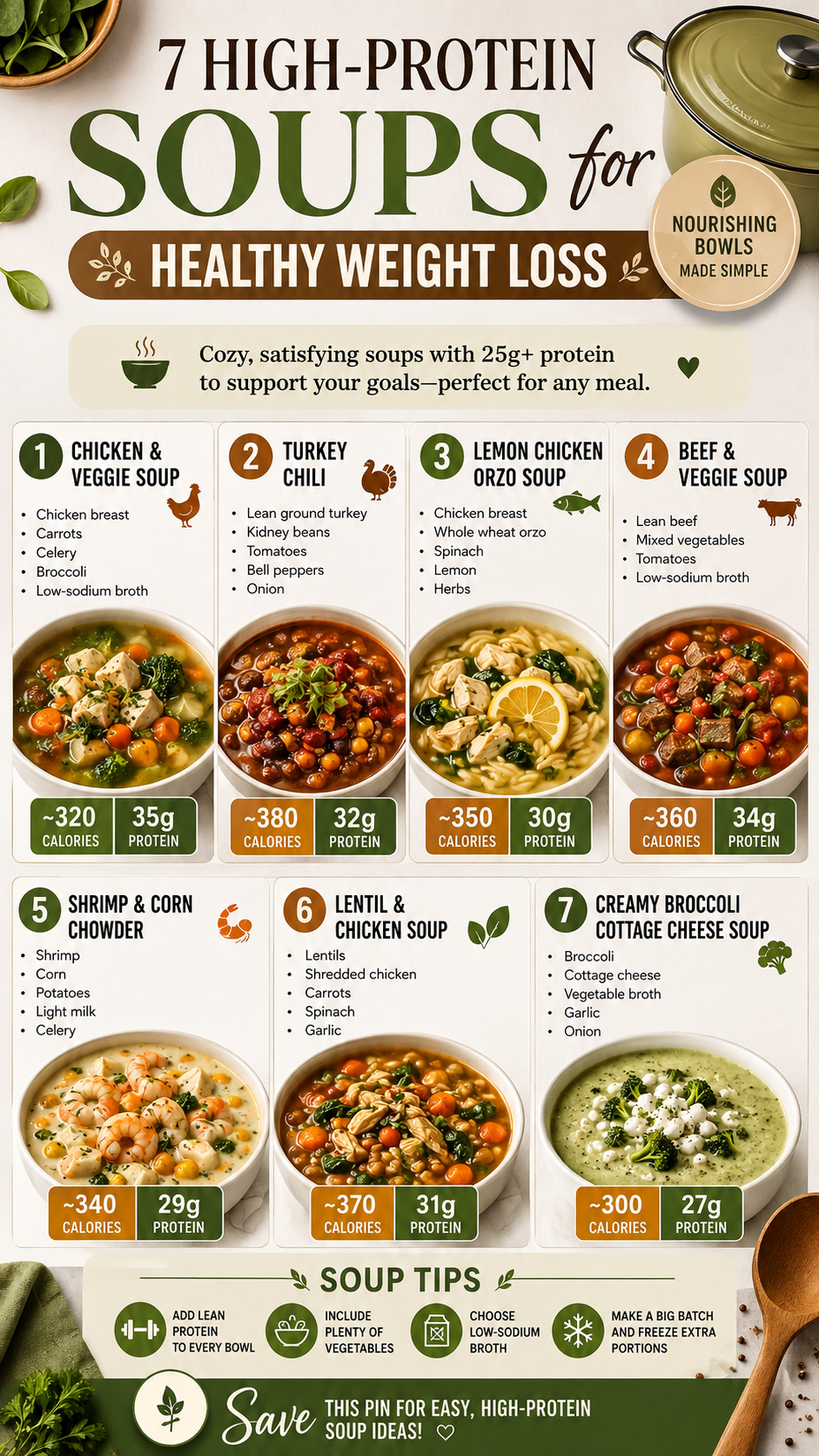
    7 High Protein Soup Recipes for Healthy Weight Loss and Easy Meal Prep Ideas

    Nothing beats a warm bowl of homemade soup when you want a meal that is comforting, filling, and packed with nutrition. Whether your goal is healthy weight management, better meal prep, or simply enjoying wholesome homemade food, high protein soup recipes offer an easy solution. By combining lean proteins, colorful vegetables, flavorful herbs, and nourishing broths, you can create satisfying meals that keep you full while delivering essential nutrients. These soups are ideal for busy weekdays, cozy evenings, and make-ahead lunches that taste just as delicious the next day.

    Key Takeaways

    • High protein soups help keep you satisfied for longer.
    • They are perfect for meal prep and freezer-friendly meals.
    • Fresh vegetables add fiber, vitamins, and natural flavor.
    • Lean meats, seafood, and legumes boost nutritional value.
    • Simple ingredients can create restaurant-quality comfort food.

    Why High Protein Soup Recipes Are Worth Adding to Your Menu

    Protein plays an important role in supporting muscle maintenance, reducing hunger, and helping create balanced meals. When combined with nutrient-rich vegetables and flavorful broth, soup becomes far more than an appetizer. It transforms into a complete meal that is both comforting and nourishing.

    Important: Choosing protein-rich soups instead of heavily processed convenience meals can help you enjoy satisfying comfort food while making it easier to include wholesome ingredients in your everyday diet.

    Unlike many heavy comfort foods, homemade soups allow you to control sodium levels, choose quality ingredients, and customize flavors based on your family’s preferences. Every bowl can be adapted with seasonal vegetables, different herbs, and a variety of protein sources.

    Popular High Protein Soup Ideas

    Chicken Vegetable Soup

    A classic favorite, chicken vegetable soup combines tender chicken breast with carrots, celery, broccoli, and a light broth. It delivers excellent protein while remaining light enough for everyday meals. Fresh herbs and garlic can elevate the flavor without adding unnecessary calories.

    Turkey Chili

    Lean ground turkey paired with kidney beans, tomatoes, onions, and peppers creates a hearty chili packed with protein and fiber. This recipe is ideal for meal prep because the flavors continue to develop after refrigeration.

    Lemon Chicken Orzo Soup

    This refreshing soup combines shredded chicken, spinach, herbs, lemon, and tender pasta for a bright, comforting meal. The citrus adds freshness while keeping the dish light and satisfying.

    Beef and Vegetable Soup

    Lean beef cubes simmered with tomatoes, mixed vegetables, carrots, and herbs produce a rich, hearty dinner that’s perfect for colder months. Choosing lean cuts helps maintain a healthier balance while preserving excellent flavor.

    Shrimp and Corn Chowder

    Shrimp adds high-quality protein while corn, potatoes, celery, and light dairy ingredients create a creamy texture. This comforting soup feels indulgent without becoming overly heavy.

    Lentil and Chicken Soup

    Lentils naturally provide protein, fiber, and minerals. Combined with shredded chicken and vegetables, they create a filling soup that works well for lunches and meal prep.

    Creamy Broccoli Cottage Cheese Soup

    Blending cottage cheese into broccoli soup creates a surprisingly creamy texture while significantly increasing protein content. This is an excellent option for anyone looking to enjoy creamy soups with a more balanced nutritional profile.

    Expert Insight

    Small ingredient upgrades often make the biggest difference. Choosing lean proteins, increasing vegetables, and using lower sodium broth creates soups that remain comforting while supporting healthier eating habits.

    Ingredients That Build Better Soup

    Every memorable soup begins with quality ingredients. Fresh vegetables, aromatic herbs, lean proteins, and flavorful broth create depth without requiring complicated cooking techniques.

    • Chicken breast
    • Lean turkey
    • Lean beef
    • Shrimp
    • Lentils and beans
    • Carrots
    • Celery
    • Broccoli
    • Spinach
    • Garlic and onions
    • Tomatoes
    • Low sodium broth
    • Fresh herbs
    • Lemon juice

    Simple Tips for More Flavor

    Flavor does not require excessive butter or cream. Instead, build layers of taste by cooking onions, garlic, and herbs before adding broth. Fresh herbs near the end of cooking brighten every bowl.

    Pro Tip: A squeeze of fresh lemon juice, chopped herbs, or cracked black pepper added just before serving can dramatically improve the freshness and overall flavor of homemade soup.

    Meal Prep Benefits

    Soup is one of the easiest meals to prepare ahead of time. Most varieties store well in the refrigerator for several days and freeze beautifully for future meals.

    1. Prepare a large batch over the weekend.
    2. Divide into individual containers.
    3. Refrigerate portions for the week.
    4. Freeze extras for quick dinners.
    5. Label containers with preparation dates.

    Having nutritious soup ready to enjoy makes healthy eating much more convenient during busy schedules.

    Making Every Bowl More Nutritious

    Small adjustments can improve nutrition without sacrificing flavor. Add extra vegetables, increase lean protein, and choose whole food ingredients whenever possible.

    Important: Balancing protein, vegetables, healthy carbohydrates, and flavorful broth creates soups that feel satisfying while supporting everyday wellness goals.

    Helpful Additions

    • Fresh spinach
    • Kale
    • Mushrooms
    • Bell peppers
    • White beans
    • Chickpeas
    • Brown rice
    • Whole grain pasta

    Serving Suggestions

    Pair your favorite soup with a crisp green salad, roasted vegetables, or whole grain bread for a complete meal. Garnish with chopped parsley, fresh dill, sliced green onions, or grated Parmesan for additional flavor and presentation.

    Quick Points

    • Choose lean protein for filling meals.
    • Use plenty of colorful vegetables.
    • Cook larger batches for meal prep.
    • Freeze extra portions for convenience.
    • Finish with fresh herbs for vibrant flavor.

    Conclusion

    High protein soup recipes combine comfort, nutrition, and convenience in one delicious bowl. Whether you prefer classic chicken soup, hearty turkey chili, flavorful beef and vegetable soup, creamy broccoli soup, or protein-rich lentil recipes, there are countless ways to enjoy wholesome homemade meals throughout the year. By focusing on quality ingredients, balanced nutrition, and simple cooking techniques, you can create soups that satisfy your appetite while fitting easily into a healthy lifestyle. Keep a few favorite recipes in your regular meal rotation, prepare larger batches for busy weeks, and enjoy comforting homemade goodness whenever you need it.

    Tags

    Soup Recipes High Protein Meals Healthy Soup Meal Prep Comfort Food Easy Dinner Homemade Soup Healthy Recipes

  • Healthy Keto Recipes for Weight Loss Tips to Break Through a Plateau

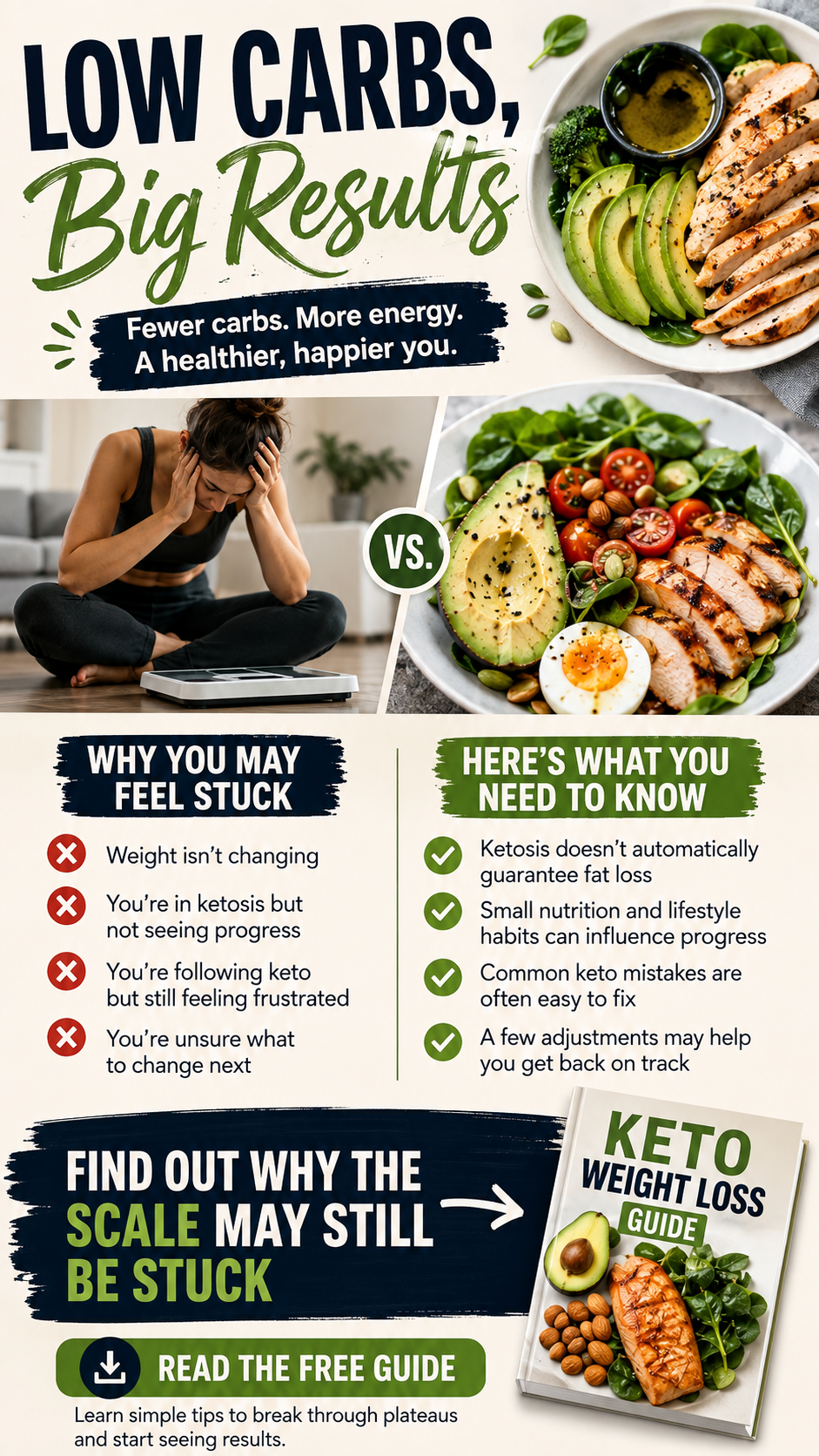
    Healthy Keto Recipes for Weight Loss Tips to Break Through a Plateau

    Cutting carbohydrates is often one of the first strategies people try when pursuing better health or weight loss. Many choose a ketogenic or low carb lifestyle with the expectation that the number on the scale will quickly move in the right direction. While reducing carbohydrate intake can be effective for many individuals, lasting success depends on much more than simply eliminating bread, pasta, or sugary snacks. Healthy recipes, balanced nutrition, consistent habits, and realistic expectations all work together to create meaningful progress.

    When weight loss slows or reaches a plateau, it does not always mean your efforts have failed. It may simply be a sign that your body has adapted or that small adjustments are needed. Understanding the bigger picture can help you stay motivated while continuing to enjoy delicious, satisfying meals that support your goals.

    Key Takeaways

    • Healthy recipes should focus on whole, nutrient-dense ingredients.
    • Weight loss plateaus are common and often temporary.
    • Quality sleep, hydration, and activity influence results.
    • Balanced meals help improve satisfaction and consistency.
    • Small lifestyle adjustments often produce meaningful improvements.

    Why Healthy Recipes Matter Beyond Weight Loss

    Healthy eating is about far more than reaching a target weight. Nutritious meals fuel daily activities, support energy levels, encourage better focus, and help maintain overall wellness. A plate filled with lean proteins, healthy fats, colorful vegetables, and minimally processed ingredients provides your body with valuable nutrients while helping you stay full for longer.

    Important: Sustainable nutrition is built on consistency rather than perfection. A collection of satisfying, healthy recipes makes it easier to maintain positive habits without feeling deprived.

    Understanding a Weight Loss Plateau

    A weight loss plateau occurs when progress slows despite continuing healthy habits. This experience is incredibly common and should not automatically be viewed as failure. As your body changes, calorie requirements, activity levels, and metabolism naturally adjust.

    Common Reasons Progress Slows

    • Your calorie needs have changed as you’ve lost weight.
    • Portion sizes have gradually increased.
    • Physical activity has become less challenging.
    • Stress or poor sleep is affecting hormones related to hunger.
    • Water retention temporarily masks fat loss.

    Instead of making drastic changes, evaluate your overall routine. Small improvements are usually easier to maintain and often deliver better long-term results than extreme restrictions.

    Expert Insight

    Weight management is influenced by nutrition, movement, recovery, hydration, and consistency. Looking at your entire lifestyle often reveals opportunities that are easy to improve without completely changing your eating plan.

    Building Balanced Healthy Recipes

    The best healthy recipes combine flavor with nutrition. Whether following a ketogenic eating pattern or simply reducing processed foods, aim to create meals that provide balance and variety.

    Prioritize Protein

    Protein helps maintain muscle, supports recovery, and promotes fullness after meals. Excellent choices include chicken, turkey, fish, eggs, lean beef, tofu, and Greek yogurt.

    Choose Healthy Fats

    Healthy fats contribute to satisfying meals while supporting overall nutrition. Avocados, olive oil, nuts, seeds, and fatty fish are popular options that pair well with vegetables and proteins.

    Add Plenty of Vegetables

    Leafy greens, broccoli, zucchini, cauliflower, peppers, asparagus, spinach, and cucumbers add vitamins, minerals, and fiber while keeping meals colorful and enjoyable.

    Pro Tip: Instead of focusing only on what to eliminate, think about what nutritious foods you can add. Filling your plate with wholesome ingredients naturally creates satisfying meals that are easier to maintain.

    Simple Habits That Support Better Results

    Healthy recipes work best when combined with supportive daily habits. Lifestyle choices often have just as much influence on progress as the meals themselves.

    Stay Hydrated

    Proper hydration supports digestion, exercise performance, and overall well-being. Sometimes thirst can even be mistaken for hunger.

    Improve Sleep Quality

    Consistent sleep helps regulate hormones that influence appetite and recovery. Even nutritious meals may not deliver their full benefits if sleep is consistently interrupted.

    Keep Moving

    Regular walking, resistance training, cycling, swimming, or other enjoyable activities help support cardiovascular health while complementing a nutritious eating plan.

    Healthy Meal Ideas for Everyday Success

    Breakfast

    • Vegetable omelet with avocado.
    • Greek yogurt topped with nuts and seeds.
    • Egg muffins prepared ahead for busy mornings.

    Lunch

    • Grilled chicken salad with olive oil dressing.
    • Salmon served over mixed greens.
    • Lettuce wraps filled with lean turkey and vegetables.

    Dinner

    • Baked salmon with roasted broccoli.
    • Grilled steak alongside cauliflower mash.
    • Chicken cooked with zucchini and mushrooms.

    Smart Snacks

    • Mixed nuts in moderate portions.
    • Cheese with cucumber slices.
    • Boiled eggs.
    • Celery with natural nut butter.

    Mistakes That Can Slow Progress

    Even nutritious eating plans can become less effective if certain habits develop over time.

    • Underestimating portion sizes.
    • Choosing highly processed convenience foods too often.
    • Ignoring stress management.
    • Skipping meals and overeating later.
    • Expecting immediate results instead of long-term consistency.

    Important: Healthy eating should feel sustainable. If your routine becomes difficult to maintain, simplify your meals, prepare food in advance, and focus on habits you can continue for months instead of days.

    Tracking Progress Beyond the Scale

    The scale tells only part of the story. Improvements in energy, strength, endurance, clothing fit, sleep quality, and confidence are equally meaningful signs that healthy habits are making a positive difference.

    Taking occasional progress photos, recording workouts, or keeping a simple nutrition journal can provide motivation even during periods when body weight remains stable.

    At a Glance

    • Focus on nutrient-dense whole foods.
    • Expect occasional plateaus during long-term weight loss.
    • Support healthy eating with sleep, hydration, and movement.
    • Measure success using more than the number on the scale.

    Conclusion

    Healthy recipes are valuable tools for anyone looking to improve their lifestyle, manage weight, or simply enjoy nourishing meals. Whether you prefer a ketogenic approach, lower carbohydrate meals, or a more balanced eating style, lasting success comes from creating habits you can realistically maintain.

    Instead of becoming discouraged by temporary plateaus, view them as opportunities to reassess your routine and make thoughtful improvements. Continue choosing wholesome ingredients, preparing satisfying meals, staying active, and giving your body the support it needs. Small, consistent actions often produce the biggest long-term results, helping you build a healthier lifestyle one meal at a time.

    Tags

    Healthy Recipes Keto Diet Weight Loss Low Carb Meals Meal Planning Healthy Lifestyle Nutrition Tips Clean Eating

  • High Protein Greek Yogurt Breakfast Ideas for Healthy High Protein Breakfast Bowls

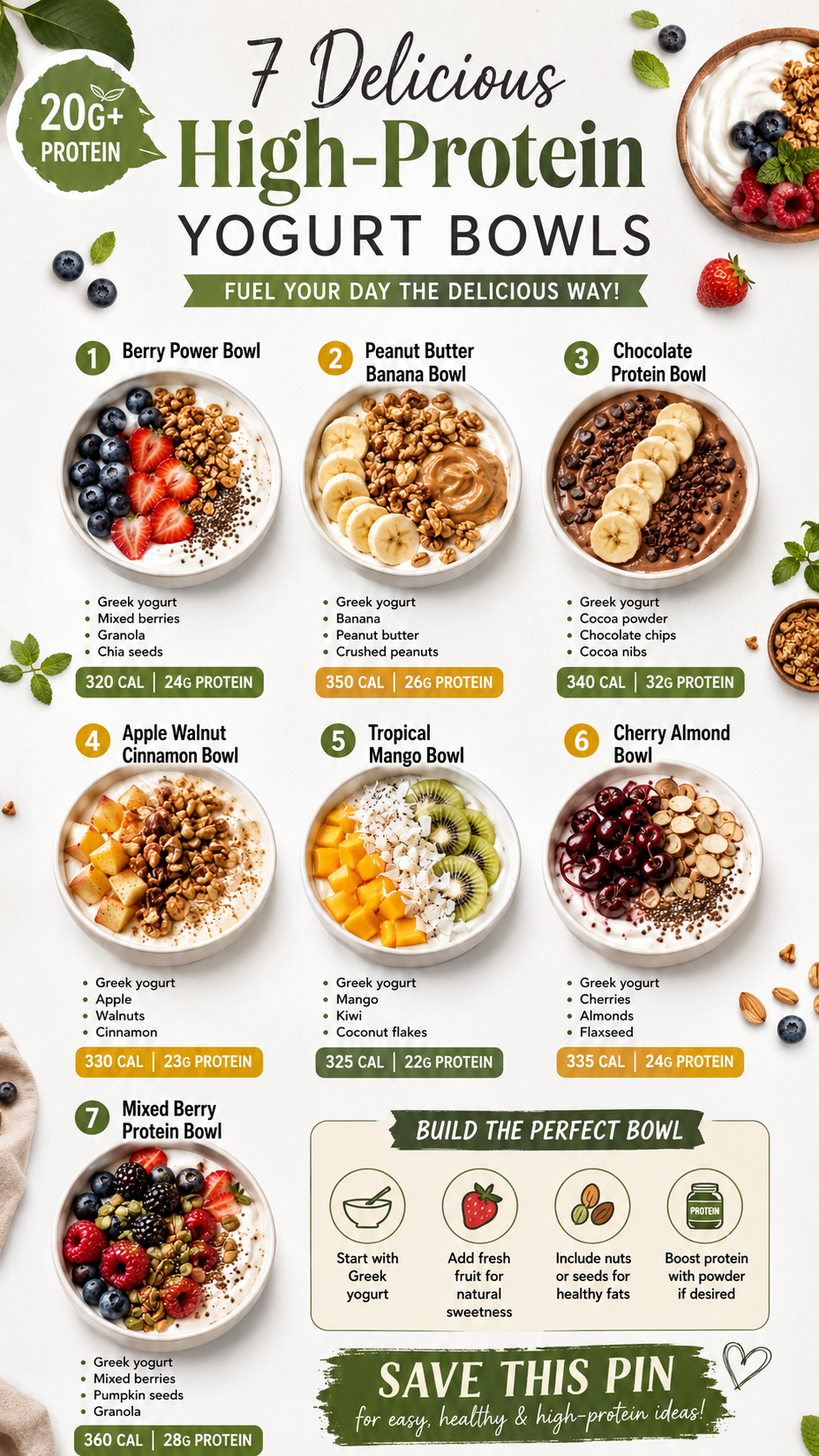
    High Protein Greek Yogurt Breakfast Ideas for Healthy High Protein Breakfast Bowls

    Looking for fresh, satisfying breakfast ideas that are both nutritious and easy to prepare? High protein Greek yogurt bowls have become a favorite choice for busy mornings because they combine creamy texture, delicious flavors, and impressive nutritional value in one simple meal. Whether you need a quick breakfast before work, a healthy afternoon snack, or a post workout option, Greek yogurt bowls can be customized with fruits, nuts, seeds, granola, and protein-rich toppings to match your taste and lifestyle. Best of all, they require minimal preparation while delivering lasting energy that helps you stay full throughout the morning.

    Key Takeaways

    • Greek yogurt is naturally rich in protein and supports a filling breakfast.
    • Fresh fruit adds natural sweetness along with vitamins and antioxidants.
    • Nuts and seeds provide healthy fats, texture, and extra nutrition.
    • Simple ingredient swaps create endless flavor combinations.
    • Most yogurt bowls can be prepared in just a few minutes.

    Why High Protein Breakfasts Are Worth Choosing

    A balanced breakfast sets the tone for the rest of the day. Meals that include plenty of protein help promote fullness, support muscle maintenance, and provide steady energy. Greek yogurt is one of the easiest ingredients to incorporate into a healthy morning routine because it offers a creamy texture while naturally containing significantly more protein than traditional yogurt.

    Important: Building your breakfast around protein can help reduce unnecessary snacking later in the day while making mornings more satisfying and enjoyable.

    Pairing Greek yogurt with wholesome toppings creates a meal that balances carbohydrates, healthy fats, and protein. This combination not only tastes great but also delivers a variety of nutrients your body appreciates.

    What Makes Greek Yogurt an Excellent Base?

    Greek yogurt is incredibly versatile. Its thick consistency holds toppings well, making every bite flavorful and satisfying. Plain varieties also allow you to control sweetness naturally by adding fresh fruit instead of relying on added sugars.

    • Rich source of protein
    • Creamy and filling texture
    • Easy to pair with sweet or lightly savory ingredients
    • Simple to prepare in minutes
    • Suitable for meal prep

    Delicious Greek Yogurt Bowl Ideas

    Berry Crunch Bowl

    Fresh strawberries, blueberries, crunchy granola, and chia seeds create a colorful breakfast packed with texture. The berries add natural sweetness while chia seeds contribute fiber and healthy fats.

    Peanut Butter Banana Bowl

    Sliced bananas combined with natural peanut butter and a sprinkle of cinnamon create a comforting breakfast that feels indulgent while remaining nutritious. This combination is ideal before an active day.

    Chocolate Protein Bowl

    Chocolate flavored protein powder blended into Greek yogurt creates a rich base that pairs perfectly with banana slices and crunchy cocoa nibs. It is a great option for anyone looking to increase protein intake.

    Expert Insight

    Choosing a combination of fruit, healthy fats, and protein creates a balanced breakfast that offers lasting energy while keeping flavors exciting throughout the week.

    Apple Cinnamon Bowl

    Diced apples, chopped walnuts, and cinnamon create warm seasonal flavors without requiring any cooking. This combination delivers crunch, sweetness, and wholesome nutrition.

    Tropical Mango Bowl

    Mango chunks, kiwi slices, and unsweetened coconut flakes bring bright tropical flavors to breakfast. This colorful bowl feels refreshing while adding vitamins and natural sweetness.

    Cherry Almond Bowl

    Sweet cherries paired with sliced almonds and ground flaxseed offer an enjoyable mix of juicy fruit and crunchy texture. Flaxseed also provides extra fiber to support a balanced meal.

    Mixed Berry Protein Bowl

    A combination of berries, hemp seeds, and almond butter transforms plain Greek yogurt into a nutrient-rich breakfast with layers of flavor and texture.

    Pro Tip: Prepare containers of washed fruit, chopped nuts, and seeds ahead of time so you can assemble a complete breakfast in less than five minutes each morning.

    How to Build the Perfect Yogurt Bowl

    1. Start with plain Greek yogurt.
    2. Add fresh fruit for natural sweetness.
    3. Include nuts or seeds for crunch and healthy fats.
    4. Mix in granola if you enjoy additional texture.
    5. Add protein powder if you want an extra protein boost.
    6. Finish with cinnamon or coconut flakes for extra flavor.

    Simple Ingredient Combinations

    Ingredient Adds
    Fresh Berries Natural sweetness and antioxidants
    Bananas Creamy texture and natural energy
    Walnuts or Almonds Healthy fats and crunch
    Chia or Flaxseed Fiber and omega fats
    Granola Crunch and satisfying texture

    Meal Prep Tips for Busy Mornings

    Meal prepping yogurt bowls can save valuable time during the week. Store yogurt separately from crunchy toppings to preserve texture. Portion fruits into containers ahead of time, and keep nuts and seeds in airtight jars so everything is ready to assemble.

    Rotating seasonal fruits also keeps breakfast interesting while introducing new flavors throughout the year. Small changes make healthy eating feel enjoyable instead of repetitive.

    Easy Ways to Customize Every Bowl

    One of the greatest advantages of Greek yogurt bowls is flexibility. Mix different fruits, nuts, seeds, spices, and crunchy toppings based on your preferences. You can create dozens of combinations without changing your basic shopping list.

    • Add cinnamon for warmth.
    • Include coconut flakes for tropical flavor.
    • Use mixed berries for variety.
    • Try almond butter or peanut butter for richness.
    • Experiment with pumpkin seeds, hemp seeds, or sunflower seeds.

    Quick Points

    • Choose plain Greek yogurt as your foundation.
    • Combine fruit, protein, and healthy fats.
    • Prepare toppings in advance for faster mornings.
    • Rotate ingredients to keep breakfasts exciting.

    Conclusion

    High protein Greek yogurt bowls offer one of the easiest ways to enjoy a healthy, flavorful, and satisfying breakfast. With endless combinations of fruits, nuts, seeds, granola, and protein-rich ingredients, every bowl can be tailored to your personal preferences. Whether your goal is convenient meal prep, better morning nutrition, or simply discovering new breakfast ideas, these customizable bowls make healthy eating simple and enjoyable. Start with quality Greek yogurt, experiment with colorful toppings, and build breakfasts that fuel your day with both great taste and balanced nutrition.

    Tags

    Breakfast Ideas Greek Yogurt High Protein Breakfast Healthy Recipes Breakfast Bowls Meal Prep Healthy Eating Protein Recipes

  • Ultimate Healthy Grocery List for Healthy Eating, Meal Prep  Clean Eating Recipes

    Ultimate Healthy Grocery List for Healthy Eating, Meal Prep Clean Eating Recipes

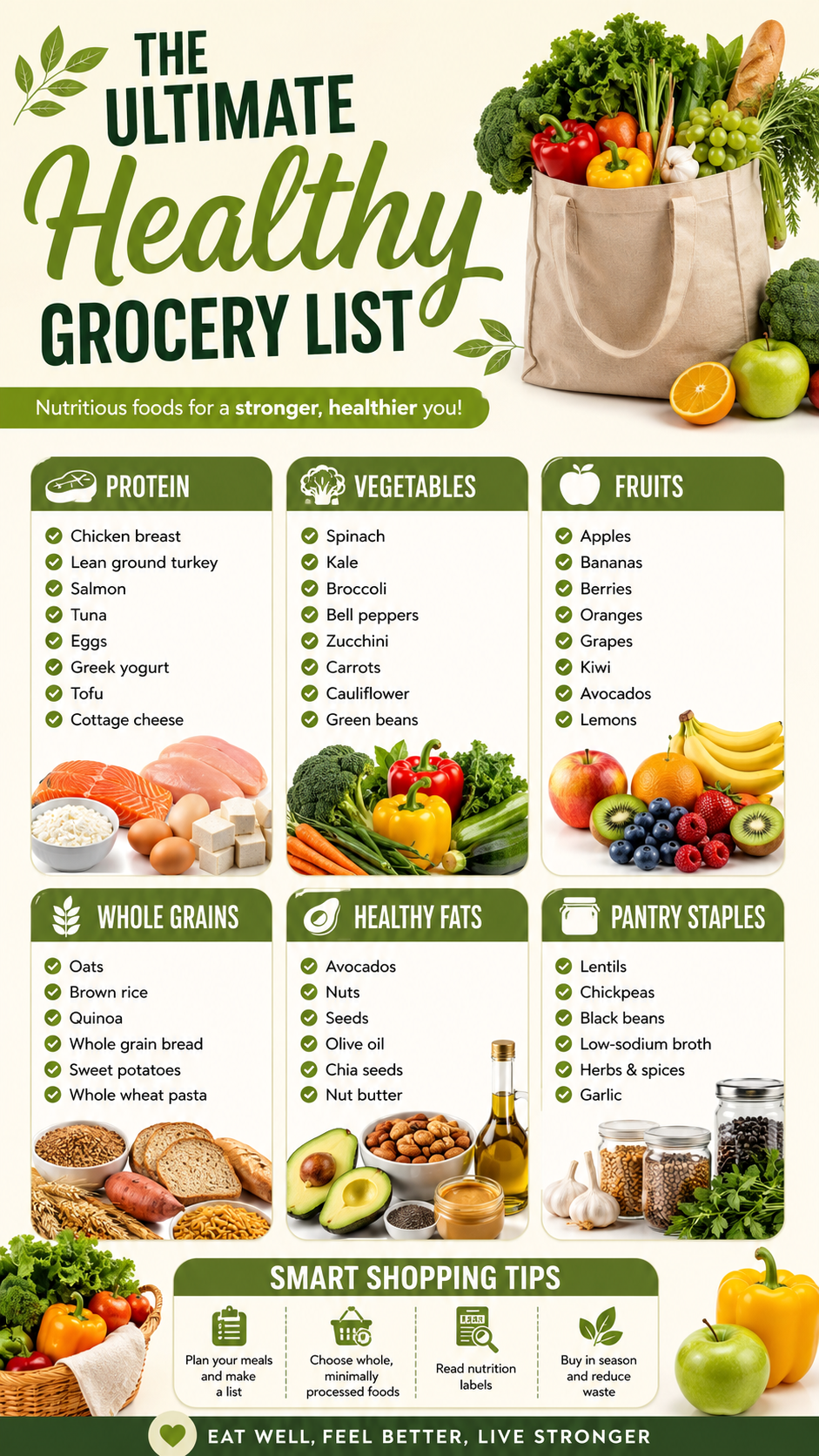
    Healthy eating starts long before the first meal is prepared. It begins with thoughtful grocery shopping and filling your kitchen with wholesome ingredients that make nutritious meals easy to create every day. A well-planned grocery list removes the guesswork from healthy eating, helps reduce impulse purchases, and makes meal preparation faster throughout the week. Whether your goal is eating more vegetables, preparing balanced meals for your family, or maintaining a healthy lifestyle, choosing nutrient-dense foods is one of the smartest habits you can build.

    Key Takeaways

    • Focus on whole, minimally processed foods.
    • Include lean protein, healthy fats, and complex carbohydrates.
    • Fill your cart with colorful fruits and vegetables.
    • Keep pantry staples stocked for quick meals.
    • Plan your shopping list before visiting the store.

    Why a Healthy Grocery List Matters

    Walking into a grocery store without a plan often leads to buying foods that do not support your nutrition goals. A healthy grocery list acts as a roadmap, helping you prioritize fresh produce, quality proteins, whole grains, and nutritious pantry essentials. Instead of wondering what to cook each night, you’ll already have the ingredients needed for balanced meals.

    Important: The healthiest eating habits are built through consistency, not perfection. Stocking your kitchen with nutritious ingredients makes healthy choices the easiest choices every single day.

    Build Your Shopping List by Food Groups

    Lean Protein Sources

    Protein supports muscle maintenance, keeps you feeling satisfied longer, and forms the foundation of balanced meals. Including a variety of protein options throughout the week also adds flavor and versatility.

    • Chicken breast
    • Lean ground turkey
    • Salmon
    • Canned tuna
    • Eggs
    • Plain Greek yogurt
    • Cottage cheese
    • Tofu

    These ingredients can be used in salads, grain bowls, wraps, sandwiches, soups, stir fries, and healthy dinner recipes that are simple enough for busy weeknights.

    Fresh Vegetables

    Vegetables provide vitamins, minerals, antioxidants, and fiber while adding color and texture to every meal. Aim for a wide variety instead of relying on only one or two favorites.

    • Broccoli
    • Spinach
    • Bell peppers
    • Cucumbers
    • Salad greens
    • Green beans
    • Cauliflower
    • Carrots

    Fresh vegetables can be roasted, grilled, steamed, sautéed, or enjoyed raw with healthy dips for convenient snacks.

    Colorful Fruits

    Fruit naturally satisfies sweet cravings while providing fiber, vitamins, and hydration. Keeping several varieties available encourages healthier snacking throughout the day.

    • Apples
    • Bananas
    • Blueberries
    • Strawberries
    • Oranges
    • Grapes

    Fresh fruit pairs well with yogurt, oatmeal, cottage cheese, smoothies, or simply enjoyed on its own.

    Smart Carbohydrates

    Complex carbohydrates provide lasting energy and essential nutrients without the rapid spikes associated with refined grains.

    • Old-fashioned oats
    • Brown rice
    • Quinoa
    • Sweet potatoes
    • Whole grain bread
    • Whole wheat tortillas

    These ingredients create filling meals that help support active lifestyles and make healthy meal planning much easier.

    Expert Insight

    Building meals around vegetables, lean protein, and whole grains naturally improves nutritional balance without requiring complicated recipes. Small shopping improvements often produce long-term healthy habits.

    Healthy Fats

    Healthy fats contribute to heart health, support nutrient absorption, and add satisfying flavor to meals.

    • Avocados
    • Olive oil
    • Almonds
    • Walnuts
    • Chia seeds
    • Natural peanut butter

    These foods fit easily into salads, breakfast bowls, smoothies, snacks, and homemade dressings.

    Pantry Staples

    A well-stocked pantry makes healthy cooking easier even when fresh ingredients begin running low.

    • Black beans
    • Lentils
    • Low-sodium broth
    • Salsa
    • Herbs and spices
    • Garlic

    Keeping these staples available allows you to prepare soups, chili, rice bowls, casseroles, and many healthy recipes with minimal effort.

    Pro Tip: Shop the outer sections of the grocery store first, where fresh produce, dairy, seafood, and lean meats are commonly found. Save packaged foods for the end of your shopping trip and choose minimally processed options whenever possible.

    Simple Healthy Shopping Strategies

    Healthy grocery shopping becomes much easier with a few practical habits.

    • Create your meal plan before shopping.
    • Write a grocery list and stick to it.
    • Read nutrition labels when comparing products.
    • Buy frozen fruits and vegetables when fresh options are unavailable.
    • Purchase seasonal produce whenever possible.
    • Avoid shopping while hungry.

    Easy Meal Ideas Using These Ingredients

    Breakfast

    • Greek yogurt with berries and chia seeds.
    • Oatmeal topped with banana and almonds.
    • Vegetable omelet with spinach and peppers.

    Lunch

    • Grilled chicken salad with mixed greens.
    • Quinoa bowl with roasted vegetables.
    • Tuna wrap using whole wheat tortillas.

    Dinner

    • Baked salmon with broccoli and brown rice.
    • Turkey and vegetable stir fry.
    • Lentil soup with a side salad.

    Healthy Snacks

    • Apple slices with natural peanut butter.
    • Carrots and cucumbers with hummus.
    • Mixed berries with cottage cheese.
    • Handful of walnuts or almonds.

    Meal Prep Tips That Save Time

    Preparing ingredients ahead of time helps healthy eating become part of your routine instead of feeling like extra work. Wash produce after shopping, cook grains in batches, portion snacks into containers, and prepare proteins for several meals at once. These simple habits reduce stress during busy weekdays and encourage more home-cooked meals.

    Important: Healthy grocery shopping is not about buying expensive specialty foods. Consistently choosing balanced, nutrient-rich ingredients offers lasting value for both your health and your budget.

    Quick Points

    • Plan meals before shopping.
    • Choose whole foods whenever possible.
    • Balance every meal with protein, vegetables, and healthy carbohydrates.
    • Keep nutritious snacks within easy reach.

    Conclusion

    A thoughtfully planned healthy grocery list is one of the easiest ways to improve everyday nutrition. Filling your kitchen with lean proteins, colorful vegetables, fresh fruits, whole grains, healthy fats, and versatile pantry staples creates endless opportunities for delicious, balanced meals. By shopping with intention and preparing ingredients ahead of time, you’ll spend less time wondering what to eat and more time enjoying nutritious recipes that support your long-term wellness goals. Every healthy meal begins with smart grocery choices, making each shopping trip an investment in a healthier lifestyle.

    Tags

    Healthy Recipes Healthy Grocery List Clean Eating Meal Prep Healthy Eating Whole Foods Balanced Nutrition Healthy Meal Planning

  • 7 Healthy High Protein Lunch Ideas for Weight Loss  Easy Healthy Sandwich Recipes

    7 Healthy High Protein Lunch Ideas for Weight Loss Easy Healthy Sandwich Recipes

    Healthy lunches do not have to be boring or complicated. A well made sandwich can deliver the perfect balance of protein, fiber, healthy fats, and fresh vegetables while fitting into a busy lifestyle. Whether you are planning meals for work, school, or home, choosing nutritious sandwich combinations can help you stay energized throughout the day without sacrificing flavor.

    From grilled chicken and turkey avocado to veggie-packed favorites, high protein sandwiches offer endless variety. By using wholesome ingredients and smart combinations, you can create satisfying lunches that support healthy eating goals while making meal prep simple and enjoyable.

    Key Takeaways

    • Choose whole grain bread for added fiber and nutrients.
    • Aim for lean protein to help keep you full longer.
    • Add colorful vegetables for extra vitamins and crunch.
    • Use lighter spreads to reduce unnecessary calories.
    • Prepare ingredients ahead of time for faster lunches.

    Why Healthy Sandwiches Make Great Lunch Ideas

    A healthy sandwich is one of the easiest meals to customize. You can adjust ingredients based on your dietary preferences, nutritional goals, or whatever you already have in your refrigerator. Unlike many packaged lunches, homemade sandwiches allow complete control over portion sizes and ingredient quality.

    Combining lean protein with whole grains and vegetables creates a balanced meal that delivers lasting energy instead of a quick burst followed by an afternoon crash. This makes healthy sandwiches an excellent choice for professionals, students, busy parents, and anyone trying to eat better.

    Important: Prioritizing protein at lunch can help improve fullness, reduce unnecessary snacking, and make it easier to maintain consistent energy levels throughout the afternoon.

    The Building Blocks of a Better Sandwich

    Start with Whole Grain Bread

    Whole grain bread provides more fiber than refined white bread, helping support digestion while keeping you satisfied longer. Look for breads made with whole wheat, oats, seeds, or other whole grains for additional nutritional benefits.

    Choose Lean Protein

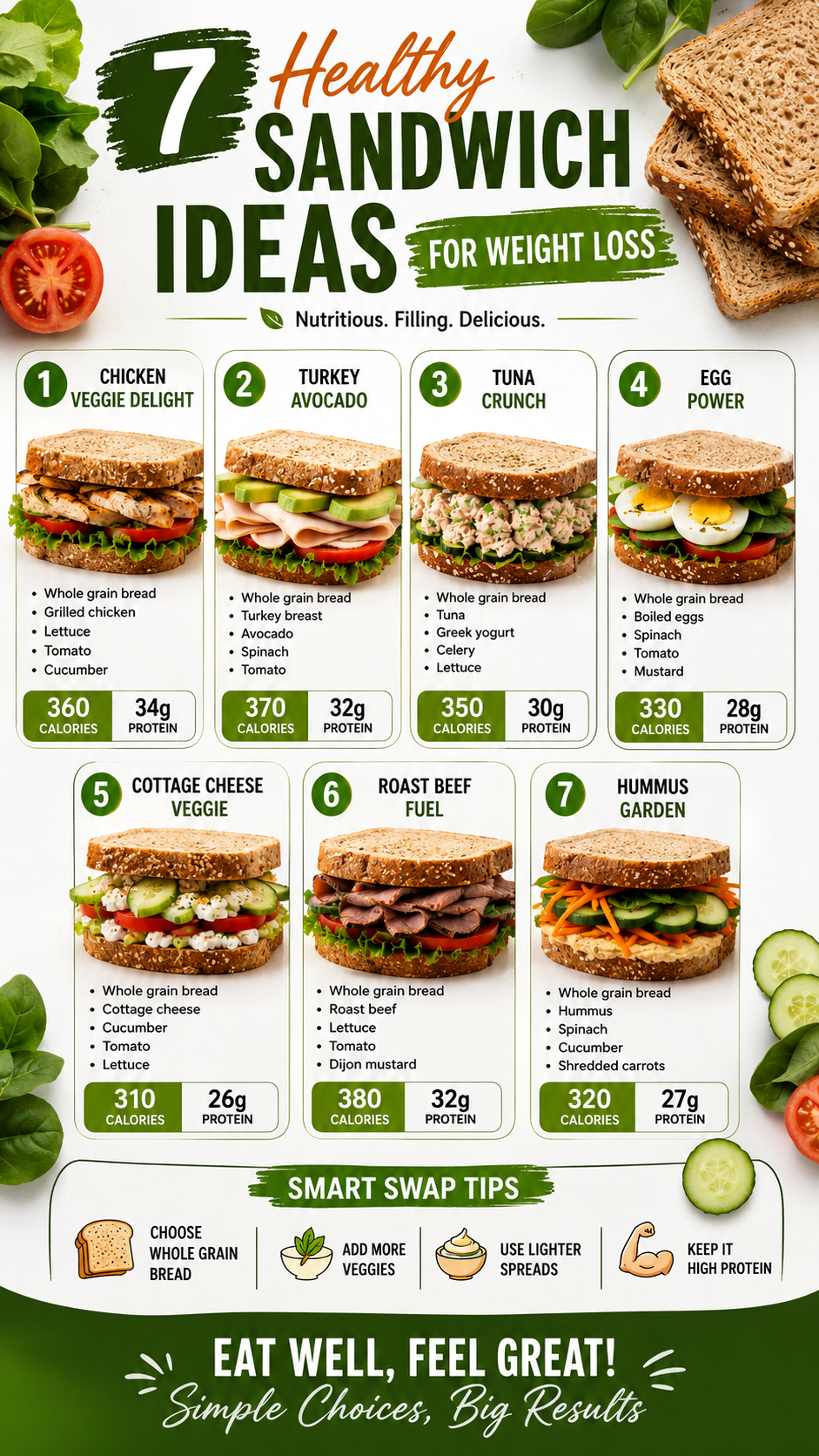
    Protein is the foundation of a filling sandwich. Popular options include grilled chicken, sliced turkey breast, tuna mixed with Greek yogurt, lean roast beef, eggs, cottage cheese, and hummus for plant based meals.

    • Grilled chicken breast
    • Turkey breast
    • Tuna
    • Eggs
    • Lean roast beef
    • Cottage cheese
    • Hummus

    Load Up on Vegetables

    Fresh vegetables increase volume without adding many calories. They also contribute vitamins, minerals, antioxidants, and texture.

    1. Lettuce
    2. Spinach
    3. Tomatoes
    4. Cucumbers
    5. Bell peppers
    6. Shredded carrots
    7. Celery
    8. Avocado for healthy fats

    Expert Insight

    Combining lean protein with vegetables and whole grain bread creates a balanced lunch that supports steady energy, better satiety, and more consistent nutrition throughout the day.

    Seven Healthy Lunch Sandwich Ideas

    1. Grilled Chicken Sandwich

    Grilled chicken paired with lettuce, tomato, mustard, and whole grain bread creates a classic lunch that is high in protein and naturally satisfying. It is easy to prepare in advance using leftover grilled chicken.

    2. Turkey Avocado Sandwich

    Turkey breast offers lean protein while avocado contributes creamy texture and heart healthy fats. Add spinach and tomatoes for extra freshness.

    3. Tuna Salad Sandwich

    Swap traditional mayonnaise for plain Greek yogurt to create a lighter tuna salad. Celery adds crunch while lettuce brings freshness and additional fiber.

    4. Egg and Spinach Sandwich

    Eggs are a versatile source of complete protein. Pair them with spinach and tomatoes on whole grain bread or an English muffin for a quick breakfast or lunch option.

    5. Cottage Cheese Veggie Sandwich

    Cottage cheese provides impressive protein while cucumbers, tomatoes, and seasoning deliver fresh flavor without much preparation.

    6. Lean Roast Beef Sandwich

    Lean roast beef combines beautifully with lettuce, tomatoes, and Dijon mustard. This option delivers rich flavor while keeping the ingredient list simple.

    7. Hummus and Veggie Sandwich

    For a delicious meat free lunch, spread hummus on whole grain bread and pile on spinach, cucumbers, carrots, and colorful bell peppers.

    Pro Tip: Prepare proteins and sliced vegetables at the beginning of the week. This makes assembling fresh lunches take only a few minutes each day.

    Simple Ways to Keep Sandwiches Healthy

    • Choose breads with higher fiber content.
    • Limit processed sauces and heavy dressings.
    • Use mustard or Greek yogurt based spreads.
    • Add vegetables generously.
    • Watch portion sizes without eliminating nutritious ingredients.
    • Pair your sandwich with fresh fruit or a simple salad.

    Meal Prep Tips for Busy Weeks

    Meal preparation can make healthy eating much easier. Cook chicken, boil eggs, slice vegetables, and portion sandwich ingredients ahead of time. Store wet ingredients separately until serving to maintain freshness.

    Having ready to assemble ingredients encourages healthier choices during busy workdays when grabbing fast food might otherwise seem more convenient.

    Important: Keeping healthy lunch ingredients visible and prepared in your refrigerator makes nutritious choices easier and helps build long term healthy eating habits.

    Creating Balanced Lunches Beyond the Sandwich

    A sandwich can easily become part of a complete meal. Pair it with fresh fruit, vegetable sticks, a light soup, or a side salad for additional nutrients. Staying hydrated throughout the day also supports overall wellness and helps maintain energy.

    Quick Points

    • Focus on lean protein and whole grain bread.
    • Add plenty of fresh vegetables for color and nutrition.
    • Choose lighter spreads whenever possible.
    • Prepare ingredients ahead to simplify weekday lunches.

    Conclusion

    Healthy lunch ideas do not need to be complicated to be delicious. By combining whole grain bread, quality protein, fresh vegetables, and lighter spreads, you can create sandwiches that are flavorful, filling, and easy to prepare. Small ingredient choices add up over time, making everyday lunches both nutritious and enjoyable.

    Whether you prefer grilled chicken, turkey, tuna, eggs, roast beef, cottage cheese, or a colorful veggie combination with hummus, there are countless ways to enjoy satisfying sandwiches that fit a balanced lifestyle. Experiment with different ingredients, prepare meals in advance, and build lunches that keep you feeling energized every day.

    Tags

    Healthy Lunch Ideas High Protein Sandwiches Meal Prep Healthy Eating Whole Grain Bread Easy Lunch Recipes Weight Loss Meals Healthy Sandwich Recipes

  • 7 Easy Healthy Lunch Bowl Ideas for Weight Loss  High Protein Meal Prep Recipes

    7 Easy Healthy Lunch Bowl Ideas for Weight Loss High Protein Meal Prep Recipes

    Healthy lunch ideas are more than just a way to satisfy midday hunger. They provide steady energy, support balanced nutrition, and make it easier to stay on track with wellness goals. One of the simplest and most effective approaches is building a nutritious lunch bowl packed with lean protein, colorful vegetables, wholesome grains, and healthy fats. These balanced meals are easy to customize, ideal for meal prep, and full of fresh flavors that make healthy eating enjoyable every day.

    Key Takeaways

    • Build balanced lunch bowls with protein, vegetables, whole grains, and healthy fats.
    • Meal prepping saves time while encouraging healthier eating habits.
    • High-protein lunches help promote fullness throughout the afternoon.
    • Fresh ingredients create satisfying meals without unnecessary complexity.
    • Simple ingredient swaps make lunch bowls suitable for many dietary preferences.

    Why Lunch Bowls Are a Smart Healthy Choice

    Lunch bowls have become one of the most popular healthy meal ideas because they combine nutrition, convenience, and flexibility in one dish. Instead of relying on processed convenience foods, a well-balanced bowl offers a complete meal that includes everything your body needs to stay energized.

    Each ingredient contributes something valuable. Lean proteins help support muscle maintenance, vegetables provide vitamins and minerals, grains supply lasting energy, and healthy fats improve flavor while increasing satisfaction.

    Important: A balanced lunch can make a significant difference in afternoon energy levels. Combining protein with fiber-rich vegetables and whole grains often helps you stay fuller for longer while reducing the temptation to snack on less nutritious foods.

    The Essential Parts of a Balanced Lunch Bowl

    1. Lean Protein

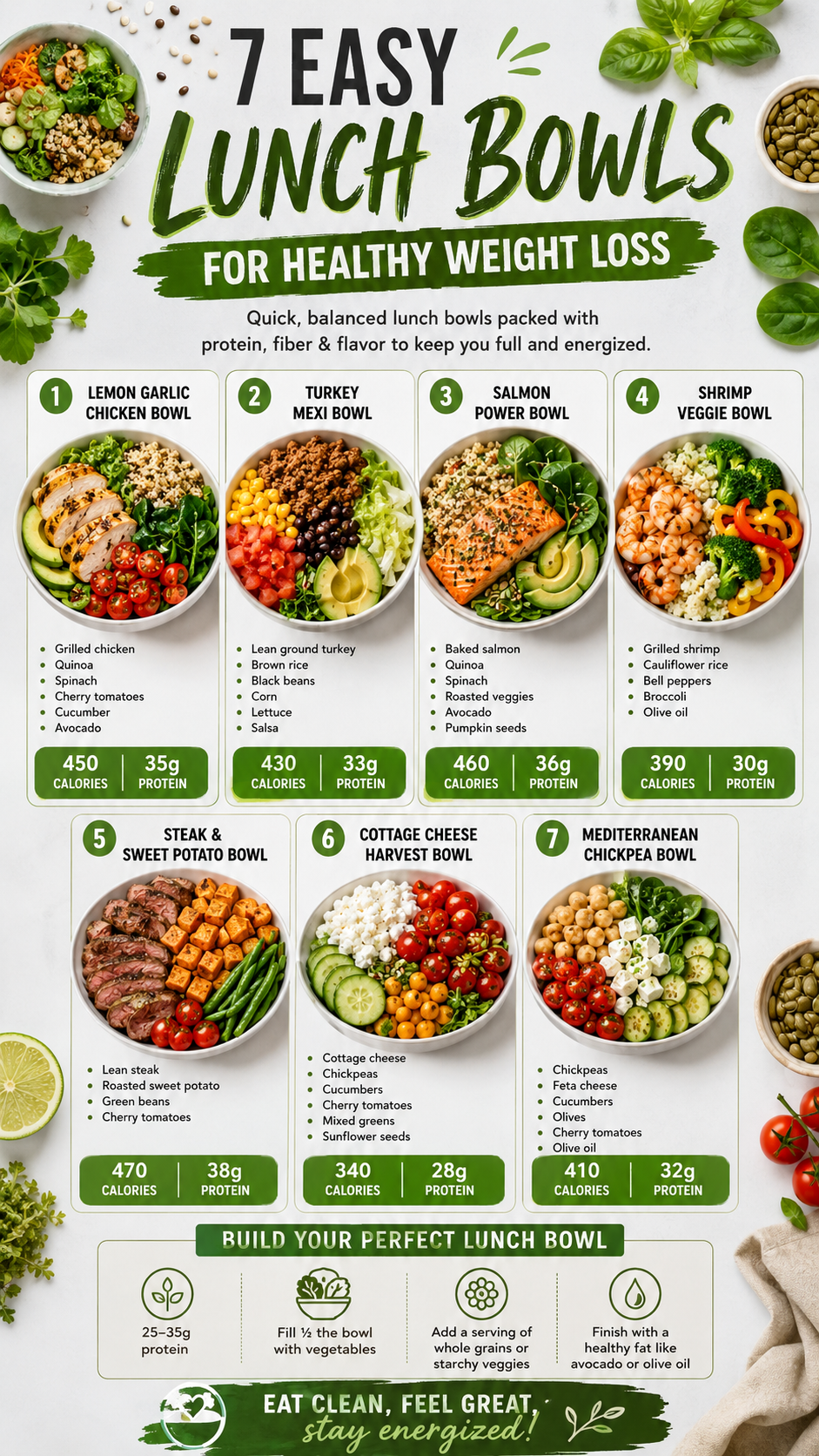
    Protein is often the foundation of a satisfying lunch bowl. Popular options include grilled chicken, turkey, salmon, shrimp, cottage cheese, beans, chickpeas, and lean steak. Each provides important nutrients while helping create a filling meal.

    • Chicken offers versatility and lean nutrition.
    • Turkey is flavorful and works well with rice or vegetables.
    • Salmon provides protein along with heart-friendly fats.
    • Shrimp cooks quickly and pairs with many vegetables.
    • Beans and chickpeas offer excellent plant-based protein.
    • Cottage cheese delivers protein with a creamy texture.

    2. Colorful Vegetables

    Adding a variety of vegetables improves both nutrition and visual appeal. Broccoli, cucumbers, spinach, carrots, tomatoes, peppers, green beans, and leafy greens contribute vitamins, minerals, antioxidants, and fiber.

    Choosing multiple colors naturally increases the diversity of nutrients while making meals more enjoyable.

    3. Healthy Carbohydrates

    Whole grains and starchy vegetables provide steady energy that lasts throughout the afternoon. Great choices include:

    • Brown rice
    • Quinoa
    • Roasted sweet potatoes
    • Cauliflower rice for a lighter option
    • Whole grain blends

    Expert Insight

    Creating variety does not require completely different recipes every day. Preparing several proteins, vegetables, and grains in advance allows you to mix and match ingredients into unique lunch bowls all week long.

    4. Healthy Fats

    Healthy fats complete the meal by improving flavor and supporting balanced nutrition. Avocados, seeds, nuts, and olive oil based dressings are excellent additions that provide richness without overwhelming the bowl.

    Popular Healthy Lunch Bowl Combinations

    Garlic Chicken Bowl

    Grilled chicken served alongside brown rice, broccoli, and carrots creates a dependable lunch that is rich in protein and easy to prepare ahead of time.

    Turkey Taco Bowl

    Lean ground turkey combined with rice, black beans, lettuce, tomatoes, and fresh salsa delivers bold flavors while remaining balanced and satisfying.

    Salmon Power Bowl

    Salmon paired with quinoa, spinach, cucumber, and avocado creates a nutrient-rich lunch featuring high-quality protein and healthy fats.

    Shrimp Vegetable Bowl

    Grilled shrimp served with broccoli, peppers, and cauliflower rice offers a light yet filling meal that’s perfect for busy weekdays.

    Steak and Sweet Potato Bowl

    Lean steak with roasted sweet potatoes and green beans provides hearty flavor while maintaining a nutritious balance.

    Cottage Cheese Harvest Bowl

    Cottage cheese mixed with tomatoes, cucumbers, peppers, seeds, and fresh vegetables creates a refreshing, protein-packed lunch that requires minimal preparation.

    Mediterranean Chickpea Bowl

    Chickpeas, quinoa, spinach, cucumber, tomatoes, and feta create a colorful Mediterranean-inspired meal full of flavor and texture.

    Pro Tip: Preparing several proteins, grains, and vegetables over the weekend makes healthy lunches almost effortless. Simply combine different ingredients each day to enjoy fresh flavors without spending extra time cooking.

    Simple Meal Prep Strategies

    Meal preparation does not need to be complicated. Cooking ingredients in batches allows you to assemble lunches in just a few minutes throughout the week.

    1. Cook proteins in larger portions.
    2. Prepare grains ahead of time.
    3. Wash and chop fresh vegetables.
    4. Store healthy toppings separately.
    5. Assemble bowls the night before or in the morning.

    Using airtight containers helps ingredients stay fresh while making lunch easy to grab before leaving home.

    Easy Ways to Customize Every Bowl

    One of the greatest advantages of lunch bowls is flexibility. You can adjust ingredients based on taste preferences, seasonal produce, or dietary needs.

    • Replace chicken with shrimp or salmon.
    • Swap rice for quinoa.
    • Use spinach instead of lettuce.
    • Add roasted vegetables for extra flavor.
    • Include avocado for creaminess.
    • Mix herbs and spices to create new flavor profiles.

    Important: Healthy eating becomes much easier when meals are enjoyable. Combining colorful ingredients, varied textures, and fresh flavors helps transform nutritious lunches into meals you’ll genuinely look forward to eating.

    Tips for Building the Perfect Lunch Bowl

    • Choose one quality protein source.
    • Fill at least half the bowl with vegetables.
    • Add a serving of whole grains or starchy vegetables.
    • Finish with healthy fats like avocado or seeds.
    • Season with herbs, spices, citrus, or light dressings.
    • Prepare multiple combinations to prevent meal fatigue.

    At a Glance

    • Prioritize lean protein for lasting fullness.
    • Add colorful vegetables for nutrition and freshness.
    • Include whole grains or healthy carbohydrates.
    • Finish with healthy fats for balanced flavor.

    Conclusion

    Healthy lunch bowls offer an easy and delicious solution for anyone looking to simplify meal planning while enjoying balanced nutrition. By combining lean proteins, fresh vegetables, wholesome grains, and healthy fats, you can create meals that are satisfying, colorful, and full of variety. Whether you are preparing lunches for work, school, or home, these versatile bowls make healthy eating practical without sacrificing flavor. Small changes in your lunch routine can lead to better consistency, greater convenience, and enjoyable meals every day.

    Tags

    Lunch Ideas Healthy Lunch Lunch Bowls Meal Prep High Protein Meals Healthy Recipes Weight Loss Meals Easy Meal Prep