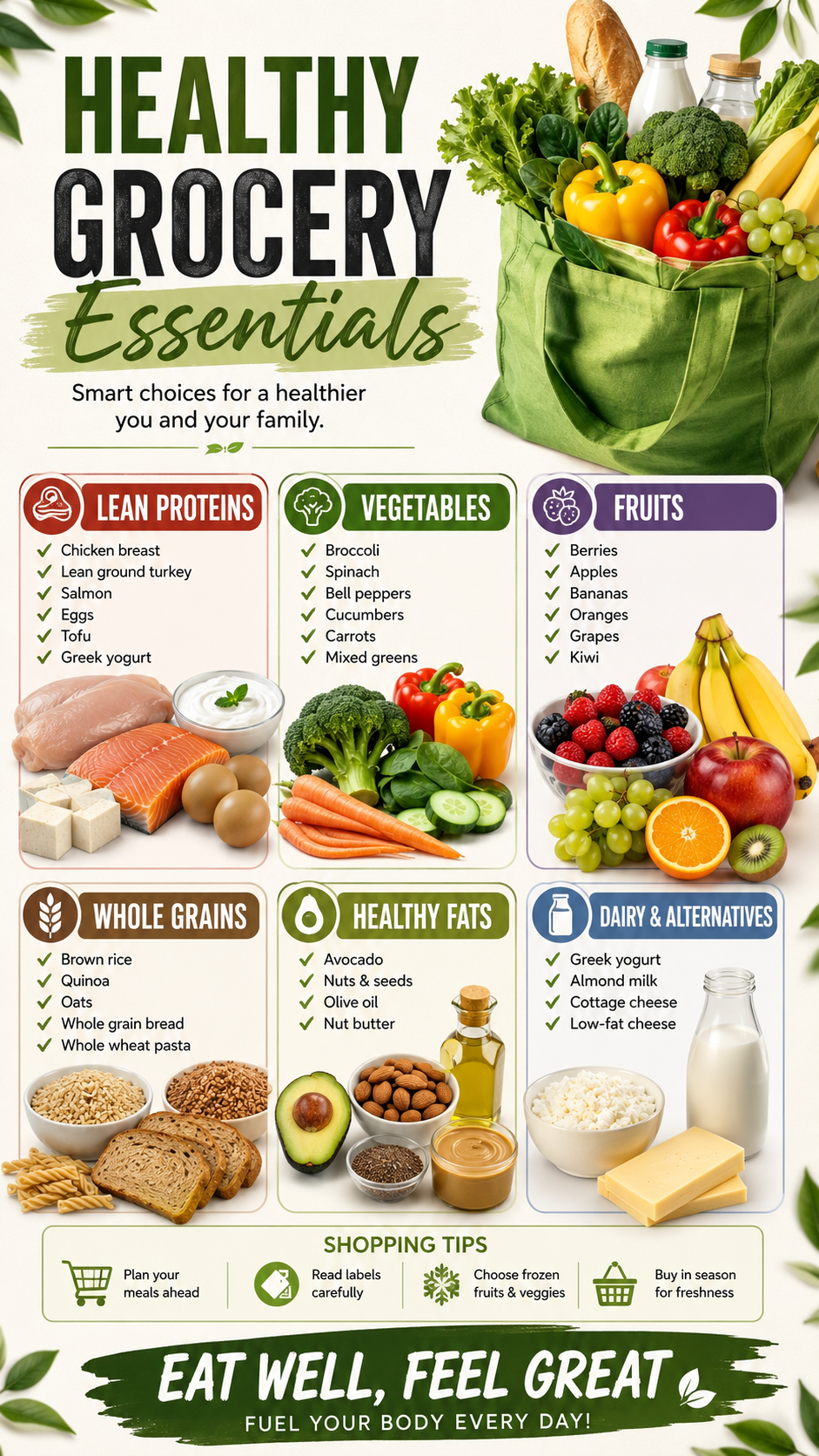
Eating healthy does not have to feel complicated or overwhelming. With the right grocery list and a little planning, you can transform your everyday meals into balanced, nourishing dishes that support your lifestyle. A well-stocked kitchen filled with wholesome ingredients makes it easier to prepare delicious meals at home, save time during busy weeks, and stay consistent with your health goals.
From lean proteins and vibrant vegetables to whole grains and healthy fats, building a smart grocery cart is the foundation of successful healthy recipes. When you focus on quality ingredients, you naturally create meals that are flavorful, satisfying, and packed with nutrients.
Key Takeaways
- Focus on whole, minimally processed foods for better nutrition
- Balance meals with protein, fiber, and healthy fats
- Plan your grocery list to simplify weekly meal prep
- Keep versatile ingredients on hand for quick recipes
- Choose fresh or frozen produce to reduce waste
Building the Foundation of Healthy Recipes
Healthy cooking starts at the grocery store. The ingredients you choose determine the quality of every meal you prepare. By organizing your shopping around nutrient-dense food groups, you set yourself up for success before you even step into the kitchen.
Important: A balanced grocery cart is not about restriction. It is about including a variety of foods that provide essential nutrients while still allowing flexibility and enjoyment in your meals.
Lean Proteins for Strength and Satiety
Protein is a key component of healthy recipes because it helps build muscle, supports metabolism, and keeps you feeling full longer. Lean protein options are especially valuable for creating lighter, nutrient-rich meals.
- Chicken breast and lean turkey for versatile meal prep
- Salmon for heart-healthy omega-3 fats
- Eggs for quick, protein-packed dishes
- Greek yogurt and cottage cheese for snacks or breakfast
Incorporating these proteins into your weekly plan ensures that every meal has a satisfying and nourishing base.
Colorful Vegetables for Nutrient Density
Vegetables are the backbone of healthy eating. They are rich in vitamins, minerals, and antioxidants while being naturally low in calories. Including a variety of colors not only enhances visual appeal but also ensures a wide range of nutrients.
- Leafy greens like spinach and mixed salad greens
- Cruciferous vegetables such as broccoli and cauliflower
- Crunchy additions like cucumbers and bell peppers
Pro Tip: Pre-wash and chop vegetables after grocery shopping to make healthy cooking faster and more convenient throughout the week.
Fruits for Natural Sweetness
Fruits bring natural sweetness and freshness to your meals. They are perfect for snacks, smoothies, desserts, or even savory dishes. Keeping a mix of fruits on hand helps satisfy cravings in a healthy way.
- Berries for antioxidants and fiber
- Apples and bananas for easy, portable snacks
- Citrus fruits for refreshing flavors and vitamin C
Whole Grains for Lasting Energy
Whole grains provide complex carbohydrates that fuel your body and keep your energy levels steady. Unlike refined grains, they retain fiber and essential nutrients.
- Brown rice and quinoa for hearty meals
- Oats for breakfast or baking
- Whole grain bread for balanced sandwiches
Including whole grains in your healthy recipes helps create meals that are both satisfying and energizing.
Healthy Fats for Flavor and Balance
Healthy fats are essential for overall wellness and add richness to your dishes. They also help your body absorb fat-soluble vitamins.
- Avocados for creamy texture and nutrients
- Nuts and seeds for crunch and healthy oils
- Olive oil for cooking and dressings
- Natural nut butters for snacks and spreads
Why This Matters
Combining healthy fats with proteins and vegetables enhances both taste and nutrition. This balance helps you feel satisfied longer and reduces the urge to snack on less nutritious options.
Smart Grocery Shopping Tips for Healthy Recipes
Shopping strategically can make a significant difference in how easy it is to stick to healthy eating habits. A few simple habits can transform your grocery routine.
- Shop the perimeter of the store where fresh foods are located
- Read nutrition labels to compare products
- Choose frozen fruits and vegetables for convenience and less waste
- Plan meals ahead to avoid impulse purchases
Important: Consistency is key. Building a routine around grocery shopping and meal prep helps you stay committed to healthy recipes without feeling overwhelmed.
Easy Healthy Meal Ideas from Your Grocery List
Once your cart is filled with nutritious staples, creating meals becomes much simpler. Here are a few ideas to inspire your weekly menu:
Balanced Bowls
Combine brown rice or quinoa with grilled chicken, roasted vegetables, and a drizzle of olive oil for a complete meal.
Fresh Salads
Mix leafy greens with colorful vegetables, add a protein like salmon or eggs, and top with a light dressing.
Quick Breakfast Options
Prepare overnight oats with fruit or enjoy Greek yogurt topped with berries and nuts.
Simple Snacks
Keep it easy with sliced fruit, a handful of almonds, or cottage cheese paired with fresh vegetables.
Making Healthy Eating a Lifestyle
Healthy recipes are not about perfection. They are about building habits that support your well-being over time. By focusing on whole foods and balanced meals, you create a sustainable approach to eating that fits your life.
The more you practice planning and preparing meals, the more natural it becomes. Over time, you will discover your favorite combinations and develop a routine that works for you.
At a Glance
- Stock up on lean proteins, vegetables, fruits, and whole grains
- Prep ingredients ahead for faster cooking
- Balance every meal with protein, fiber, and healthy fats
- Keep meals simple and consistent
Conclusion
Creating healthy recipes starts with a thoughtful grocery list. When your kitchen is filled with wholesome ingredients, preparing balanced meals becomes easier and more enjoyable. From vibrant vegetables to nourishing proteins and energizing grains, every item in your cart plays a role in your overall well-being.
By adopting smart shopping habits and focusing on simple, nutritious combinations, you can build a sustainable routine that supports your health goals. Start with your next grocery trip and take one step closer to a healthier, more balanced lifestyle.
Tags
Healthy Recipes Meal Prep Clean Eating Grocery List Healthy Lifestyle Balanced Diet