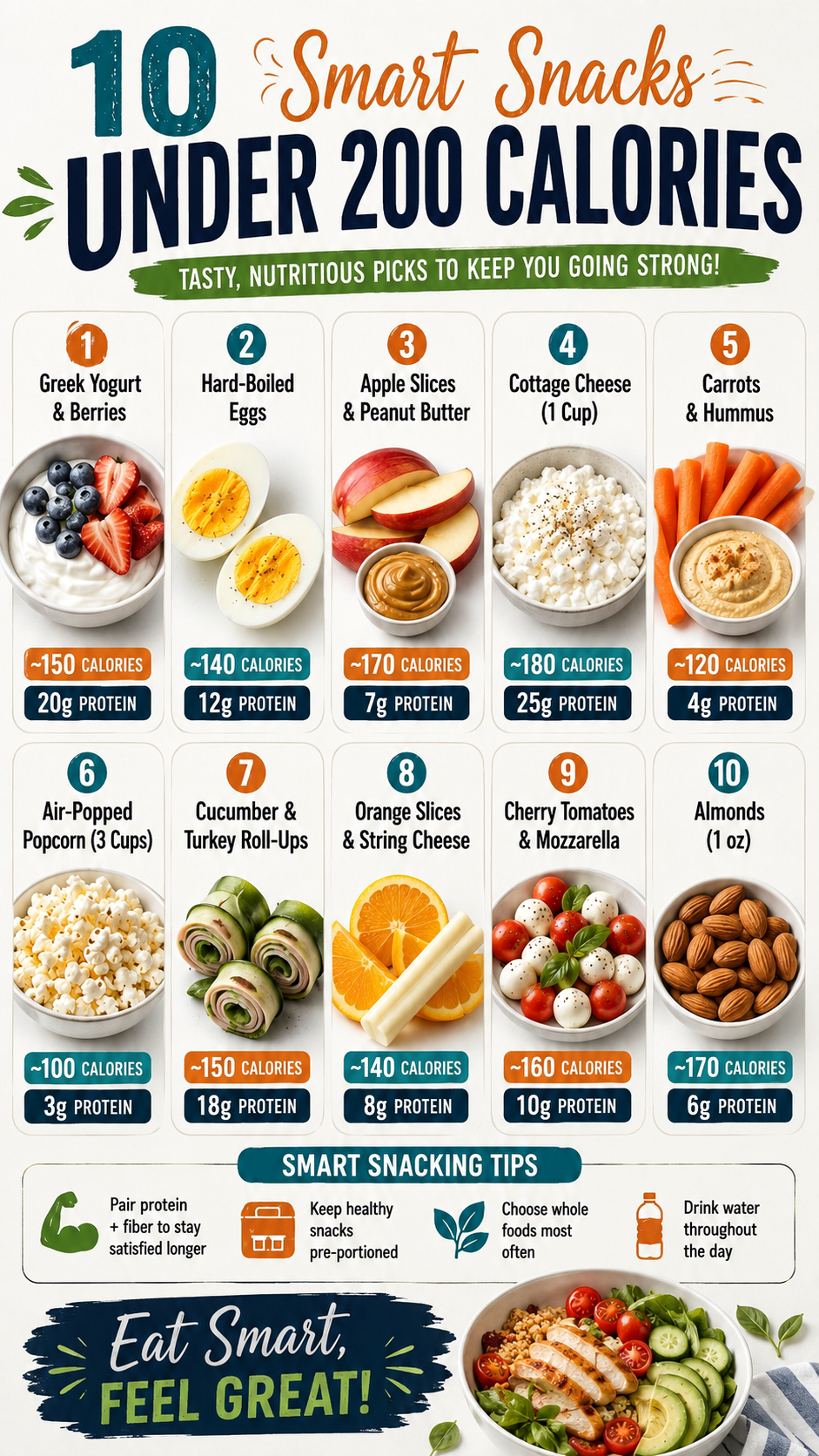
Finding healthy snacks that are both satisfying and lower in calories can make a big difference in maintaining energy levels and supporting long term wellness. Instead of reaching for highly processed options, choosing nutrient-dense foods rich in protein, fiber, and healthy fats can help curb hunger and reduce unnecessary overeating. Whether you are planning snacks for work, school, or busy afternoons at home, having simple, wholesome choices available makes healthy eating feel effortless.
Key Takeaways
- Choose snacks that combine protein and fiber for longer-lasting fullness.
- Keep portions moderate to stay within your calorie goals.
- Whole foods often provide better nutrition than heavily processed snacks.
- Preparing snacks ahead of time makes healthy choices easier.
- Hydration plays an important role in managing hunger.
Why Healthy Snacks Matter
Snacking has earned a mixed reputation, but the right snacks can become an important part of a balanced eating plan. Healthy snacks help bridge the gap between meals, prevent excessive hunger, and provide steady energy throughout the day. Instead of causing unwanted weight gain, smart snacking can actually support better portion control during main meals.
Important: The quality of your snack matters just as much as the calorie count. Foods that contain protein, fiber, vitamins, and minerals tend to keep you fuller and more satisfied than snacks made mostly from refined sugar or processed carbohydrates.
Characteristics of a Filling Low Calorie Snack
Not every low calorie food is satisfying. Some options may leave you hungry shortly after eating, while others provide lasting fullness because they contain nutrients that digest more slowly.
Protein Supports Fullness
Protein is one of the most filling nutrients. It helps slow digestion and contributes to muscle maintenance while keeping hunger under control.
- Greek yogurt
- Hard-boiled eggs
- Cottage cheese
- Turkey slices
- String cheese
Fiber Adds Staying Power
Fiber helps increase fullness while supporting digestive health. Fruits and vegetables are excellent sources that pair well with protein-rich foods.
- Apples
- Carrots
- Cucumbers
- Oranges
- Cherry tomatoes
- Air-popped popcorn
Healthy Snack Ideas Under 200 Calories
Greek Yogurt with Fresh Berries
Plain Greek yogurt paired with berries creates a creamy, refreshing snack rich in protein and antioxidants. Fresh berries also add natural sweetness without excessive added sugar.
Two Hard-Boiled Eggs
Eggs are portable, convenient, and naturally rich in protein. They require very little preparation and make an excellent snack when you need lasting energy.
Apple with Peanut Butter
Fresh apple slices combined with a moderate amount of peanut butter offer a satisfying balance of fiber, healthy fats, and natural sweetness.
Cottage Cheese
Cottage cheese provides plenty of protein in a relatively small serving. Enjoy it plain or pair it with fresh fruit or vegetables for extra flavor and texture.
Baby Carrots with Hummus
This colorful combination offers fiber from vegetables and plant-based protein from hummus, making it a nutritious afternoon snack.
Air-Popped Popcorn
Popcorn is a whole grain that provides satisfying volume without excessive calories when prepared without large amounts of butter or oil.
Turkey and Cucumber Roll-Ups
Lean turkey wrapped with crisp cucumber creates a refreshing snack packed with protein while remaining light and easy to prepare.
Expert Insight
Combining lean protein with fresh produce is one of the simplest ways to create satisfying snacks that help maintain energy while naturally supporting portion control throughout the day.
Orange with String Cheese
The sweetness of fresh citrus pairs beautifully with creamy cheese. Together they provide protein, calcium, vitamin C, and satisfying flavor.
Cherry Tomatoes with Mozzarella
This fresh combination delivers protein along with juicy tomatoes that are naturally rich in vitamins and antioxidants.
Almonds
A small portion of almonds offers healthy fats, protein, and crunch. Portion control is important because nuts are nutrient dense.
Pro Tip: Preparing several healthy snack portions at the beginning of the week can reduce impulse eating and make nutritious choices the easiest option during busy days.
Simple Tips for Smarter Snacking
- Keep washed fruits and vegetables ready to eat.
- Pair protein with fiber whenever possible.
- Choose minimally processed foods most of the time.
- Drink water regularly throughout the day.
- Pay attention to serving sizes.
- Listen to your body’s hunger and fullness signals.
Meal Prep Makes Healthy Eating Easier
Planning snacks in advance eliminates much of the guesswork during busy days. Portion ingredients into reusable containers, prepare hard-boiled eggs ahead of time, slice vegetables in advance, and keep fruit visible in your refrigerator. Small habits like these make nutritious eating far more convenient.
Creating a dedicated snack shelf can also encourage healthier decisions. Stock it with yogurt, cottage cheese, hummus, fresh vegetables, fruit, nuts, and other wholesome options that are ready to enjoy.
Balancing Nutrition Without Feeling Restricted
Healthy eating is about consistency rather than perfection. Enjoying nutritious snacks throughout the day does not mean eliminating every favorite treat. Instead, focus on building habits around foods that nourish your body while leaving room for flexibility.
Important: Consistently choosing balanced snacks rich in protein, fiber, and whole food ingredients can help support better energy, improved satisfaction between meals, and healthier eating habits over time.
Choosing Snacks for Different Lifestyles
For Busy Professionals
Portable snacks like almonds, hard-boiled eggs, yogurt cups, and fruit travel well and fit easily into a work routine.
For Students
Quick combinations such as apple slices with peanut butter or carrots with hummus provide steady energy for studying without requiring much preparation.
For Families
Preparing snack trays filled with colorful vegetables, fruit, cheese, and protein-rich options encourages healthier choices for both children and adults.
At a Glance
- Prioritize protein and fiber.
- Choose whole foods whenever possible.
- Prepare snacks ahead of time.
- Practice mindful portion control.
- Stay hydrated throughout the day.
Conclusion
Healthy snacks do more than simply satisfy hunger. They provide an opportunity to fuel your body with nutrient-rich foods that support energy, fullness, and overall wellness. By choosing balanced combinations like Greek yogurt with berries, eggs, fresh fruit, vegetables with hummus, cottage cheese, popcorn, lean turkey, mozzarella, and almonds, you can enjoy delicious snacks that fit comfortably into a healthy lifestyle. With a little planning and smart preparation, nutritious snacking becomes a sustainable habit that supports your goals every day.
Tags
Healthy Snacks Low Calorie Snacks High Protein Snacks Healthy Eating Weight Management Meal Prep Clean Eating Nutrition Tips