Healthy dinner recipes do not have to be complicated to be effective. One of the easiest ways to create satisfying, nutrient-rich meals is by following a balanced plate approach. Instead of focusing on restrictive diets or counting every calorie, this simple meal-building method encourages variety, portion awareness, and wholesome ingredients that naturally support a healthy lifestyle.
Whether your goal is weight management, improved energy, better nutrition, or simply making dinner less stressful, building meals with vegetables, lean protein, smart carbohydrates, and healthy fats creates a practical foundation you can enjoy every day. Best of all, this flexible approach works with many different cuisines, cooking styles, and personal preferences.
Key Takeaways
- Fill half your plate with colorful, non-starchy vegetables.
- Choose lean protein to help support fullness and muscle health.
- Include smart carbohydrates for lasting energy.
- Add healthy fats in moderation for flavor and satisfaction.
- Practice balanced portions instead of strict food restrictions.
The Balanced Plate Formula
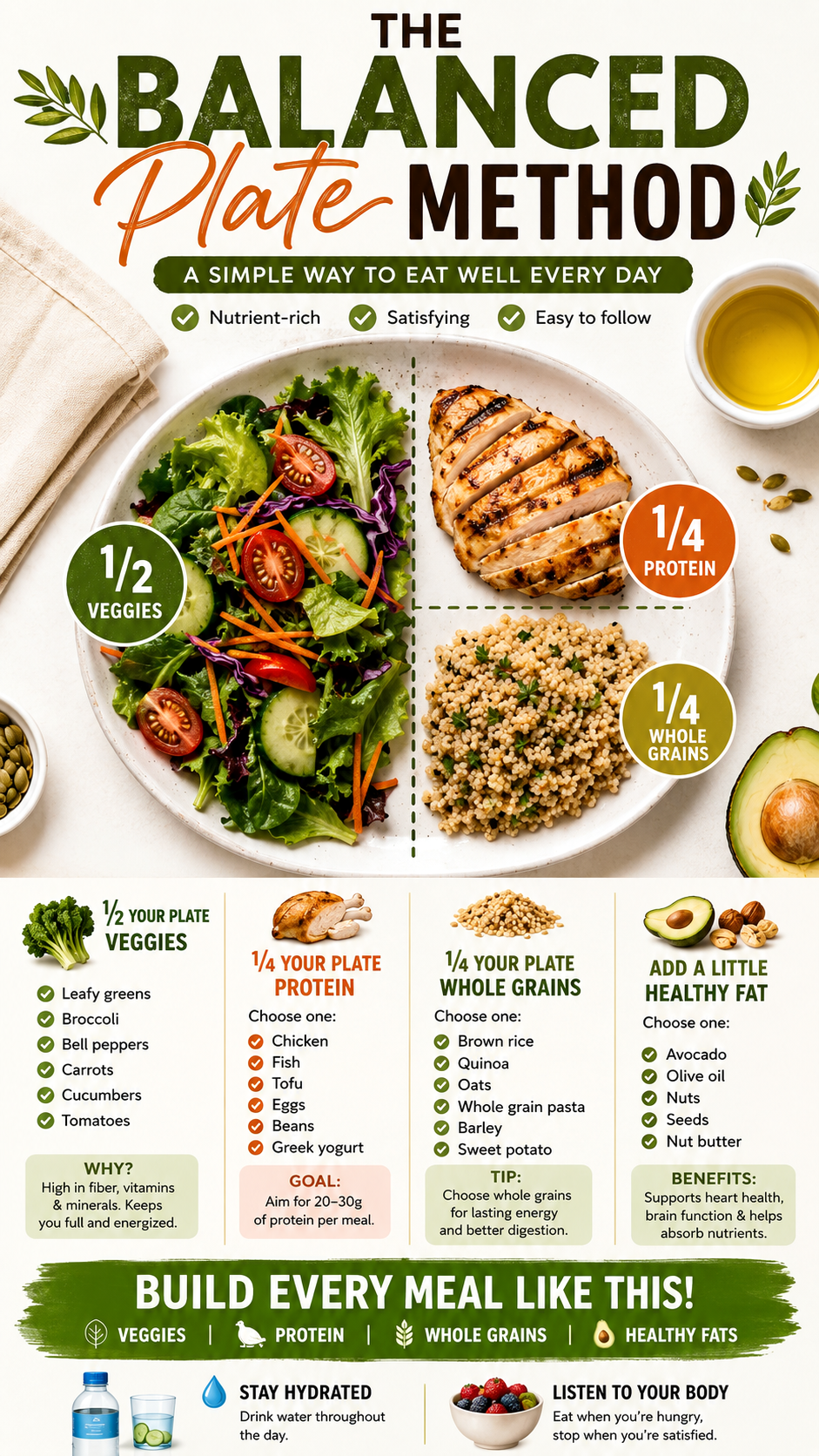
The balanced plate method offers a visual guide that makes healthy eating simple. Instead of memorizing complicated nutrition rules, you divide your dinner plate into practical sections that encourage variety while naturally supporting portion control.
The idea is straightforward. Half of your plate is filled with vegetables, one quarter contains lean protein, and the remaining quarter includes nutrient-rich carbohydrates. A small serving of healthy fats completes the meal and enhances both flavor and nutrition.
Important: Consistency usually delivers better long-term results than perfection. Building balanced meals most days of the week can have a greater impact than following an overly restrictive eating plan that is difficult to maintain.
Why Vegetables Should Fill Half Your Plate
Vegetables provide volume, vitamins, minerals, antioxidants, and dietary fiber while remaining relatively low in calories. Filling half your plate with vegetables helps create satisfying meals without relying on oversized portions of higher calorie foods.
Excellent Vegetable Choices
- Broccoli
- Spinach
- Cauliflower
- Bell peppers
- Green beans
- Cucumber
- Zucchini
- Asparagus
- Mixed salad greens
- Brussels sprouts
Adding a variety of colorful vegetables throughout the week also increases the diversity of nutrients in your meals. Different colors often represent different beneficial plant compounds, making variety an easy nutrition strategy.
Choosing Lean Protein
Protein plays an important role in keeping you satisfied after meals while supporting muscle maintenance and recovery. Including a quality protein source at dinner may also help reduce unnecessary evening snacking.
Healthy Protein Options
- Chicken breast
- Turkey
- Salmon
- Tuna
- Eggs
- Tofu
- Greek yogurt in certain recipes
- Beans and lentils
Cooking methods matter just as much as ingredient selection. Baking, grilling, roasting, steaming, and air frying are excellent techniques that preserve flavor while limiting unnecessary added fats.
Expert Insight
Preparing several portions of lean protein at the beginning of the week makes healthy dinners much easier. Cook once, then combine your protein with different vegetables and whole grains for quick, balanced meals.
Smart Carbohydrates for Lasting Energy
Carbohydrates are often misunderstood. Rather than avoiding them entirely, focus on nutrient-dense options that contain fiber and digest more gradually.
Smart Carbohydrate Choices
- Brown rice
- Quinoa
- Sweet potatoes
- Whole grain pasta
- Oats
- Barley
- Farro
These foods provide energy while pairing well with vegetables and lean proteins. Portion awareness helps maintain balance without eliminating foods you enjoy.
Pro Tip: Adjust carbohydrate portions based on your activity level. More active individuals often benefit from slightly larger portions, while lighter activity may require less.
Don’t Forget Healthy Fats
Healthy fats improve flavor, increase meal satisfaction, and contribute important nutrients. Since fats are naturally calorie dense, moderate portions usually work best.
Healthy Fat Sources
- Avocado
- Olive oil
- Almonds
- Walnuts
- Chia seeds
- Pumpkin seeds
A drizzle of olive oil over roasted vegetables or a few slices of avocado can transform a simple dinner into a more satisfying meal.
Easy Healthy Dinner Ideas
Grilled Chicken Bowl
Pair grilled chicken breast with steamed broccoli, spinach, quinoa, and a drizzle of olive oil.
Salmon and Vegetables
Serve baked salmon alongside roasted broccoli, cauliflower, and sweet potato for a colorful dinner packed with nutrients.
Vegetarian Power Plate
Combine roasted vegetables with seasoned tofu, quinoa, sliced avocado, and fresh herbs for a satisfying plant-based option.
Turkey Stir Fry
Cook lean ground turkey with bell peppers, green beans, broccoli, and serve over brown rice for an easy weeknight dinner.
Simple Meal Prep Tips
- Wash and chop vegetables ahead of time.
- Cook grains in larger batches.
- Prepare multiple servings of protein.
- Store ingredients separately for maximum freshness.
- Mix and match ingredients throughout the week.
- Keep healthy fats available for quick finishing touches.
Important: Healthy eating should feel sustainable. Flexible meal planning allows you to enjoy your favorite foods while maintaining balanced nutrition over time.
Hydration Completes a Healthy Meal
Balanced nutrition extends beyond food. Drinking water throughout the day supports normal body functions and complements healthy eating habits. Keeping a glass of water with dinner is a simple habit that many people find helpful.
Quick Points
- Build every dinner around vegetables first.
- Include lean protein for balanced nutrition.
- Choose whole food carbohydrates whenever possible.
- Add healthy fats in moderate amounts.
- Focus on consistency instead of perfection.
Conclusion
Healthy dinner recipes become much easier when you follow a simple, balanced plate formula. By filling half your plate with vegetables, adding lean protein, choosing smart carbohydrates, and finishing with healthy fats, you can create meals that are nourishing, satisfying, and enjoyable. This flexible approach removes much of the guesswork from meal planning while encouraging lasting healthy habits that fit into everyday life. Start with small changes, experiment with different ingredients, and build meals that you genuinely look forward to eating.
Tags
Healthy Dinner Recipes Balanced Meals Meal Prep Healthy Eating Weight Loss Meals High Protein Meals Clean Eating Nutrition Tips