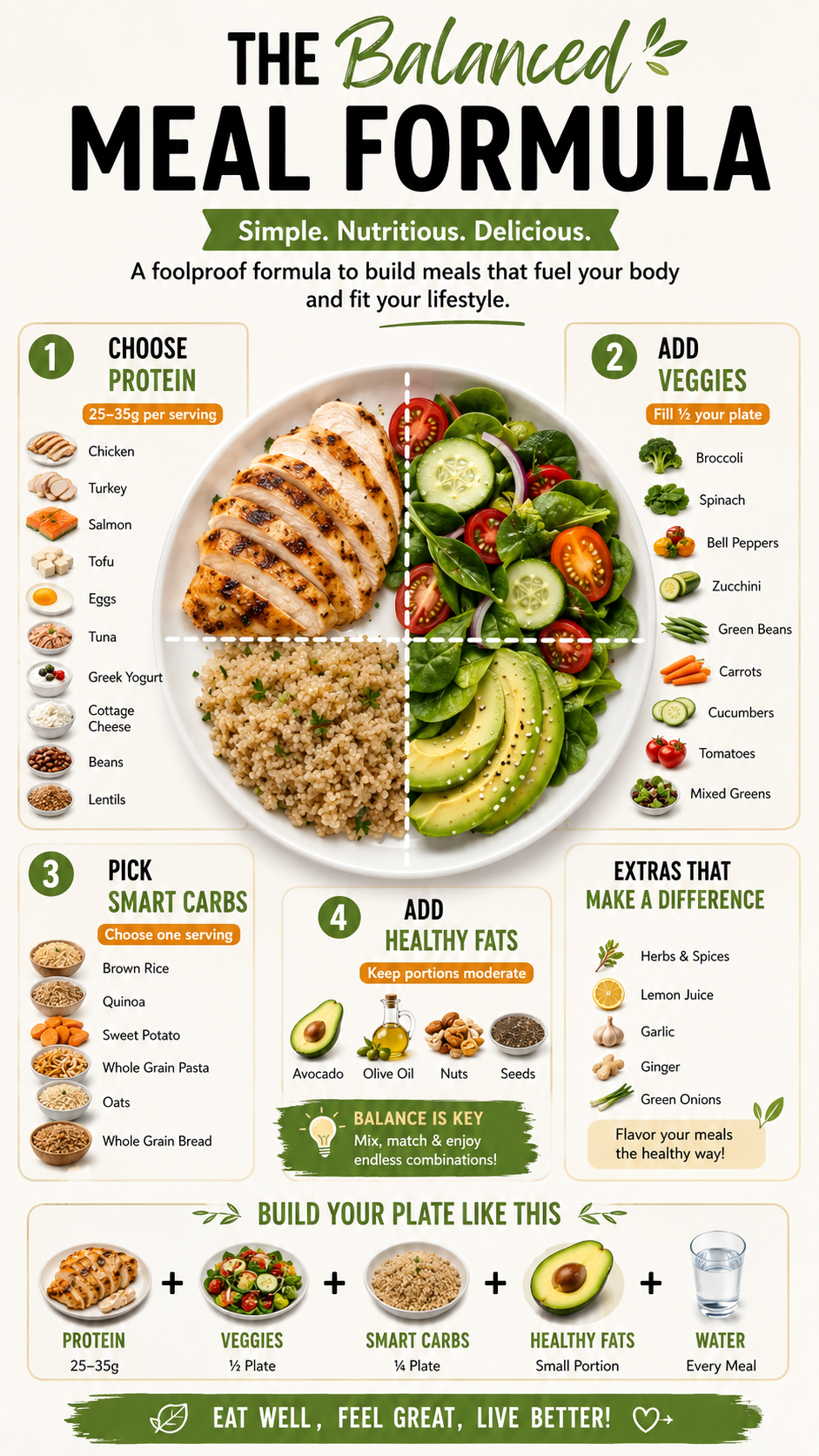
Healthy dinners do not have to be complicated. In fact, the easiest way to build satisfying, nutritious meals is by following a simple plate formula that balances protein, vegetables, smart carbohydrates, and healthy fats. Instead of counting every calorie or following restrictive meal plans, you can create delicious meals with everyday ingredients while supporting your energy levels, muscle health, and overall wellness.
This balanced approach makes meal planning less stressful and more sustainable. Whether you are preparing dinner for yourself, feeding a family, or organizing meals for the week ahead, a flexible formula helps you mix and match ingredients without getting bored. It also encourages variety, making it easier to enjoy different flavors, textures, and nutrients throughout the week.
Key Takeaways
- Build every dinner around a quality protein source.
- Fill half your plate with colorful vegetables.
- Add smart carbohydrates for lasting energy.
- Include healthy fats in moderate portions.
- Keep meals simple by mixing everyday ingredients.
Why a Balanced Dinner Matters
A balanced dinner provides your body with essential nutrients while helping you stay satisfied throughout the evening. Rather than focusing on a single food group, combining lean protein, vegetables, whole grains, and healthy fats creates meals that support a healthy lifestyle without feeling restrictive.
Important: Consistency often matters more than perfection. Building balanced dinners most days of the week can help establish healthy eating habits that are easier to maintain over the long term.
Using a simple formula also saves time during grocery shopping and meal preparation. Once you understand the basic proportions, you can create endless combinations using seasonal produce and your favorite ingredients.
Step 1: Choose a High Quality Protein
Protein forms the foundation of a satisfying dinner. It helps support muscle maintenance, keeps you feeling full, and pairs well with nearly every type of vegetable and grain.
Excellent Protein Choices
- Grilled chicken breast
- Turkey
- Salmon
- Tuna
- Eggs
- Greek yogurt
- Cottage cheese
- Tofu
Choosing different protein sources throughout the week keeps meals interesting while adding variety to your diet. Seafood, poultry, dairy, and plant based proteins each contribute unique nutritional benefits.
Step 2: Fill Half Your Plate with Vegetables
Vegetables bring color, texture, vitamins, minerals, and fiber to every meal. Filling half your plate with vegetables naturally creates a more balanced dinner while leaving plenty of room for other nutritious foods.
Vegetable Ideas
- Broccoli
- Spinach
- Bell peppers
- Cucumbers
- Green beans
- Mixed salad greens
Try roasting vegetables for deeper flavor, steaming them for a quick side dish, or enjoying fresh salads during warmer months. Rotating vegetables throughout the week also adds visual appeal and nutritional diversity.
Expert Insight
Using a variety of colorful vegetables increases the range of vitamins, minerals, and antioxidants in your meals. Aim to include several different colors across your weekly dinner menu for greater nutritional variety.
Step 3: Include Smart Carbohydrates
Carbohydrates provide fuel for daily activities and complement protein and vegetables perfectly. The key is choosing nutrient rich options that contain fiber and valuable nutrients.
Smart Carb Options
- Brown rice
- Quinoa
- Sweet potatoes
- Whole grain pasta
- Oats
Portion size matters. A moderate serving helps provide steady energy while maintaining balance across the plate. Preparing grains in larger batches can also simplify meal prep for busy weekdays.
Step 4: Add Healthy Fats
Healthy fats complete the meal by adding richness, flavor, and satisfying texture. They also pair beautifully with vegetables and lean proteins.
- Avocado
- Olive oil
- Almonds
- Walnuts
- Chia seeds
Pro Tip: Healthy fats are nutrient dense, so a small serving is usually enough to enhance both flavor and satisfaction without overpowering the rest of the meal.
Building the Perfect Plate
A practical dinner plate can be divided into simple portions.
- Half the plate filled with vegetables.
- One quarter dedicated to lean protein.
- One quarter reserved for smart carbohydrates.
- Add a moderate serving of healthy fats.
- Enjoy water alongside your meal.
This flexible structure works across countless cuisines and dietary preferences. Whether you enjoy Mediterranean flavors, classic comfort foods, or simple homemade dinners, the formula remains easy to adapt.
Easy Healthy Dinner Combinations
Chicken Bowl
Pair grilled chicken with roasted broccoli, brown rice, sliced avocado, and a drizzle of olive oil.
Salmon Plate
Serve baked salmon with green beans, quinoa, and fresh salad greens for a colorful dinner.
Vegetarian Option
Combine tofu, roasted bell peppers, spinach, sweet potato, and chia seeds for a satisfying plant based meal.
Quick Family Dinner
Cook turkey with whole grain pasta, steamed vegetables, and a sprinkle of chopped walnuts for extra texture.
Meal Prep Tips for Busy Weeks
- Cook proteins in batches.
- Prepare grains ahead of time.
- Wash and chop vegetables before storing them.
- Keep healthy fats available for quick meal assembly.
- Mix ingredients differently throughout the week to avoid repetition.
Important: Meal prep does not require cooking every dinner in advance. Preparing ingredients ahead of time often saves just as much effort while allowing meals to stay fresh and customizable.
Quick Points
- Start with lean protein.
- Fill half your plate with vegetables.
- Add whole grain or fiber rich carbohydrates.
- Include healthy fats in moderation.
- Drink water with every meal.
Conclusion
Creating healthy dinner recipes becomes much easier when you follow a balanced meal formula instead of relying on complicated plans. Combining lean protein, colorful vegetables, smart carbohydrates, and healthy fats allows you to prepare delicious meals that are both satisfying and nourishing.
With a little planning and a variety of wholesome ingredients, you can build dinners that fit your schedule, support your wellness goals, and keep every meal interesting. Small, consistent choices often lead to lasting healthy habits, making this simple approach one you can enjoy every day.
Tags
Healthy Dinner Recipes High Protein Meals Balanced Meals Meal Prep Healthy Eating Easy Weeknight Dinners Nutrition Tips Wholesome Recipes