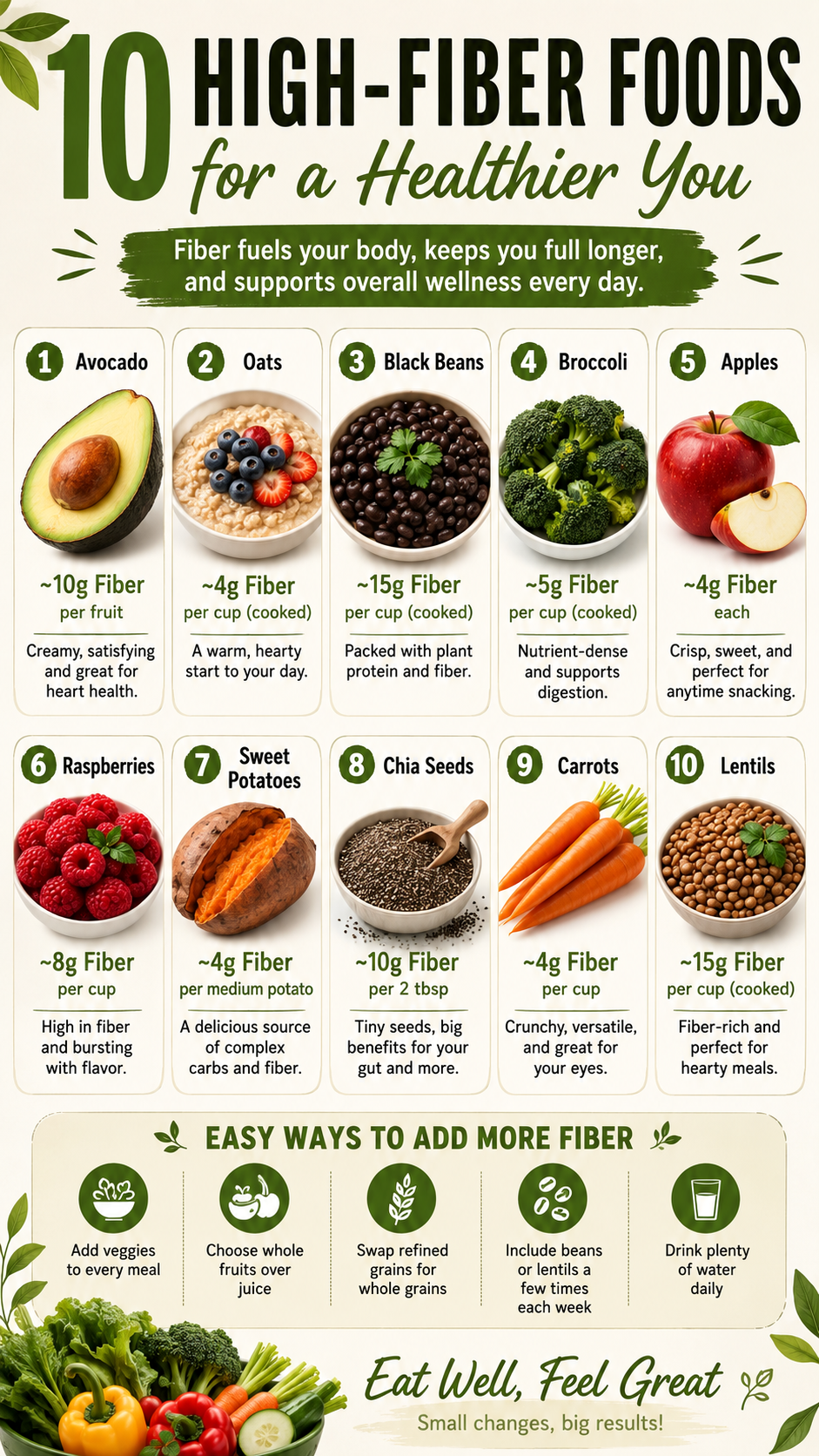
Healthy snacks can make a meaningful difference in the way you feel throughout the day. Instead of reaching for highly processed options that leave you hungry soon after, choosing fiber-rich foods helps keep you satisfied, supports digestive health, and provides steady energy between meals. Whether your goal is healthy weight management, better nutrition, or simply finding smarter snack ideas, adding more high fiber foods to your routine is one of the easiest lifestyle upgrades you can make. From creamy avocados to crunchy carrots and wholesome oats, there are countless delicious ways to snack well without feeling deprived.
Key Takeaways
- Fiber helps you stay full longer and reduces unnecessary snacking.
- Whole foods provide vitamins, minerals, and plant-based nutrients.
- Simple swaps can dramatically improve your daily nutrition.
- Balanced snacks support steady energy throughout the day.
- A variety of colorful fruits, vegetables, legumes, and whole grains offers the best nutritional value.
Why Fiber Is the Secret to Better Snacking
Fiber is a type of carbohydrate that the body cannot fully digest. Instead of being broken down quickly, it moves through the digestive system while supporting healthy digestion and helping you feel full for longer periods. This makes high fiber foods especially valuable for anyone trying to avoid constant hunger or frequent cravings.
Unlike sugary snacks that often cause rapid spikes and drops in energy, fiber-rich choices provide a slower release of energy. This helps you stay focused, productive, and satisfied between meals.
Important: Choosing snacks rich in fiber is one of the simplest ways to improve overall eating habits. Small daily changes often create bigger long-term health benefits than dramatic short-term diets.
Top High Fiber Foods That Make Excellent Healthy Snacks
Avocados
Avocados combine healthy fats with dietary fiber, creating a satisfying snack that keeps hunger away. Spread avocado on whole grain toast, add slices to salads, or enjoy it with vegetables for a simple snack packed with nutrition.
Oats
Oats are a versatile whole grain that works well beyond breakfast. Prepare overnight oats, make homemade oat energy bites, or mix oats into yogurt for a filling afternoon snack.
Black Beans
Beans are among the richest natural sources of fiber and plant protein. Bean salads, healthy dips, and grain bowls make satisfying snack options that keep you energized.
Broccoli
Fresh broccoli florets pair perfectly with hummus or Greek yogurt dip. They provide fiber, vitamins, and antioxidants while adding satisfying crunch.
Apples
Apples are portable, naturally sweet, and packed with fiber. Pair one with peanut butter or almond butter for a balanced snack that combines carbohydrates, fiber, and healthy fats.
Raspberries
Among berries, raspberries are especially rich in fiber. Add them to smoothies, yogurt bowls, or simply enjoy them fresh for a naturally sweet treat.
Expert Insight
Combining fiber with protein or healthy fats often creates longer-lasting satisfaction. Pair fruit with nuts, vegetables with hummus, or oats with Greek yogurt for snacks that keep you feeling full.
Sweet Potatoes
Roasted sweet potato slices or wedges make a naturally sweet and filling snack. Their fiber and complex carbohydrates provide lasting energy.
Chia Seeds
Small but incredibly nutritious, chia seeds absorb liquid and create a pudding-like texture. They can be added to smoothies, yogurt, oatmeal, or homemade puddings for an easy fiber boost.
Carrots
Crunchy carrots are convenient, affordable, and naturally satisfying. Pair them with hummus, cottage cheese, or bean dip for a nutrient-rich snack.
Lentils
Lentils deliver an impressive combination of fiber and plant protein. Cold lentil salads or roasted lentil snacks offer a delicious alternative to processed snack foods.
Easy Ways to Add More Fiber Every Day
- Include vegetables with lunch and dinner.
- Choose whole fruits instead of fruit juice.
- Replace refined grains with whole grain alternatives.
- Add beans or lentils to soups, salads, and wraps.
- Sprinkle chia seeds onto yogurt, oatmeal, or smoothies.
- Keep fresh fruits and vegetables visible for quick snacking.
These small habits require very little effort but can significantly increase your daily fiber intake over time.
Pro Tip: Increase fiber gradually while drinking plenty of water. This allows your digestive system to adjust comfortably while maximizing the benefits of a fiber-rich eating pattern.
Building Balanced Healthy Snacks
The best snacks combine multiple nutrients instead of relying on just one ingredient. Pairing fiber with protein and healthy fats creates longer-lasting satisfaction and better nutrition.
Simple Snack Combinations
- Apple slices with peanut butter.
- Greek yogurt topped with raspberries and chia seeds.
- Carrot sticks with hummus.
- Whole grain crackers with avocado.
- Roasted chickpeas with mixed vegetables.
- Oatmeal topped with berries and nuts.
Common Mistakes to Avoid
Many packaged snacks advertise themselves as healthy while containing large amounts of added sugar and very little fiber. Reading ingredient lists and nutrition labels helps identify genuinely nutritious choices.
Another common mistake is relying on only one source of fiber. Eating a variety of fruits, vegetables, legumes, seeds, and whole grains provides a wider range of nutrients while making meals more enjoyable.
Benefits Beyond Feeling Full
A diet rich in fiber supports much more than appetite control. It contributes to digestive wellness, helps maintain healthy cholesterol levels, supports balanced blood sugar, and encourages a diverse gut microbiome. Whole foods also provide vitamins, minerals, antioxidants, and plant compounds that work together to support overall health.
Making healthy snacks part of your daily routine can improve your eating habits without requiring complicated meal plans or restrictive diets.
At a Glance
- Prioritize naturally fiber-rich whole foods.
- Pair fiber with protein for longer-lasting energy.
- Drink enough water as fiber intake increases.
- Choose colorful fruits, vegetables, legumes, and whole grains.
- Prepare healthy snacks in advance for convenience.
Conclusion
Healthy snacking does not have to be complicated. Choosing fiber-rich foods such as avocados, oats, apples, broccoli, beans, raspberries, carrots, chia seeds, sweet potatoes, and lentils can help you stay satisfied, nourish your body, and enjoy more consistent energy throughout the day. By making simple swaps and planning nutritious snacks ahead of time, you can build sustainable eating habits that support long-term wellness. Start with one or two changes today, experiment with different combinations, and discover how enjoyable healthy, high fiber snacking can be.
Tags
Healthy Snacks High Fiber Foods Healthy Eating Snack Ideas Nutrition Tips Whole Foods Gut Health Healthy Lifestyle