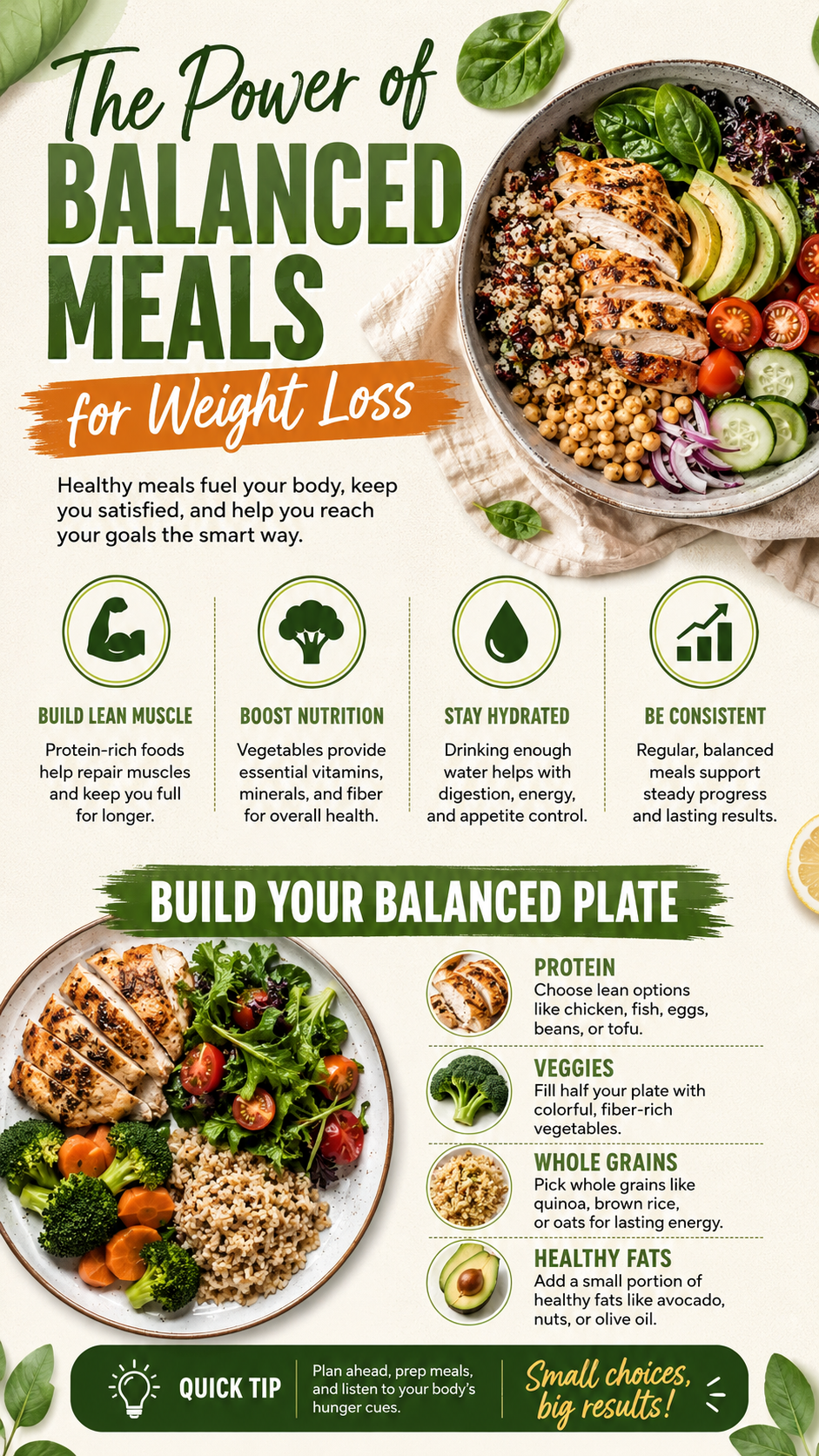
Healthy eating is often surrounded by myths, and one of the most common is the belief that skipping meals is an effective way to lose weight. While eating less might seem like a simple solution, building balanced meals and maintaining consistent eating habits is generally a more sustainable approach to supporting overall wellness. Focusing on nutrient-dense foods, staying hydrated, and creating balanced plates can help you feel energized, satisfied, and better equipped to maintain healthy habits over time.
Key Takeaways
- Choose balanced meals instead of skipping them.
- Include lean protein to stay satisfied longer.
- Fill half your plate with colorful vegetables.
- Drink enough water throughout the day.
- Practice consistent eating habits for lasting results.
- Add healthy fats in moderate portions.
Why Skipping Meals Is Not Always the Best Strategy
Many people believe that eating fewer meals automatically leads to weight loss. In reality, regularly skipping meals may leave you feeling overly hungry later in the day, making it more difficult to make balanced food choices. Hunger can build gradually, increasing the temptation to snack excessively or eat larger portions during the next meal.
Instead of focusing on eating less, many nutrition experts encourage creating satisfying meals that provide a combination of protein, fiber, healthy fats, and complex carbohydrates. This balanced approach supports steady energy levels while making healthy eating feel more enjoyable.
Important: Sustainable healthy eating is built on consistency rather than restriction. Small, realistic habits often produce better long-term results than extreme dieting or regularly skipping meals.
The Power of Balanced Meals
A balanced plate provides your body with a variety of nutrients needed throughout the day. Rather than eliminating entire food groups, aim to include foods that complement each other and promote fullness.
Lean Protein
Protein is one of the most satisfying nutrients. Including foods like grilled chicken, fish, beans, lentils, tofu, eggs, or Greek yogurt in your meals may help you stay full longer while supporting muscle maintenance.
- Chicken breast
- Turkey
- Fish and seafood
- Eggs
- Low-fat dairy
- Legumes
- Plant-based protein options
Colorful Vegetables
Vegetables provide vitamins, minerals, antioxidants, and dietary fiber while naturally adding volume to meals. Filling half your plate with non-starchy vegetables creates satisfying meals without relying heavily on calorie-dense ingredients.
Excellent choices include:
- Broccoli
- Bell peppers
- Spinach
- Cauliflower
- Zucchini
- Cucumber
- Leafy greens
Whole Grains
Whole grains provide complex carbohydrates that release energy more gradually than refined grains. Brown rice, quinoa, oats, whole wheat pasta, and barley are excellent additions to balanced meals.
Healthy Fats
Healthy fats contribute flavor and satisfaction while supporting overall nutrition. Moderate portions of foods such as avocado, olive oil, nuts, and seeds fit well into a balanced eating pattern.
Expert Insight
Rather than eliminating foods you enjoy, focus on improving meal quality. Adding vegetables, lean protein, and healthy fats often creates meals that are naturally more filling and easier to maintain over time.
Why Hydration Matters
Water plays an important role in everyday health. Staying hydrated supports normal body functions and may also help you distinguish between thirst and hunger. Many people discover that drinking water consistently throughout the day supports better eating habits.
Simple hydration tips include:
- Start your morning with a glass of water.
- Carry a reusable water bottle.
- Drink water before meals.
- Add lemon, cucumber, or mint for natural flavor.
- Increase fluids during exercise or hot weather.
Pro Tip: Building healthy habits does not require perfection. Drinking enough water and eating balanced meals consistently can be more valuable than following overly restrictive eating plans.
Build a Balanced Plate Every Day
A simple visual approach to meal planning can make healthy eating easier without counting every calorie.
- Half the plate: Non-starchy vegetables.
- One quarter: Lean protein.
- One quarter: Whole grains or starchy vegetables.
- Add: A small serving of healthy fats.
This flexible method works for breakfast, lunch, and dinner while allowing room for different cuisines and personal preferences.
Benefits of Eating Consistently
Regular meal timing helps many people establish routines that support healthy eating. Consistency may reduce excessive hunger and make planning meals easier throughout the week.
Potential benefits include:
- Steadier energy levels.
- Greater meal satisfaction.
- Improved meal planning.
- Better portion awareness.
- Long-term healthy eating habits.
Important: Healthy eating is not about perfection. Focus on creating balanced meals most of the time while allowing flexibility for your lifestyle and personal preferences.
Simple Healthy Meal Ideas
Breakfast
- Greek yogurt with berries and nuts.
- Oatmeal topped with fruit and seeds.
- Vegetable omelet with whole grain toast.
Lunch
- Grilled chicken salad with avocado.
- Quinoa bowl with roasted vegetables.
- Turkey and vegetable wrap.
Dinner
- Baked salmon with broccoli and brown rice.
- Grilled chicken with roasted vegetables.
- Bean chili with mixed vegetables.
Healthy Snacks
- Apple slices with peanut butter.
- Carrot sticks and hummus.
- Mixed nuts in moderate portions.
- Fresh fruit.
Making Healthy Eating Sustainable
Healthy eating becomes easier when it fits naturally into your routine. Planning meals ahead, keeping nutritious ingredients available, and preparing simple recipes can reduce daily decision-making and help you stay consistent.
You do not need expensive ingredients or complicated recipes to eat well. Simple combinations of lean proteins, vegetables, whole grains, and healthy fats can create satisfying meals that support your goals while fitting into busy schedules.
Quick Points
- Eat balanced meals instead of skipping them.
- Include protein and vegetables at every meal.
- Drink water consistently throughout the day.
- Build healthy habits that are easy to maintain.
- Focus on progress rather than perfection.
Conclusion
Healthy eating is about creating habits that you can maintain for the long term. Instead of relying on meal skipping or restrictive approaches, prioritize balanced meals that include lean protein, vegetables, whole grains, healthy fats, and adequate hydration. These practical strategies support a satisfying eating pattern while helping you build a healthier lifestyle one meal at a time. Small, consistent improvements often lead to meaningful progress, making healthy recipes and balanced nutrition valuable tools for everyday wellness.
Tags
Healthy Recipes Healthy Eating Balanced Meals Nutrition Tips Meal Planning Weight Management Healthy Lifestyle Meal Prep