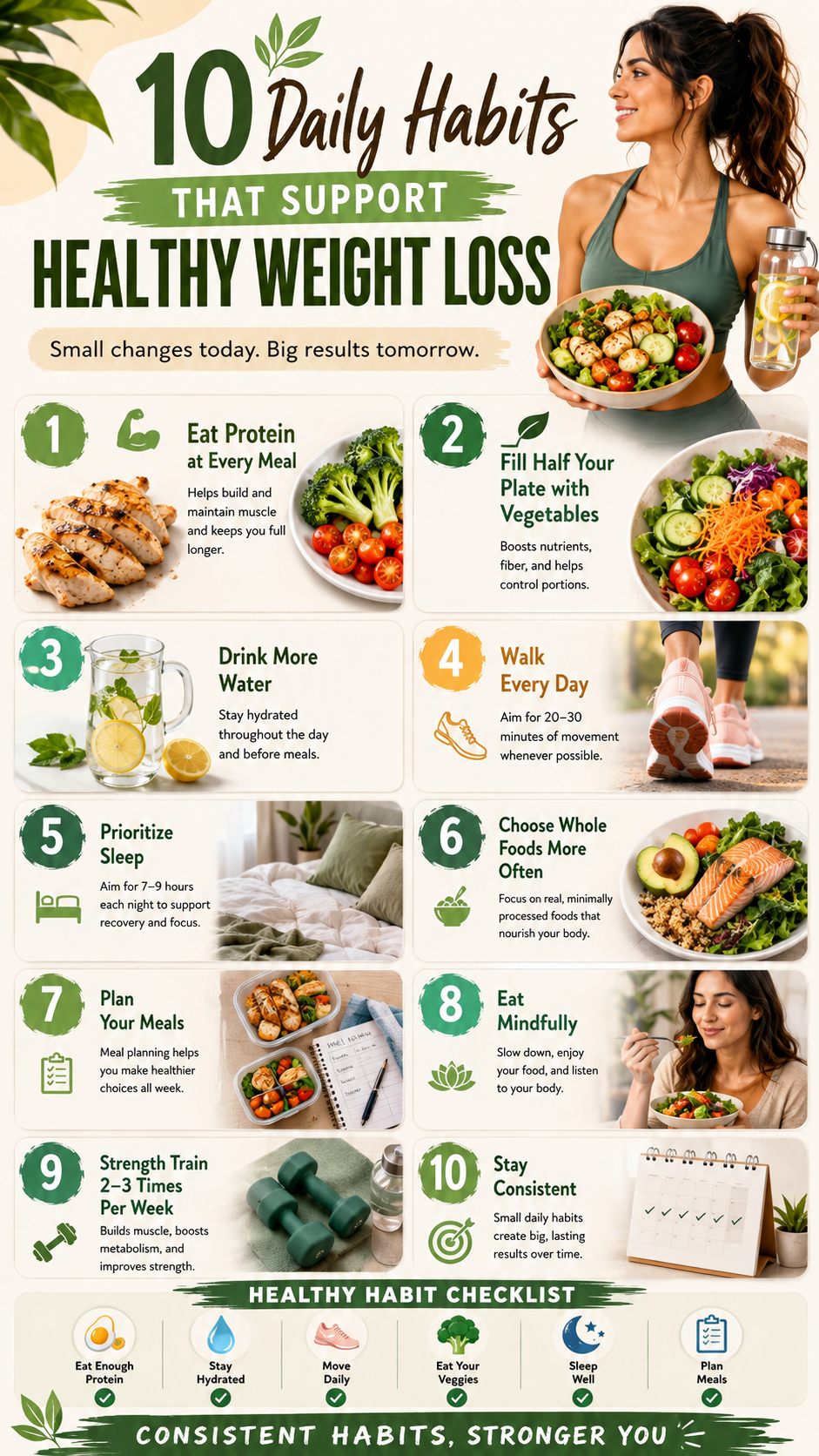
Healthy weight loss is not about following extreme diets or making drastic changes overnight. The most sustainable approach is to build simple daily habits that support balanced nutrition, regular movement, quality sleep, and consistency. When these habits become part of your routine, healthy choices can feel much easier and more natural.
The key is to focus on practical actions you can repeat every day. From eating enough protein and filling your plate with vegetables to drinking more water, walking regularly, planning meals, and practicing mindful eating, small improvements can add up over time.
Key Takeaways
- Include a good source of protein in balanced meals.
- Make vegetables a major part of your plate.
- Stay hydrated throughout the day.
- Combine daily walking with regular strength training.
- Prioritize sleep and practice mindful eating.
- Focus on consistency instead of perfection.
10 Daily Habits That Support Healthy Weight Loss
Healthy weight management is influenced by many everyday choices. Rather than relying on one particular food or workout, consider creating a routine that supports your overall lifestyle. The following habits are simple enough to adapt to different schedules and can help you make more intentional choices each day.
1. Eat Protein at Every Meal
Protein is an important part of a balanced eating pattern, and including it in meals can make them more satisfying. Foods such as chicken, fish, eggs, Greek yogurt, beans, lentils, tofu, and other protein-rich options can fit into a variety of healthy meals.
Instead of building meals primarily around refined carbohydrates or highly processed foods, try pairing protein with vegetables, whole grains, or other nutrient-dense ingredients. This simple combination can make meals more balanced and satisfying.
Important: A healthy meal does not need to be complicated. A protein source, plenty of vegetables, and a sensible serving of carbohydrates or healthy fats can create a practical foundation for everyday meals.
2. Fill Half Your Plate With Vegetables
Vegetables can add color, texture, fiber, vitamins, minerals, and volume to meals. Making vegetables a large part of your plate is an easy way to create more balanced portions without making every meal feel restrictive.
Try rotating different vegetables throughout the week. Broccoli, leafy greens, peppers, tomatoes, carrots, cucumbers, zucchini, cauliflower, and other seasonal choices can keep meals interesting. Raw, roasted, steamed, grilled, or sautéed vegetables can all work depending on the dish.
A colorful plate can also make healthy eating more enjoyable. Combine several colors and textures rather than relying on the same vegetable every day.
3. Drink More Water
Staying hydrated is a basic part of supporting overall health. Keep water available during the day and consider drinking regularly rather than waiting until you feel extremely thirsty.
Water can also be a useful alternative to sugary beverages. If plain water feels boring, add slices of lemon, lime, cucumber, or fresh fruit for a little natural flavor.
One practical habit is to keep a reusable water bottle nearby at work, at home, or while running errands. Making water convenient can make hydration easier to remember.
4. Walk Every Day
Walking is one of the simplest ways to add more movement to your daily routine. You do not necessarily need a complicated exercise program to become more active. A brisk walk, an evening stroll, walking during a break, or choosing to walk for short errands can all contribute to a more active lifestyle.
The visual guide highlights aiming for around 20 to 30 minutes of movement whenever possible. The exact amount that works for you can vary, so focus on building a routine you can maintain consistently.
5. Prioritize Quality Sleep
Sleep is an often-overlooked part of a healthy lifestyle. A consistent sleep routine can support overall well-being and make it easier to maintain good habits during the day.
The guide recommends aiming for 7 to 9 hours of sleep each night. Creating a relaxing bedtime routine, keeping regular sleep and wake times, and reducing unnecessary distractions before bed can help make quality sleep a greater priority.
Think of sleep as part of your wellness routine rather than something to sacrifice whenever life becomes busy.
6. Choose Whole Foods More Often
Whole and minimally processed foods can make it easier to build nutrient-dense meals. Fresh vegetables, fruits, fish, lean proteins, beans, whole grains, nuts, seeds, and healthy fats can all contribute to a varied eating pattern.
This does not mean every food you eat needs to be completely unprocessed. A balanced approach is more practical. Focus on adding nutritious foods more often instead of creating a long list of foods you can never enjoy.
Why This Matters
- Simple habits are easier to repeat than extreme routines.
- Balanced meals can support a more satisfying approach to eating.
- Movement, sleep, hydration, and nutrition work best as part of the same lifestyle.
7. Plan Your Meals Ahead
Meal planning can remove some of the guesswork from healthy eating. When you already know what you are going to prepare, you may be less likely to rely on last-minute food choices when you are hungry or short on time.
Start with a simple weekly plan. Choose a few protein sources, vegetables, fruits, whole grains, and convenient ingredients. You can then mix and match them into different meals rather than preparing something completely different every day.
Even planning just a few dinners can make a noticeable difference in how organized your week feels. Keep healthy snacks available too, especially for busy days.
8. Eat Mindfully
Mindful eating means slowing down and paying attention to your meal instead of eating automatically while distracted. Put away unnecessary screens when possible, take time to enjoy the flavors, and notice how the food makes you feel.
Eating more slowly can also give you an opportunity to recognize when you are comfortably satisfied. Rather than rushing through a meal, try taking smaller bites and pausing occasionally.
Pro Tip: Give your meals your full attention whenever possible. A few distraction-free minutes can turn an ordinary meal into a more intentional part of your daily wellness routine.
9. Strength Train 2 to 3 Times Per Week
Strength training can complement walking and other forms of movement by helping support muscle strength and an active lifestyle. The image highlights two to three strength-training sessions per week as a practical goal.
Beginners can start with simple movements that match their current fitness level. Bodyweight exercises, resistance bands, dumbbells, or supervised gym exercises can all be options depending on your experience and available equipment.
Consistency matters more than trying to do an intense workout immediately. Start at a manageable level and gradually build your routine as you become more comfortable.
10. Stay Consistent
Perhaps the most important habit is consistency. Healthy lifestyle changes rarely depend on having a perfect day every day. Instead, progress comes from returning to your routine again and again.
If one meal does not go according to plan, you do not need to abandon the entire day. If you miss a workout, simply continue with your next opportunity. If your schedule becomes hectic, return to the basics: balanced meals, water, movement, sleep, and mindful choices.
Remember: Small habits become powerful when they are repeated consistently. The goal is not to create a perfect routine, but to develop healthy behaviors that can realistically fit into your everyday life.
How to Turn These Habits Into a Daily Routine
Trying to change all ten habits at once can feel overwhelming. Instead, begin with two or three actions that seem realistic for your current lifestyle. Once they become familiar, gradually introduce additional habits.
- Start the day with water and a balanced breakfast if breakfast fits your routine.
- Build meals around protein and plenty of vegetables.
- Keep nutritious ingredients ready for quick meals and snacks.
- Schedule a daily walking opportunity, even if it is divided into shorter periods.
- Set aside specific days for strength training.
- Create a consistent evening routine that gives sleep a higher priority.
- Review your progress weekly and adjust your routine when necessary.
The goal is to make healthy choices convenient. Keep water visible, prepare vegetables ahead of time, store protein-rich foods where they are easy to reach, and plan workouts around the times when you are most likely to follow through.
Build Balanced Meals Without Overcomplicating Them
A healthy meal can be surprisingly simple. Start with a protein source, add a generous portion of vegetables, and include an appropriate amount of whole grains, starchy foods, or healthy fats based on your needs and preferences.
For example, grilled chicken with broccoli and avocado can create a simple meal, while salmon with vegetables and whole grains offers another combination. Plant-based meals can use beans, lentils, tofu, nuts, or seeds as protein-rich components.
Variety is useful because it keeps your meals enjoyable. Experiment with different herbs, spices, cooking methods, and seasonal ingredients so healthy food does not become repetitive.
A Simple Healthy Habit Checklist
Use the following checklist as a quick reminder throughout the week. You do not have to complete everything perfectly every single day. The purpose is to keep your attention on the habits that support a healthier lifestyle.
- ✓ Eat enough protein
- ✓ Include plenty of vegetables
- ✓ Stay hydrated
- ✓ Walk or move every day
- ✓ Prioritize quality sleep
- ✓ Choose whole foods more often
- ✓ Plan meals ahead
- ✓ Practice mindful eating
- ✓ Strength train regularly
- ✓ Stay consistent
At a Glance
- Build meals around nutritious, satisfying foods.
- Make vegetables and hydration everyday priorities.
- Combine walking with regular strength training.
- Protect your sleep and reduce distracted eating.
- Choose sustainable consistency over short-term perfection.
Conclusion: Focus on Habits You Can Keep
Healthy weight loss habits do not need to be complicated. Eating balanced meals, choosing whole foods more often, drinking enough water, walking regularly, strength training, sleeping well, planning meals, and eating mindfully can create a strong foundation for a healthier lifestyle.
Most importantly, give yourself room to be human. There will be busy days, restaurant meals, missed workouts, and moments when your routine does not go as planned. What matters is returning to your healthy habits rather than expecting perfection.
Choose a few habits from this list and start today. As they become part of your routine, add another. Over time, these small daily decisions can help create a lifestyle that feels balanced, practical, and sustainable.
Tags
Healthy Recipes Healthy Eating Healthy Weight Loss Meal Planning Healthy Habits Clean Eating Nutritious Meals Wellness Tips