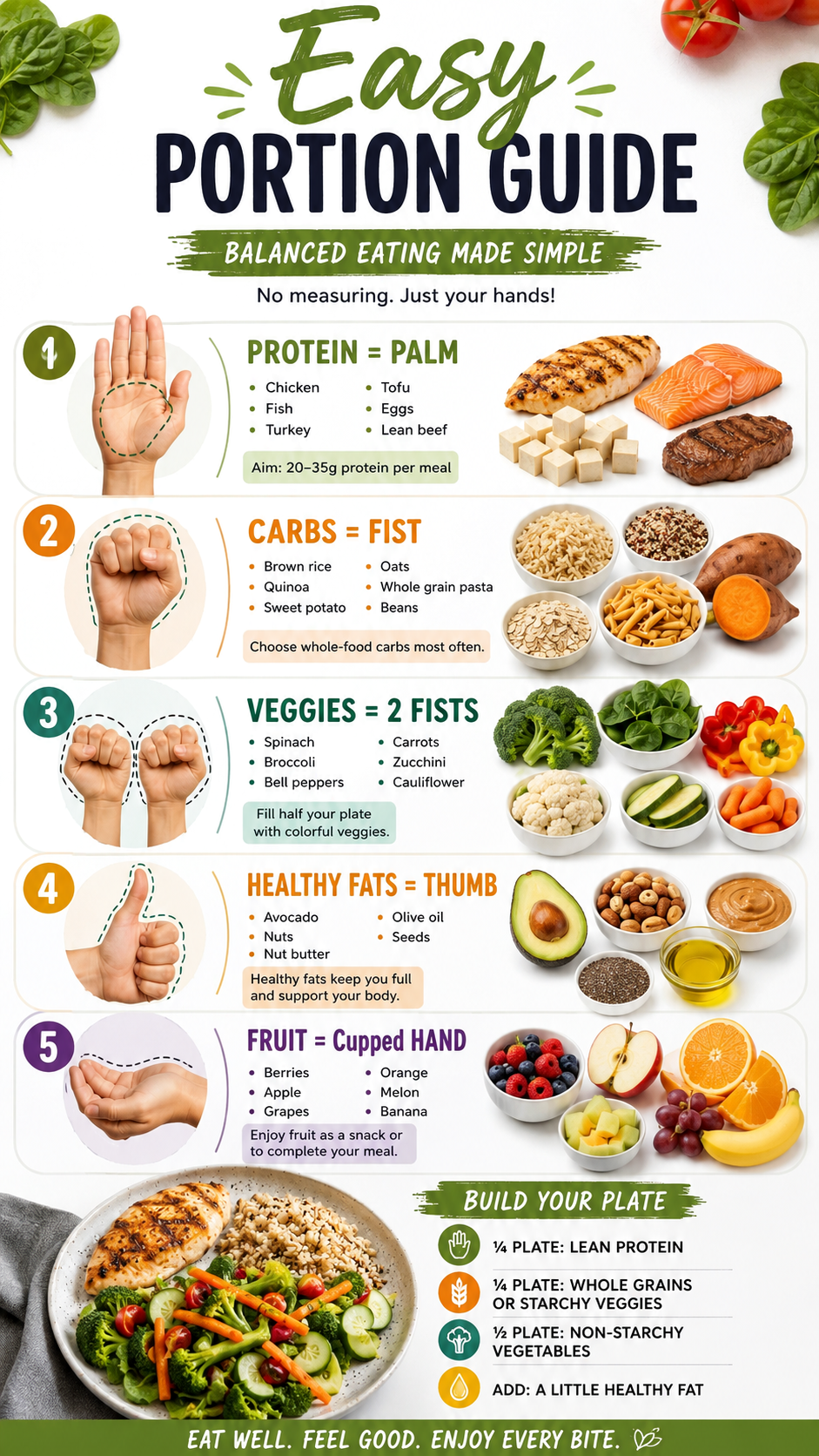
Healthy eating does not have to involve complicated meal plans, endless calorie counting, or expensive kitchen gadgets. One of the easiest ways to build balanced meals is by learning simple portion sizes that you can estimate with your own hands. This practical approach makes it easier to enjoy nutritious meals whether you are cooking at home, packing lunch for work, or dining out. Instead of focusing on perfection, you can create balanced plates that support energy, satisfaction, and long-term healthy habits.
Key Takeaways
- Use your hand as a simple guide for balanced portion sizes.
- Aim to include protein, vegetables, healthy carbohydrates, and healthy fats.
- Fill half of your plate with non-starchy vegetables whenever possible.
- Focus on whole, minimally processed foods for everyday meals.
- Consistency matters more than perfection for lasting healthy eating habits.
Why Portion Control Makes Healthy Eating Easier
Many people assume healthy eating means measuring every ingredient or following strict diets. In reality, understanding portion sizes can simplify meal planning while helping you enjoy a wide variety of nutritious foods. A visual method removes much of the guesswork and creates a flexible routine that fits almost any lifestyle.
Important: Portion awareness is about creating balance rather than restriction. Learning approximate serving sizes helps you build satisfying meals while reducing the stress of constant measuring or calorie tracking.
Using your hands as a reference works because they naturally scale with your body size. Although everyone’s nutritional needs differ depending on age, activity level, and health goals, this approach offers a practical starting point that is easy to remember throughout the day.
A Simple Hand Portion Guide
The hand method divides common food groups into easy visual measurements that make balanced eating approachable for beginners and experienced meal planners alike.
Protein: About One Palm
Protein plays an important role in muscle maintenance, recovery, and overall health. A serving roughly equal to the size of your palm is an easy way to estimate an appropriate portion for many meals.
- Chicken breast
- Turkey
- Fish
- Lean beef
- Tofu
Including a quality protein source at each meal can also improve satiety, helping you stay full for longer between meals.
Carbohydrates: About One Fist
Carbohydrates provide energy for daily activities and exercise. Choosing whole-food carbohydrate sources often delivers additional fiber, vitamins, and minerals.
- Brown rice
- Quinoa
- Oats
- Whole grain pasta
- Sweet potatoes
Rather than avoiding carbohydrates altogether, focus on selecting nutrient-rich options and enjoying them in balanced portions.
Vegetables: Two Fists
Vegetables should make up the largest portion of most meals. They provide fiber, antioxidants, vitamins, and minerals while naturally adding color and variety to your plate.
- Broccoli
- Spinach
- Green beans
- Bell peppers
- Cauliflower
Filling half of your plate with non-starchy vegetables is one of the simplest ways to increase nutrient intake without making meals feel restrictive.
Expert Insight
Building meals around vegetables first often makes healthy eating feel more natural. Once vegetables are in place, adding protein, whole grains, and healthy fats becomes much easier while keeping portions balanced.
Healthy Fats: One Thumb
Healthy fats contribute to flavor, satisfaction, and nutrient absorption. Because they are energy dense, smaller portions are generally sufficient.
- Avocado
- Nuts
- Seeds
- Olive oil
- Nut butter
Adding a moderate serving of healthy fats can make meals more enjoyable while supporting overall wellness.
Fruit: One Cupped Hand
Fruit provides natural sweetness along with fiber, vitamins, and antioxidants. A cupped hand offers a convenient estimate for fresh fruit servings.
- Berries
- Apple slices
- Grapes
- Orange
- Melon
Fruit works well as a snack or paired with meals, especially alongside a protein source for improved satisfaction.
Building a Balanced Plate
A balanced meal is not just about individual food groups. It is also about how they come together on your plate. A simple visual strategy includes:
- One quarter lean protein.
- One quarter whole grains or starchy vegetables.
- Half the plate filled with non-starchy vegetables.
- A small serving of healthy fats.
Pro Tip: Preparing your plate before sitting down to eat can help you enjoy balanced portions naturally. This simple habit encourages mindful eating without requiring complicated calculations.
Benefits of Following a Portion Guide
Learning practical portion sizes offers several advantages beyond weight management. It also supports healthier relationships with food and encourages balanced nutrition throughout the day.
- Reduces confusion during meal preparation.
- Encourages more vegetables at every meal.
- Promotes balanced nutrition without strict dieting.
- Makes healthy eating easier while traveling or dining out.
- Supports long-term consistency and sustainable habits.
Healthy Meal Ideas Using the Portion Method
Breakfast
Pair Greek yogurt with berries, oats, and a sprinkle of nuts for a satisfying morning meal.
Lunch
Enjoy grilled chicken with brown rice, roasted broccoli, and a drizzle of olive oil.
Dinner
Serve baked salmon with roasted sweet potato, steamed green beans, and sliced avocado.
Snack
Combine fresh fruit with a handful of nuts or a serving of yogurt for a balanced snack.
Common Portion Control Mistakes
Even simple eating strategies can become less effective when certain habits creep in. Being aware of these common mistakes can help you stay on track.
- Skipping vegetables in favor of larger carbohydrate portions.
- Adding excessive amounts of healthy fats.
- Eating distracted while watching television or using a phone.
- Ignoring hunger and fullness signals.
- Relying heavily on highly processed convenience foods.
Important: Healthy eating is built through everyday choices rather than occasional perfect meals. Small improvements practiced consistently often produce better long-term results than overly restrictive plans.
Making Healthy Eating a Lasting Habit
Developing sustainable nutrition habits starts with keeping things simple. Instead of trying to overhaul every meal at once, begin by using the hand portion guide consistently for breakfast, lunch, or dinner. Over time, these visual cues become second nature.
Meal planning, grocery shopping with a list, preparing vegetables ahead of time, and keeping healthy snacks available can make balanced choices much easier throughout the week. Remember that flexibility is part of a healthy lifestyle, and occasional treats can fit into an overall balanced eating pattern.
Quick Points
- Use your palm for protein portions.
- Choose whole-food carbohydrates when possible.
- Fill half your plate with vegetables.
- Add healthy fats in moderation.
- Focus on consistency instead of perfection.
Conclusion
Healthy recipes become even more effective when they are paired with smart portion habits. Using your hands as a visual guide provides an easy, flexible approach that supports balanced nutrition without adding unnecessary complexity. By combining lean protein, colorful vegetables, whole-food carbohydrates, healthy fats, and fresh fruit into appropriate portions, you can create meals that are satisfying, nutritious, and enjoyable every day. Small, consistent improvements will always have a greater impact than chasing perfection, making this simple portion guide an excellent foundation for lifelong healthy eating.
Tags
Healthy Recipes Balanced Meals Portion Control Healthy Eating Nutrition Tips Meal Planning Clean Eating Wellness