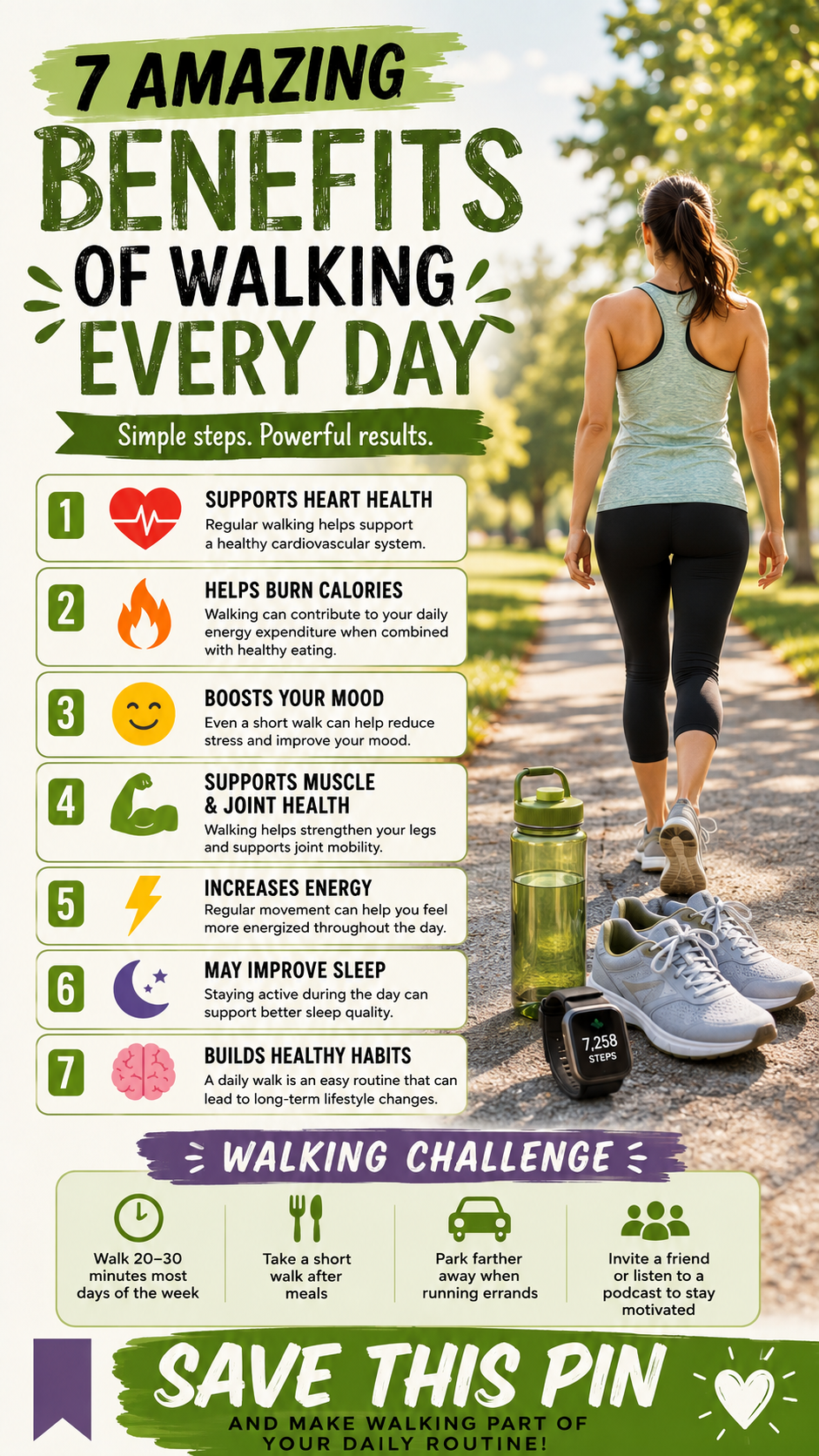
Walking is one of the simplest habits you can add to your daily routine, yet it delivers an impressive range of health benefits. You do not need expensive equipment, a gym membership, or complicated workout plans to enjoy meaningful improvements in your physical and mental well-being. A comfortable pair of walking shoes and a commitment to move consistently are often enough to create lasting positive changes. Whether your goal is improving heart health, increasing energy, managing weight, or simply building healthier habits, walking offers an accessible path that fits almost every lifestyle.
Key Takeaways
- Walking supports cardiovascular health and overall fitness.
- Daily walks can improve mood, energy, and sleep quality.
- Consistency matters more than speed or distance.
- Walking is a beginner-friendly activity suitable for most ages.
- Small daily habits often lead to long-term healthy lifestyle changes.
Why Walking Is One of the Best Daily Habits
Many fitness trends come and go, but walking remains one of the most effective forms of physical activity. It is low impact, easy to adapt to different fitness levels, and can be enjoyed almost anywhere. Unlike intense workouts that may require recovery days, walking can comfortably become part of your everyday routine.
Important: Building a healthy lifestyle does not always require dramatic changes. A consistent 20 to 30 minute walk each day can become the foundation for better health, making it easier to stay active over the long term.
1. Supports Heart Health
Your heart benefits from regular movement. Walking encourages healthy circulation, helps strengthen the cardiovascular system, and contributes to overall heart wellness. Consistent movement also supports healthy blood pressure and helps maintain good circulation throughout the body.
Simple Ways to Improve Heart Health
- Walk at a brisk but comfortable pace.
- Aim for most days of the week.
- Gradually increase your walking time as your fitness improves.
- Choose enjoyable routes to stay motivated.
2. Helps Burn Calories
Walking naturally increases your daily energy expenditure. While it may not burn calories as quickly as high intensity exercise, the consistency of daily walking often produces better long-term results than short bursts of intense activity that are difficult to maintain.
Combining walking with balanced nutrition creates a sustainable approach to weight management. Small improvements repeated daily often produce impressive results over time.
3. Boosts Your Mood
Physical activity supports emotional well-being. Even a short walk outdoors can help reduce everyday stress, improve focus, and leave you feeling refreshed. Walking also offers an opportunity to disconnect from screens, enjoy fresh air, and clear your mind after a busy day.
Pro Tip: Try walking in a local park or quiet neighborhood. Natural surroundings can make the experience even more relaxing and enjoyable while encouraging you to maintain the habit.
Expert Insight
Walking becomes even more effective when it is attached to an existing daily routine. Consider walking after breakfast, during lunch breaks, or after dinner to make the habit easier to maintain.
4. Supports Muscle and Joint Health
Walking engages multiple muscle groups, including your legs, hips, and core. Regular movement also helps keep joints flexible while supporting balance and coordination.
Unlike many high impact activities, walking places less stress on the joints, making it an excellent choice for beginners and older adults who want to stay active without excessive strain.
Helpful Walking Tips
- Wear supportive walking shoes.
- Maintain an upright posture.
- Swing your arms naturally.
- Stay hydrated during longer walks.
- Stretch gently after finishing.
5. Increases Daily Energy
Although it may seem surprising, regular physical activity often helps you feel more energized. Walking encourages healthy blood flow and supports efficient oxygen delivery throughout the body, helping reduce feelings of sluggishness during the day.
Many people discover that a short walk during the afternoon provides a healthier energy boost than relying on additional caffeine.
6. May Improve Sleep Quality
Healthy movement during the day often contributes to better rest at night. Establishing a consistent walking routine can help your body maintain a regular daily rhythm, making it easier to relax when bedtime arrives.
Important: Better sleep supports nearly every aspect of health, including mood, concentration, recovery, and energy. Regular walking can become one valuable part of an overall healthy sleep routine.
7. Builds Healthy Long-Term Habits
The greatest benefit of walking may be its sustainability. Because it requires very little preparation, it is easier to continue for months and years. Long-term consistency often produces greater health improvements than occasional intense exercise sessions.
Walking also encourages other healthy decisions. Many people who begin walking regularly become more interested in nutritious meals, drinking enough water, improving sleep habits, and maintaining an active lifestyle overall.
Simple Walking Challenges to Stay Motivated
Keeping your routine interesting helps prevent boredom and encourages long-term success. Consider adding small challenges throughout your week.
- Walk for 20 to 30 minutes most days.
- Take a short walk after meals.
- Park farther away during errands.
- Invite a friend or family member to join you.
- Listen to your favorite podcast or music while walking.
- Track your daily steps with a fitness watch or smartphone.
Pair Walking With Healthy Nutrition
Walking and healthy eating naturally complement each other. Nutritious meals provide the energy needed for daily movement, while regular activity helps support an active lifestyle.
Healthy Habits That Work Together
- Drink plenty of water throughout the day.
- Include fruits and vegetables in every meal.
- Choose lean protein sources.
- Eat whole grains for lasting energy.
- Prepare balanced meals ahead of time.
Making Walking Part of Your Routine
You do not need perfect conditions to start. Begin with manageable goals that fit your schedule. Even ten minute walks throughout the day can add up and contribute to your weekly activity.
Celebrate small milestones, stay flexible, and remember that consistency is more valuable than perfection. Every step contributes to building a healthier future.
Quick Points
- Walk consistently instead of occasionally.
- Support your routine with balanced nutrition.
- Stay hydrated and wear comfortable shoes.
- Track progress to stay motivated.
- Small habits create lasting results.
Conclusion
Walking proves that effective exercise does not need to be complicated. With benefits that support heart health, mood, energy, muscles, joints, sleep, and long-term wellness, it remains one of the easiest and most rewarding habits to develop. By combining regular walks with healthy nutrition and simple lifestyle improvements, you can create a routine that feels enjoyable, sustainable, and beneficial for years to come. Start with a few minutes today, remain consistent, and allow each step to bring you closer to your health and wellness goals.
Tags
Walking Benefits Healthy Lifestyle Daily Exercise Heart Health Fitness Tips Wellness Healthy Habits Active Living