Healthy snacks are often associated with weight management, but their benefits go much further. Making thoughtful snack choices can help stabilize energy levels, improve focus, and reduce the urge to eat in response to stress or emotions. When paired with mindful eating habits, nutritious snacks become an important part of a balanced lifestyle rather than something to avoid.
Many people experience moments when emotions such as stress, boredom, loneliness, or fatigue lead them toward food. This is completely normal, but learning to recognize those moments can help you make choices that support both your physical and emotional well-being. Small daily habits, like preparing healthy snacks ahead of time or taking a short break before reaching for food, can make a meaningful difference over time.
Key Takeaways
- Healthy snacks help maintain energy between meals.
- Mindful eating reduces emotional and impulsive snacking.
- Protein, fiber, and healthy fats improve satisfaction.
- Recognizing emotional triggers supports better food choices.
- Simple lifestyle habits can reduce unnecessary cravings.
Understanding Emotional Eating
Emotional eating happens when food becomes a response to feelings instead of physical hunger. While enjoying comfort foods occasionally is part of a healthy relationship with food, consistently eating to cope with emotions can make it harder to understand your body’s natural hunger and fullness signals.
Important: Learning the difference between physical hunger and emotional hunger is one of the most valuable skills for creating healthier eating habits. Asking yourself whether you are truly hungry before grabbing a snack can lead to more intentional decisions.
Common Emotional Triggers
Many situations can encourage emotional eating, including:
- Stress from work or school
- Boredom during free time
- Loneliness or isolation
- Fatigue after a long day
- Anxiety or overwhelming emotions
- Celebrating achievements with food
Recognizing these patterns allows you to pause and consider whether food is the best response or whether another activity would better address your needs.
Healthy Snacks That Keep You Satisfied
Nutritious snacks should provide a combination of protein, fiber, and healthy fats whenever possible. These nutrients digest more slowly than highly processed snacks, helping you stay fuller for longer.
Protein-Rich Snack Ideas
- Greek yogurt with berries
- Hard-boiled eggs
- Cottage cheese with sliced tomatoes
- Roasted chickpeas
- Turkey roll-ups
Fiber-Filled Options
- Fresh fruit
- Apple slices with peanut butter
- Vegetables with hummus
- Whole grain crackers
- Air-popped popcorn
Healthy Fat Choices
- Mixed nuts
- Avocado on whole grain toast
- Seeds such as pumpkin or sunflower
- Nut butter with banana slices
Simple Habits That Help Manage Emotional Eating
Building healthy routines is often more effective than relying on willpower alone. Small actions practiced consistently can gradually become second nature.
Pause Before You Eat
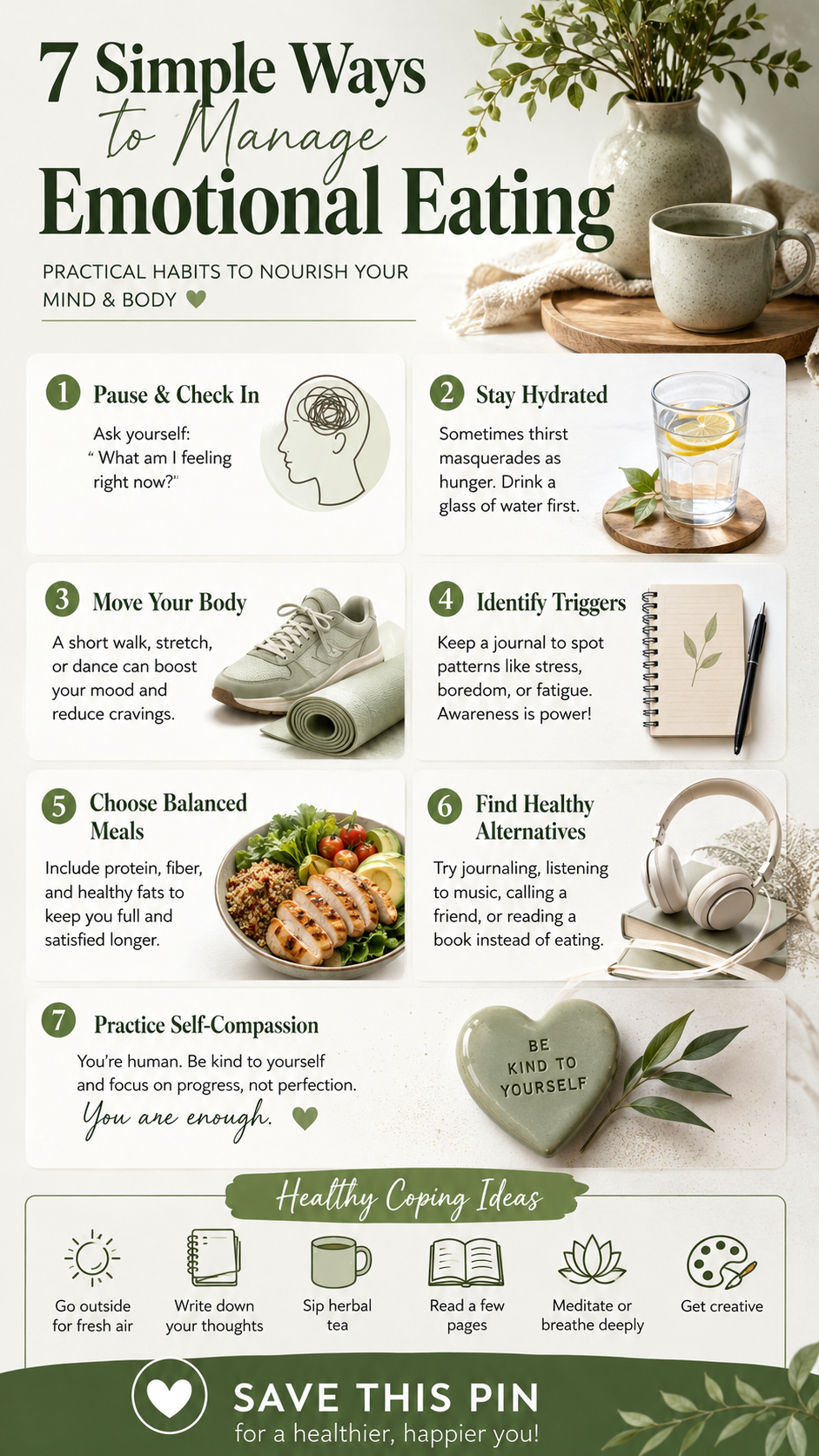
Before reaching for a snack, pause for a minute and ask yourself a simple question: “Am I physically hungry, or am I responding to an emotion?” This quick check creates space for better decisions.
Stay Hydrated
Sometimes thirst can feel similar to hunger. Drinking a glass of water before deciding on a snack may help you better understand what your body truly needs.
Take a Short Walk
A brief walk outside or around your home can shift your focus, reduce stress, and refresh your mind. Even ten minutes of movement may help reduce emotional cravings.
Expert Insight
- Healthy snacks work best when paired with balanced meals.
- Planning snacks ahead reduces impulsive food choices.
- Mindfulness helps build a healthier relationship with food.
Balanced Meals Support Better Snacking
Skipping meals often increases hunger later in the day, making emotional eating more likely. Regular meals that include lean protein, vegetables, fruits, whole grains, and healthy fats help maintain steady energy and reduce the temptation to overeat.
Pro Tip: Preparing healthy snacks in advance makes nutritious choices the easiest option when hunger strikes. Keep washed fruit, sliced vegetables, yogurt, nuts, and whole grain snacks within easy reach.
Healthy Alternatives to Emotional Eating
Food is only one way to respond to emotions. Building a collection of healthy coping strategies gives you more options when challenging moments arise.
- Practice deep breathing.
- Write in a journal.
- Read a favorite book.
- Stretch for a few minutes.
- Listen to relaxing music.
- Call a supportive friend.
- Enjoy a warm cup of herbal tea.
- Spend time outdoors.
Practice Self-Compassion
No eating pattern is perfect. One snack or one meal does not define your overall progress. Healthy living is built through consistent habits over weeks and months rather than isolated moments.
Important: Avoid labeling foods as completely “good” or “bad.” A balanced mindset encourages long-term success and reduces the guilt that often fuels emotional eating.
Creating a Sustainable Healthy Snack Routine
Consistency is easier when your environment supports your goals. Keep nutritious snacks visible, prepare snack portions ahead of time, and avoid waiting until you are extremely hungry before eating.
It also helps to develop routines that encourage mindful eating. Sit down while eating, minimize distractions, chew slowly, and pay attention to flavors and textures. These small habits increase satisfaction and make it easier to recognize fullness.
Remember that healthy eating is not about perfection. It is about creating habits that fit your lifestyle while supporting your overall health and well-being.
At a Glance
- Choose snacks rich in protein and fiber.
- Pause to identify true hunger before eating.
- Stay hydrated throughout the day.
- Use healthy coping strategies during stressful moments.
- Practice consistency instead of perfection.
Conclusion
Healthy snacks are much more than convenient bites between meals. They provide lasting energy, support balanced nutrition, and help reinforce mindful eating habits that benefit both body and mind. By understanding emotional triggers, choosing nourishing foods, and developing healthy coping strategies, you can create a sustainable routine that feels realistic and enjoyable.
Small changes practiced consistently often lead to the biggest improvements. Whether your goal is to reduce emotional eating, improve daily nutrition, or simply enjoy healthier snacks, every mindful choice is another step toward a balanced lifestyle.
Tags
Healthy Snacks Mindful Eating Emotional Eating Healthy Lifestyle Balanced Nutrition Healthy Habits Wellness Nutrition Tips