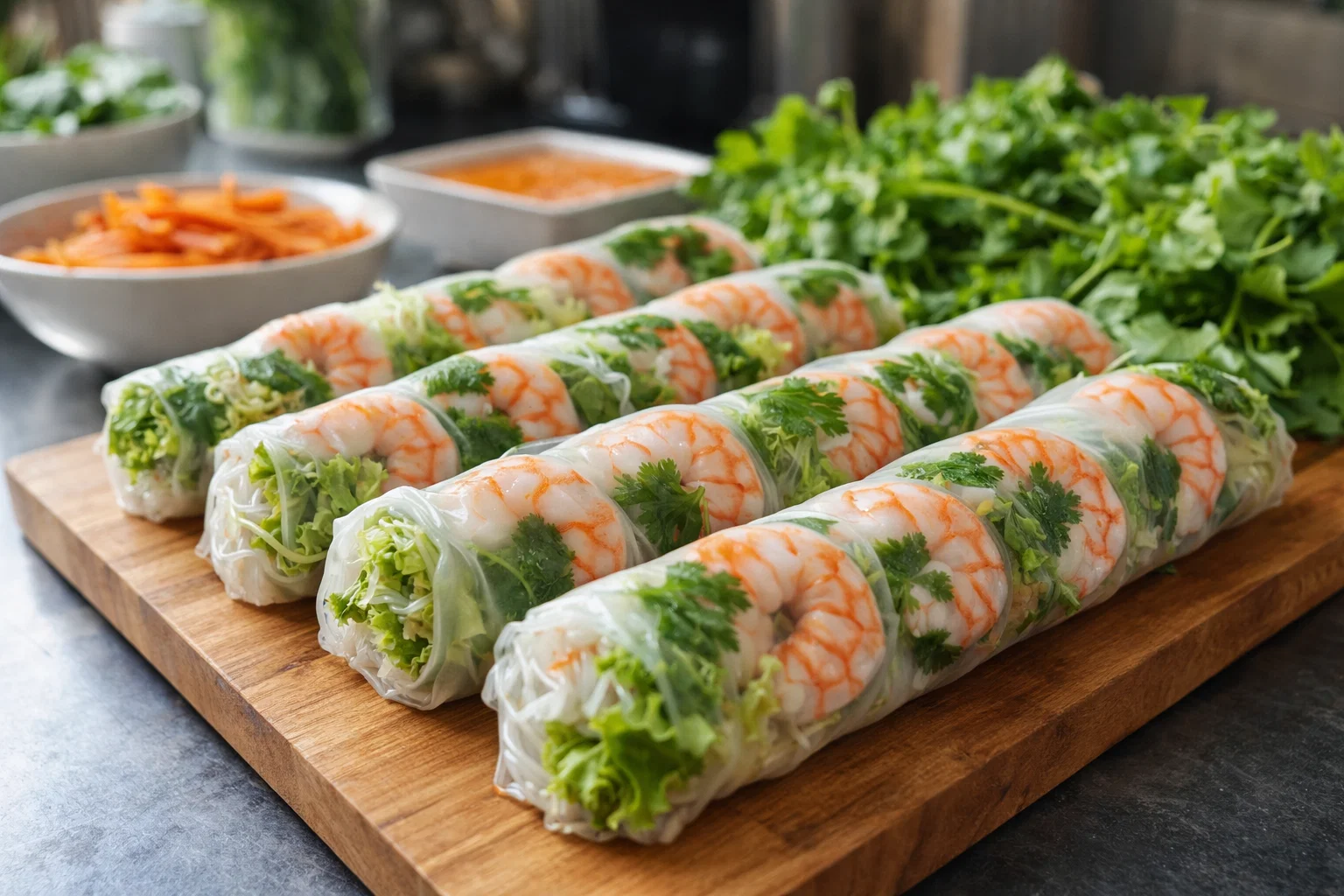
Fresh Vietnamese Spring Rolls Easy Healthy: A Tropical Delight
Introduction to Fresh Vietnamese Spring Rolls Easy Healthy
Welcome to the vibrant world of Fresh Vietnamese Spring Rolls! This delightful dish showcases a perfect blend of colorful vegetables, fresh herbs, and flavorful proteins wrapped in a delicate rice paper. Not only are these spring rolls a feast for the eyes, but they also deliver numerous health benefits that make them stand out in the realm of healthy recipes. Whether you’re a busy parent, a student, or anyone seeking simple yet delicious options, this recipe will become your go-to.
Preparing these spring rolls is easy and quick, making them an excellent choice for weeknight dinners or meal prep for lunches. Imagine the satisfaction of making a dish that not only delights your palate but also packs a nutritional punch—these rolls can be vegan, gluten-free, and low-calorie, catering to a wide range of dietary needs. The versatility and freshness of ingredients like crisp vegetables and aromatic herbs ensure that each bite is bursting with flavor and vitality. Plus, they make for a visually stunning appetizer or light meal perfect for any occasion!
Benefits and Advantages of Fresh Vietnamese Spring Rolls Easy Healthy
What makes Fresh Vietnamese Spring Rolls such a stellar choice? Let’s delve deeper into the benefits that come with this simple yet fulfilling dish.
Ease of Preparation
One of the most attractive benefits of these spring rolls is their simplicity. The foundational technique involves soaking rice paper, layering ingredients, and rolling—all of which require minimal culinary skills. This means you can prepare a wholesome meal without spending hours in the kitchen. Whether you’re a novice cook or someone seasoned in the kitchen, making these spring rolls is straightforward and rewarding.
Health Benefits
Fresh Vietnamese Spring Rolls score high on the health meter. Packed with colorful veggies like bell peppers, cucumbers, and carrots, they are rich in vitamins and minerals. The inclusion of fresh herbs allows you to tap into their numerous health advantages, such as improved digestion and enhanced immunity. These rolls are low in calories yet satisfyingly filling, making them a fantastic option for weight watchers or those pursuing a healthier lifestyle.
Versatility
Another notable aspect of these healthy recipes is their adaptability. You can easily swap out ingredients based on dietary preferences. Whether you choose shrimp, chicken, tofu, or even go completely plant-based, these spring rolls can cater to everyone at the table. In addition, you have the freedom to personalize the fillings to suit your taste, making it an exciting dish that can evolve with each preparation.
In summary, Fresh Vietnamese Spring Rolls are easy to make, healthful, and versatile. They are perfect for families, students, or anyone looking for a delicious way to enjoy fresh ingredients. Let’s explore the essential components and how to make these delightful spring rolls!
Ingredients Overview
Essential Ingredients for Fresh Vietnamese Spring Rolls Easy Healthy
To make Fresh Vietnamese Spring Rolls, you’ll need the following key ingredients. Each element plays a crucial role in ensuring the delicious taste and fulfilling nature of the dish.
- Rice Paper Wrappers (8-10 sheets)
-
The base of the rolls, rice paper wrappers are gluten-free and can be found in most Asian grocery stores.
-
Proteins (Pick one or more)
- Shrimp (7 oz, cooked and sliced)
- Chicken (7 oz, cooked and shredded)
-
Tofu (8 oz, firm, diced, and lightly sautéed for extra flavor)
-
Veggies:
- Red Bell Pepper (1, julienned)
- Carrot (1 large, julienned or grated)
- Cucumber (1, julienned)
-
Lettuce (Romaine or Butter Lettuce for wrapping)
-
Herbs:
- Fresh Mint (1/2 cup, chopped)
- Cilantro (1/2 cup, chopped)
-
Basil (1/2 cup, chopped for added flavor)
-
Dipping Sauce:
- Peanut Sauce or Soy Sauce (1/4 cup)
- Chili Sauce (optional for heat)
This ingredient list provides a colorful, nutritious base for your healthy recipes. Remember to adjust measurements and ingredients based on taste preference and dietary requirements!
Dietary Substitutions to Customize Your Fresh Vietnamese Spring Rolls Easy Healthy
Customize your spring rolls with easy substitutions:
-
Gluten-Free: Ensure your dipping sauce is gluten-free—choose tamari instead of soy sauce.
-
Vegan: Use tofu as your protein source while ensuring your dipping sauce doesn’t include fish sauce. There are many plant-based peanut sauces available.
-
Low-Calorie: Focus on adding more veggies and herbs, decreasing the quantity of protein if you’re tracking calories.
-
Spicy: For those who enjoy a kick, add sliced jalapeños or a sprinkle of Sriracha inside the roll to awaken the flavors.
These substitutions demonstrate the versatility that Fresh Vietnamese Spring Rolls offer, making it a delightful choice for everyone.
How to Prepare the Perfect Fresh Vietnamese Spring Rolls Easy Healthy: Step-by-Step Guide
Are you ready to create delicious Fresh Vietnamese Spring Rolls? Follow these simple steps for an enjoyable cooking experience!
- Prepare the Ingredients:
- Start by julienning your vegetables (bell pepper, carrot, cucumber) and set them aside.
-
Cook any protein if necessary (shrimp should be boiled and peeled, chicken should be rotisserie or grilled, and tofu should be sautéed).
-
Soften Rice Paper Wrappers:
- Fill a shallow dish or plate with warm water.
- Gently dip one rice paper wrapper in the water for about 15-20 seconds.
-
Remove it once it becomes pliable but not overly soft.
-
Lay the Wrapper:
-
Place the softened rice paper flat on a clean surface or a damp kitchen towel.
-
Add the Filling:
-
In the lower third of the wrapper, layer a small handful of lettuce, followed by a few pieces of each vegetable, a portion of your chosen protein, and a sprinkle of fresh herbs.
-
Roll Tight:
- Fold the sides of the wrapper inward over the filling.
-
Starting from the bottom, tightly roll up the spring roll while keeping the filling packed tightly.
-
Seal Edges:
- Moisten the top edges of the rice paper with a bit of water to help seal the roll.
-
Press to ensure it sticks.
-
Repeat:
-
Continue this process for the remaining wrappers and filling, keeping the finished rolls covered with a damp cloth to prevent drying.
-
Serve:
- Arrange the rolls on a serving platter and serve with your choice of dipping sauce.
As you create these fresh rolls, feel free to experiment and adjust the ingredients to match various preferences. The resulting spring rolls will be a delightful addition to any meal or gathering.
Mastering Fresh Vietnamese Spring Rolls Easy Healthy: Advanced Tips and Variations
Now that you’ve perfected the basic spring roll recipe, let’s explore some advanced tips and variations to take your culinary creation to the next level.
Advanced Tips:
-
Use Fresh Ingredients: Always choose the freshest vegetables and herbs. This not only enhances the flavor but also ensures optimal nutrition—important if you’re striving for healthy recipes.
-
Experiment with Proteins: While shrimp and chicken are traditional proteins, don’t shy away from trying seared tofu, grilled portobello mushrooms, or even quinoa for a plant-based twist.
-
Herb Combinations: Try blending different herbs such as Thai basil or even arugula for a spicy kick. The variety of flavors will elevate the taste of your rolls.
-
Prep in Advance: For busy nights, prep your ingredients ahead of time! Store chopped vegetables and cooked proteins separately and roll them just before serving to keep everything fresh.
Variations:
-
Fruit Spring Rolls: For a refreshing dessert or a light snack, swap the vegetables with fruits like mango, strawberries, or kiwi, pairing them with a coconut or yogurt dip.
-
Rice Paper Salad: Tear up the rice paper and use it as a unique base for a salad, mixing chopped spring roll ingredients with a light vinaigrette.
-
Add Flavor Boosts: Incorporate ingredients like pickled carrots, bean sprouts, or crushed nuts for additional texture and taste.
These suggestions allow you to customize your Fresh Vietnamese Spring Rolls while maintaining their healthy essence, making them dishes you can enjoy throughout diverse meal plans.
How to Store Fresh Vietnamese Spring Rolls Easy Healthy: Best Practices
To maintain the freshness and quality of your Fresh Vietnamese Spring Rolls, proper storage is crucial. Here are some best practices to follow:
Refrigerator Storage
- Short-Term: If you have leftover spring rolls, keep them in an airtight container. Place parchment paper between layers to prevent sticking. Refrigerate and consume within 1-2 days for best taste and texture.
Freezing Spring Rolls
- Long-Term Storage: For longer preservation, consider freezing the rolls. Wrap each roll in plastic wrap tightly and place in a freezer-safe bag. They can last up to 2 months.
- Thawing: To enjoy, thaw them overnight in the refrigerator. Serve cold or dip in warm water briefly if you wish to enjoy them fresh again.
Reheating Tips
- If you’d like to serve them warm, avoid microwaving as it can make the wrappers tough. Instead, lightly steam the rolls for a few minutes.
By following these storage methods, you can create healthy recipes that last not only in flavor but also in freshness for days to come.
Nutritional Value of Fresh Vietnamese Spring Rolls Easy Healthy
Understanding the nutritional value of your Fresh Vietnamese Spring Rolls enriches the cooking experience. Here’s a general breakdown of the nutritional content per roll, assuming a filling of shrimp, fresh veggies, and herbs, with peanut sauce for dipping.
- Calories: Approximately 80-100 calories per roll.
- Protein: Around 6-8 grams (primarily from shrimp or tofu).
- Carbohydrates: Approximately 15-20 grams (depending on the amount of rice paper).
- Fat: About 2-4 grams (largely from the dipping sauce, especially if using peanut sauce).
- Fiber: Roughly 2-3 grams (thanks to the rich array of veggies).
- Vitamins and Minerals: A great source of Vitamin A, Vitamin C, iron, and calcium, due to the fresh produce used.
This nutritional profile emphasizes how Fresh Vietnamese Spring Rolls are not only delicious but also a smart choice, aligning perfectly with your goal of incorporating healthy recipes into your meal planning.
FAQs: Frequently Asked Questions About Fresh Vietnamese Spring Rolls Easy Healthy
Q1: Can I make spring rolls in advance?
A: Yes, you can prepare them a few hours in advance. Store the prepared rolls covered with a damp cloth to keep them moist.
Q2: How do I prevent the rice paper from sticking?
A: Always ensure that the wrappers are kept moist. You can stack them with parchment paper in between to prevent sticking.
Q3: What can I substitute for peanut sauce?
A: If you have nut allergies, consider using soy sauce, hoisin sauce, or a sesame dressing as alternatives.
Q4: Are these spring rolls suitable for meal prepping?
A: Absolutely! They are perfect for meal prep. Just ensure you keep them refrigerated and enjoy within a couple of days.
Q5: Can I use cooked ingredients?
A: Yes, you can certainly use cooked ingredients! Grilled chicken, shrimp, or sautéed tofu all work beautifully in spring rolls.
Each of these FAQs provides valuable information while ensuring to align with the overarching theme of healthy recipes our readers are excited to explore.
In conclusion, Fresh Vietnamese Spring Rolls are a vibrant, nutritious, and versatile dish perfect for everyone. This easy-to-follow recipe will bring a tropical delight to your dining table, allowing you to shine as a home cook while embracing healthy eating habits! So roll up your sleeves and dive into the refreshing flavors of this fantastic dish today!