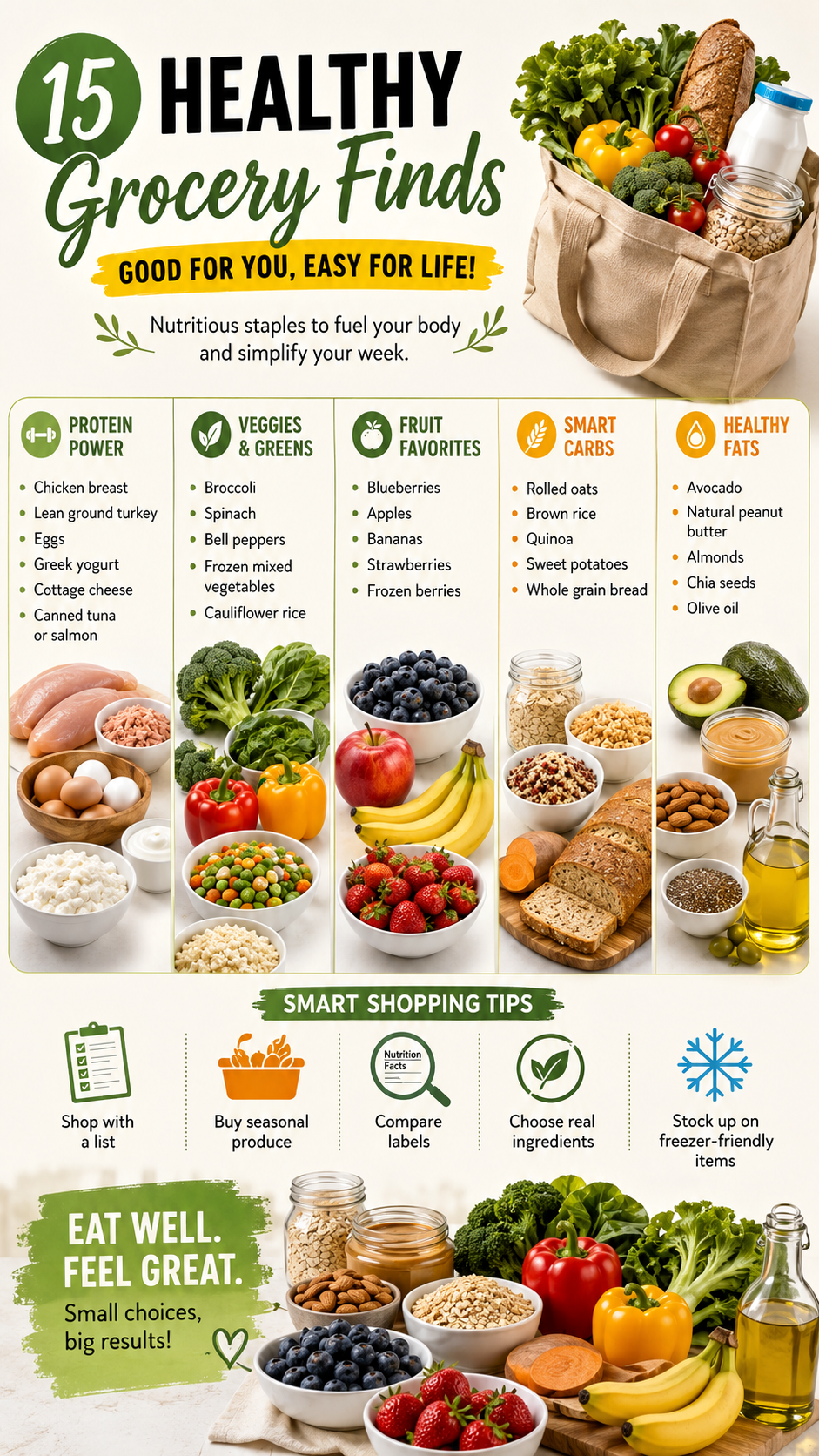
Healthy eating becomes much easier when your grocery cart is filled with simple, versatile ingredients you can use throughout the week. A well-planned shopping trip can give you the building blocks for balanced breakfasts, satisfying lunches, easy dinners, and nutritious snacks without making healthy meals feel complicated.
The best approach is not about buying every trendy health food on the shelf. It is about choosing a practical mix of protein-rich foods, colorful produce, smart carbohydrates, and healthy fats. With a few dependable staples on hand, you can create plenty of wholesome meals while spending less time wondering what to cook.
Key Takeaways
- Build your cart around protein, vegetables, fruit, whole grains, and healthy fats.
- Choose versatile ingredients that can work across several meals.
- Keep fresh and freezer-friendly produce available for convenience.
- Compare nutrition labels when choosing packaged staples.
- Plan your grocery list before shopping to make healthier choices easier.
- Use simple ingredients to create balanced meals without unnecessary complexity.
15 Healthy Grocery Finds to Keep in Your Cart
A healthy grocery list does not need to be long or expensive. The foods highlighted in this collection focus on everyday ingredients that are easy to recognize, combine, and store. Think of them as a flexible foundation rather than a strict meal plan.
1. Chicken Breast
Chicken breast is a versatile protein choice for simple meals. It can be baked, grilled, pan-cooked, or sliced into salads and grain bowls. Keeping cooked chicken available can also make quick lunches and dinners much easier to assemble.
2. Lean Ground Turkey
Lean ground turkey works well in tacos, bowls, lettuce wraps, stuffed vegetables, and homemade meatballs. It is especially useful when you want a protein option that can be seasoned differently for several meals.
3. Eggs
Eggs are one of the easiest foods to keep in the refrigerator for breakfast and beyond. Scrambled eggs, omelets, egg sandwiches, and vegetable-packed egg bowls can turn a handful of ingredients into a satisfying meal.
4. Greek Yogurt
Plain Greek yogurt is a convenient addition to a healthy grocery list. Enjoy it with berries and oats for breakfast, use it as a creamy base for sauces, or pair it with fruit for a simple snack. Choosing plain yogurt also gives you more control over the sweetness of your meal.
5. Cottage Cheese
Cottage cheese can add variety to breakfasts and snacks. Serve it with fruit, add it to a savory bowl, or pair it with vegetables for a simple high-protein option. Its mild flavor makes it easy to combine with both sweet and savory ingredients.
Fresh and Frozen Vegetables for Everyday Meals
Vegetables are an easy way to add color, texture, and variety to your meals. A smart grocery cart can include both fresh and frozen options. Fresh vegetables are excellent for salads and quick cooking, while frozen vegetables can be especially useful when convenience matters.
6. Broccoli
Broccoli is a dependable side dish and a great addition to bowls, stir-fries, pasta, and roasted vegetable trays. Roast it until tender, steam it for a quick dinner, or chop it finely into salads.
7. Spinach
Spinach can be used in salads, omelets, smoothies, soups, and cooked dishes. Because it wilts quickly when heated, it is an easy way to add leafy greens to meals without significantly changing the overall preparation.
8. Bell Peppers
Colorful bell peppers make meals more appealing while adding a crisp texture. Slice them for snacks, roast them with chicken, add them to scrambled eggs, or use them in grain bowls and wraps.
9. Frozen Mixed Vegetables
A bag of frozen mixed vegetables can be one of the most convenient items in a busy household. They can be added to rice dishes, soups, stir-fries, or quick skillet meals with very little preparation.
10. Cauliflower Rice
Cauliflower rice offers another flexible vegetable option for bowls and side dishes. It can be paired with seasoned protein, vegetables, and a flavorful sauce for a quick meal that feels substantial without requiring complicated cooking.
Why This Matters
The most useful healthy grocery items are the ones you will actually use. Prioritize ingredients that can appear in multiple meals, then mix and match them throughout the week. This approach can make healthy meal planning feel much more manageable.
Fruit Favorites for Naturally Sweet Choices
Fruit is another simple category to include when building a balanced grocery cart. Keeping several varieties available gives you easy options for breakfast, snacks, smoothies, yogurt bowls, and desserts.
11. Blueberries
Blueberries are convenient to keep on hand and work beautifully with Greek yogurt, oats, smoothies, or breakfast bowls. Fresh berries can be enjoyed immediately, while frozen berries are useful when you want a longer-lasting option.
12. Apples
Apples make an easy grab-and-go snack. Pair one with natural peanut butter or a handful of almonds when you want a more substantial snack with complementary flavors and textures.
13. Bananas
Bananas are particularly useful for breakfast recipes and smoothies. Slice them over oatmeal, blend them into a smoothie, or enjoy them with yogurt and nuts for a quick snack.
14. Frozen Berries
Frozen berries are a practical freezer staple for smoothies, oatmeal, yogurt bowls, and quick sauces. They also make it easier to keep fruit available when fresh produce is running low.
Smart Carbohydrates for Satisfying Meals
Carbohydrates can be part of a balanced eating pattern, especially when you choose filling staples and combine them with protein, vegetables, and healthy fats. The key is creating meals with variety rather than relying on one food group alone.
15. Old-Fashioned Oats, Brown Rice, Quinoa, Sweet Potatoes, and Whole Grain Bread
These versatile staples can form the base of countless healthy meals. Old-fashioned oats are useful for breakfast, while brown rice and quinoa can anchor lunch and dinner bowls. Sweet potatoes work well roasted or baked, and whole grain bread can turn eggs, chicken, vegetables, or cottage cheese into a quick meal.
Pro Tip: Rather than thinking of carbohydrates as a separate part of the meal, pair them with protein and produce. A bowl with quinoa, chicken, vegetables, and a simple dressing is a practical example of how several grocery staples can work together.
Healthy Fats That Add Flavor and Variety
Healthy fats can make meals more enjoyable and help add richness to otherwise simple foods. Avocados, natural peanut butter, almonds, chia seeds, and olive oil are versatile ingredients that can be used in different ways across the week.
Avocados
Avocado is an easy addition to toast, salads, bowls, wraps, and eggs. Its creamy texture can make simple meals feel more satisfying without requiring a complicated sauce.
Natural Peanut Butter and Almonds
Natural peanut butter and almonds are convenient pantry staples for snacks and breakfasts. Spread peanut butter on whole grain toast, pair it with fruit, or add almonds to yogurt and oatmeal for extra crunch.
Chia Seeds and Olive Oil
Chia seeds can be stirred into oatmeal, yogurt, and smoothies, while olive oil can be used for cooking, dressings, and roasted vegetables. Small additions like these can make everyday meals more varied and flavorful.
How to Build a Better Healthy Grocery List
Smart shopping starts before you walk into the store. A little planning can help you avoid impulse purchases and make sure you have the ingredients needed for meals you genuinely want to eat.
- Plan a few meals first. Think about breakfasts, lunches, dinners, and snacks you expect to make.
- Choose versatile ingredients. Look for foods that can appear in at least two or three different meals.
- Mix fresh and frozen produce. This gives you freshness as well as convenient backup options.
- Compare nutrition labels. When choosing packaged foods, compare similar products and look at serving information and ingredient lists.
- Shop with a list. A written list keeps your trip focused and makes it easier to remember staple foods.
Important: Healthy grocery shopping does not have to mean completely changing the way you eat. Start by adding more useful foods to your routine, such as vegetables, fruit, protein sources, whole grains, and simple healthy fats. Small, consistent choices can make everyday meals easier to balance.
Simple Meal Ideas From Your Grocery Cart
Once your kitchen is stocked, combining these ingredients becomes much easier. For breakfast, try Greek yogurt with blueberries, bananas, oats, and chia seeds. Eggs with spinach and bell peppers can create another quick option, especially when served with whole grain toast.
For lunch, build a simple bowl with chicken, brown rice or quinoa, broccoli, bell peppers, and avocado. For dinner, roasted chicken or lean ground turkey can be paired with sweet potatoes and mixed vegetables. Snacks can be as simple as an apple with natural peanut butter, Greek yogurt with berries, or cottage cheese with fruit.
The goal is flexibility. You do not need a different recipe for every meal. A small collection of dependable ingredients can be rearranged into many combinations, making healthy eating easier to maintain during busy weeks.
Quick Shopping Tips for Healthier Choices
- Shop with a grocery list based on meals you actually plan to prepare.
- Buy seasonal produce when it fits your budget and meal plans.
- Keep freezer-friendly vegetables and fruit available for busy days.
- Choose simple ingredient lists when comparing packaged foods.
- Keep protein staples visible and easy to reach in the refrigerator.
- Store healthy snack options where they are convenient to grab.
At a Glance
- Prioritize protein and colorful produce.
- Keep whole grains and versatile carbohydrates stocked.
- Use healthy fats to add flavor and variety.
- Combine simple staples instead of relying on complicated recipes.
- Keep frozen foods available for convenient backup meals.
Conclusion: Make Healthy Eating Easier With Smart Staples
A nutritious grocery cart starts with practical choices you can use again and again. Protein sources such as chicken, eggs, lean ground turkey, Greek yogurt, and cottage cheese provide versatile foundations, while vegetables and fruit bring color and variety to everyday meals. Whole grains, oats, sweet potatoes, and healthy fats round out the selection with plenty of possibilities.
The biggest advantage of this approach is simplicity. When your refrigerator, freezer, and pantry contain useful staples, putting together a balanced meal becomes less of a daily challenge. You can mix ingredients according to your schedule, preferences, and available time.
Before your next grocery trip, make a short list, choose a few versatile foods from each category, and think about how they can work together. A little preparation can turn healthy recipes and meal ideas into a much more manageable weekly routine.
Tags
Healthy Recipes Healthy Grocery List Healthy Eating Meal Prep Ideas Healthy Food Grocery Shopping Tips Easy Meal Ideas Nutritious Meals