Healthy snacks can do much more than satisfy hunger between meals. The right choices help maintain steady energy, support balanced nutrition, and reduce the urge to overeat later in the day. Foods that combine protein, fiber, and healthy fats are especially effective because they digest more slowly, helping you feel fuller for longer. Whether your goal is weight management, better eating habits, or simply making smarter food choices, building a list of satisfying snacks is a simple step that can make a lasting difference.
Key Takeaways
- Choose snacks rich in protein and fiber for longer-lasting fullness.
- Healthy fats help improve satisfaction after eating.
- Whole foods provide more nutrients than heavily processed snacks.
- Balanced snacks can help reduce unnecessary cravings.
- Simple daily habits support healthier eating patterns.
Why Healthy Snacks Matter
Snacking often gets a bad reputation, but it is not the habit itself that causes problems. The quality of the snack makes the biggest difference. Nutrient-dense foods help bridge the gap between meals while supporting energy, concentration, and appetite control.
Important: Snacks that combine protein, fiber, and healthy fats help slow digestion, making you feel satisfied for a longer period while reducing the temptation to reach for sugary treats.
Instead of relying on highly processed foods loaded with refined sugars, choosing wholesome ingredients provides vitamins, minerals, antioxidants, and long-lasting fuel that benefits your body throughout the day.
The Best Foods That Help You Stay Full Longer
A variety of everyday foods naturally support fullness while delivering excellent nutrition. Incorporating these into your snack routine makes healthy eating easier and more enjoyable.
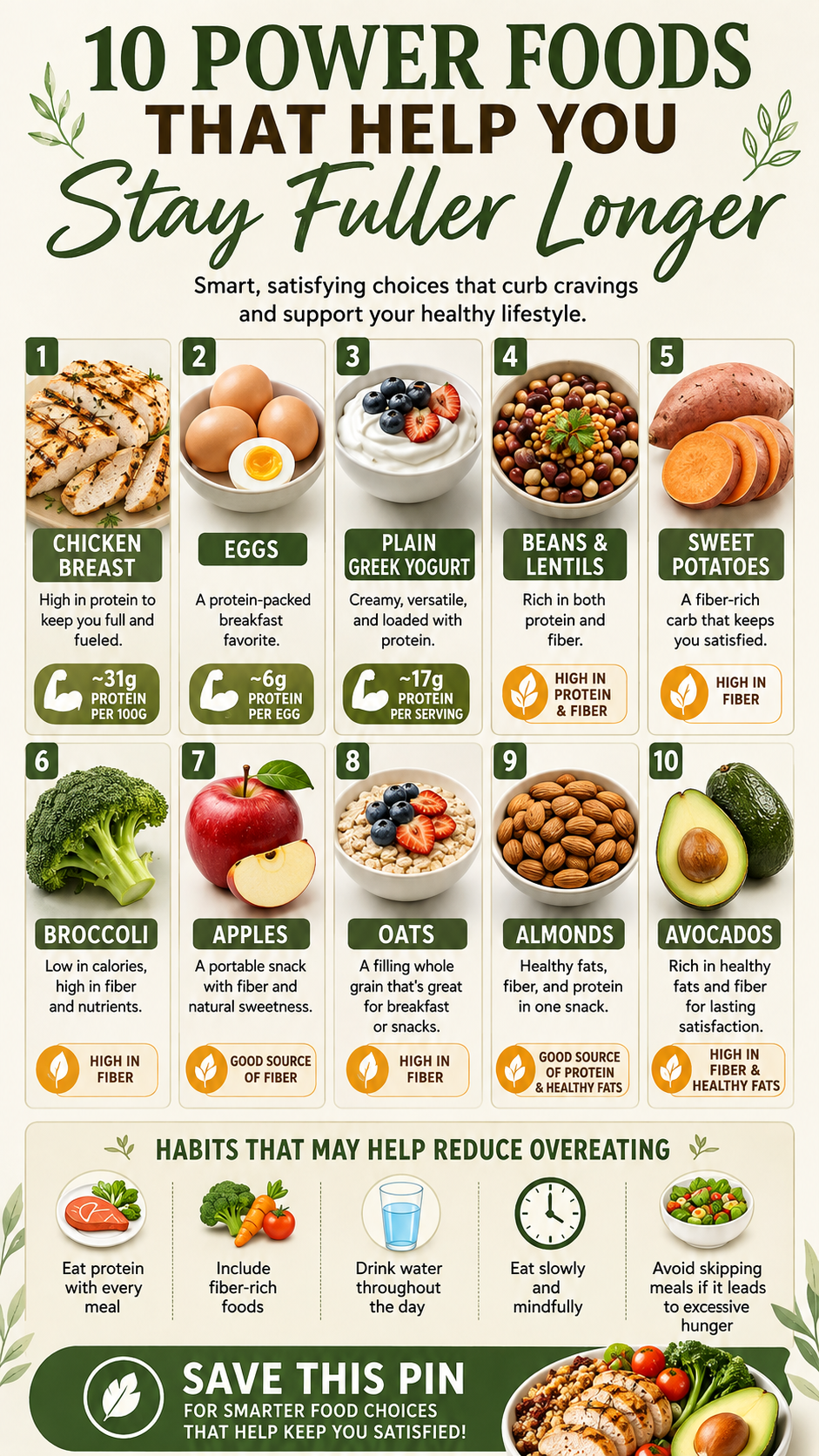
1. Chicken Breast
Lean chicken breast is packed with high-quality protein, making it one of the most filling foods available. Small portions can easily become part of meal prep, wraps, salads, or protein snack boxes.
2. Eggs
Eggs provide complete protein along with essential nutrients. Hard-boiled eggs are portable, convenient, and ideal for busy schedules. Pair them with vegetables or fruit for an even more satisfying snack.
3. Plain Greek Yogurt
Greek yogurt contains significantly more protein than regular yogurt while remaining creamy and versatile. Add fresh berries or a sprinkle of nuts for extra fiber and healthy fats.
4. Beans and Lentils
Beans and lentils are rich in both protein and fiber, creating an excellent combination for appetite control. They also provide slow-digesting carbohydrates that support consistent energy.
Expert Insight
Combining protein with fiber is one of the simplest ways to improve satiety. Rather than focusing on calorie counting alone, prioritize foods that naturally keep you satisfied for longer.
5. Sweet Potatoes
Sweet potatoes contain fiber, complex carbohydrates, and valuable nutrients that support fullness. They make a delicious snack when roasted and paired with Greek yogurt or cottage cheese.
6. Broccoli
Broccoli is naturally low in calories while offering plenty of fiber, vitamins, and antioxidants. It pairs well with hummus or yogurt-based dips for a balanced snack.
7. Apples
Apples contain natural sweetness along with dietary fiber that supports digestion. Eating the skin provides the highest fiber content, making this fruit an easy everyday snack.
8. Oats
Oats contain soluble fiber that helps promote fullness. Overnight oats or small oatmeal bowls with fruit create satisfying breakfasts or afternoon snacks.
9. Almonds
Almonds deliver protein, healthy fats, vitamin E, and fiber in one convenient package. Because they are calorie-dense, moderate portions are usually the best approach.
10. Avocados
Avocados are rich in heart-healthy fats and fiber. Their creamy texture makes them an excellent addition to toast, salads, wraps, or vegetable platters.
Simple Habits That Help Reduce Overeating
Healthy eating extends beyond food choices. Daily habits also influence hunger and satisfaction throughout the day.
- Include a source of protein with every meal.
- Eat plenty of fiber-rich vegetables, fruits, legumes, and whole grains.
- Drink water consistently throughout the day.
- Eat slowly and pay attention to hunger signals.
- Avoid skipping meals, which often leads to excessive hunger later.
Pro Tip: Preparing healthy snacks ahead of time makes nutritious choices much easier during busy days. Keeping fruits, boiled eggs, yogurt, or portioned nuts readily available helps prevent impulsive eating.
Building Balanced Snack Combinations
Pairing different food groups creates more satisfying snacks than eating carbohydrates alone. Balanced combinations provide better nutrition while extending fullness.
- Greek yogurt with fresh berries.
- Apple slices with almonds.
- Boiled eggs with broccoli.
- Oatmeal topped with berries.
- Avocado spread on whole grain toast.
- Beans mixed into fresh vegetable salads.
Common Snacking Mistakes to Avoid
Even healthy foods can become less effective when eaten mindlessly. Portion awareness and balanced nutrition remain important.
- Choosing snacks high in added sugar.
- Ignoring protein and fiber.
- Eating directly from large packages.
- Skipping water throughout the day.
- Using snacks as a replacement for balanced meals.
Important: Consistency matters more than perfection. Making small improvements to your snack choices each day can support healthier eating habits and make it easier to maintain long-term wellness goals.
Making Healthy Snacking a Daily Habit
Healthy snacking does not require expensive specialty products or complicated recipes. Simple whole foods often provide the greatest nutritional value while helping you stay energized throughout the day.
Creating a weekly shopping list, preparing snacks in advance, and keeping nutritious options visible at home or work can significantly improve your eating routine. Small, sustainable habits often deliver the biggest long-term results.
At a Glance
- Prioritize protein, fiber, and healthy fats.
- Choose whole foods whenever possible.
- Stay hydrated throughout the day.
- Prepare snacks before hunger strikes.
Conclusion
Healthy snacks are an important part of a balanced lifestyle. Choosing nutrient-rich foods like eggs, Greek yogurt, beans, sweet potatoes, broccoli, apples, oats, almonds, avocados, and lean protein helps support fullness, steady energy, and smarter eating habits. Combined with mindful eating, proper hydration, and consistent meal timing, these simple choices can make it easier to reduce cravings and enjoy satisfying nutrition every day. Focus on building sustainable habits, and healthy snacking will naturally become part of your routine.
Tags
Healthy Snacks High Protein Foods High Fiber Foods Healthy Eating Weight Management Nutrition Tips Smart Snacking Balanced Diet