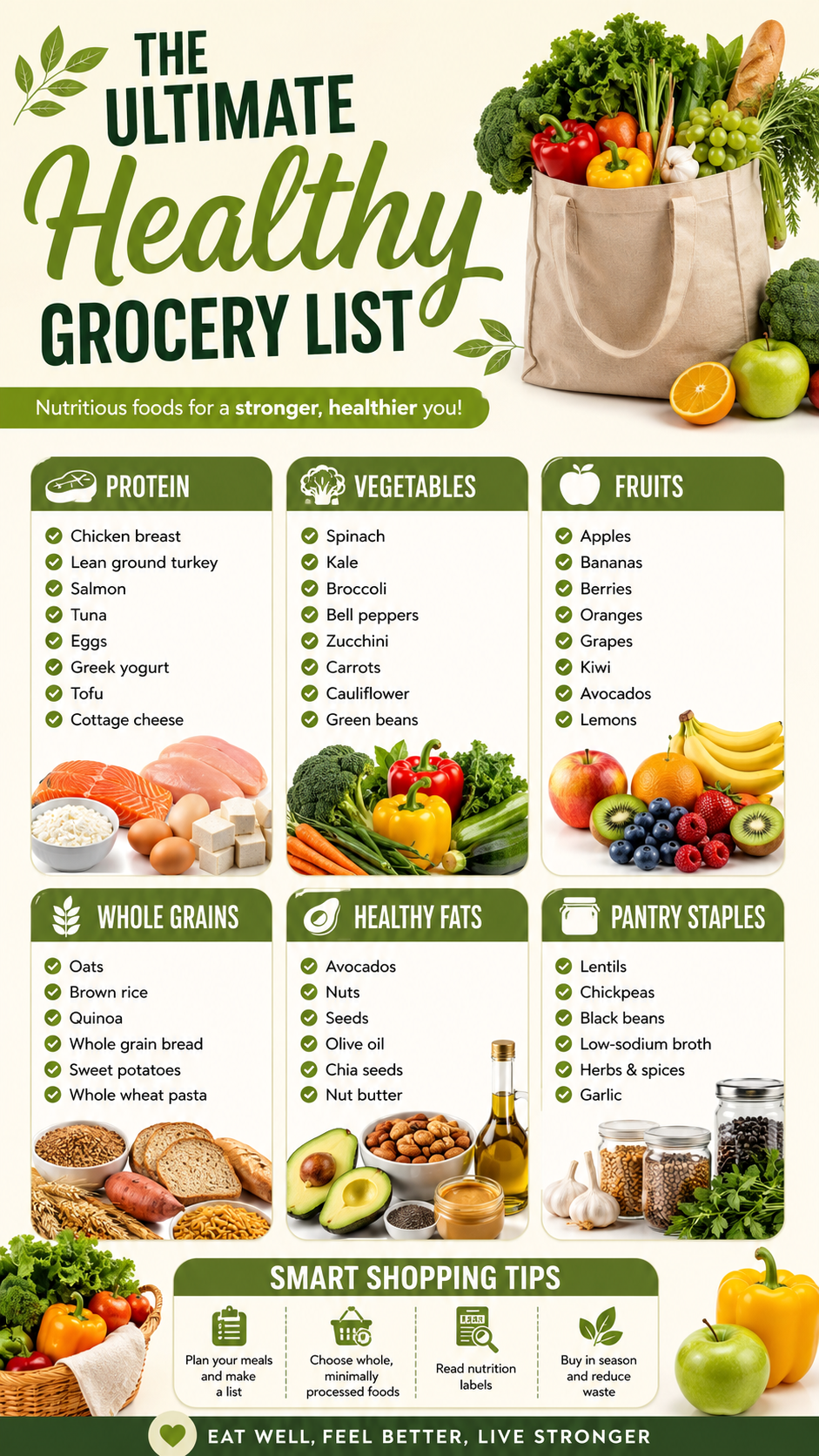
Healthy eating starts long before the first meal is prepared. It begins with thoughtful grocery shopping and filling your kitchen with wholesome ingredients that make nutritious meals easy to create every day. A well-planned grocery list removes the guesswork from healthy eating, helps reduce impulse purchases, and makes meal preparation faster throughout the week. Whether your goal is eating more vegetables, preparing balanced meals for your family, or maintaining a healthy lifestyle, choosing nutrient-dense foods is one of the smartest habits you can build.
Key Takeaways
- Focus on whole, minimally processed foods.
- Include lean protein, healthy fats, and complex carbohydrates.
- Fill your cart with colorful fruits and vegetables.
- Keep pantry staples stocked for quick meals.
- Plan your shopping list before visiting the store.
Why a Healthy Grocery List Matters
Walking into a grocery store without a plan often leads to buying foods that do not support your nutrition goals. A healthy grocery list acts as a roadmap, helping you prioritize fresh produce, quality proteins, whole grains, and nutritious pantry essentials. Instead of wondering what to cook each night, you’ll already have the ingredients needed for balanced meals.
Important: The healthiest eating habits are built through consistency, not perfection. Stocking your kitchen with nutritious ingredients makes healthy choices the easiest choices every single day.
Build Your Shopping List by Food Groups
Lean Protein Sources
Protein supports muscle maintenance, keeps you feeling satisfied longer, and forms the foundation of balanced meals. Including a variety of protein options throughout the week also adds flavor and versatility.
- Chicken breast
- Lean ground turkey
- Salmon
- Canned tuna
- Eggs
- Plain Greek yogurt
- Cottage cheese
- Tofu
These ingredients can be used in salads, grain bowls, wraps, sandwiches, soups, stir fries, and healthy dinner recipes that are simple enough for busy weeknights.
Fresh Vegetables
Vegetables provide vitamins, minerals, antioxidants, and fiber while adding color and texture to every meal. Aim for a wide variety instead of relying on only one or two favorites.
- Broccoli
- Spinach
- Bell peppers
- Cucumbers
- Salad greens
- Green beans
- Cauliflower
- Carrots
Fresh vegetables can be roasted, grilled, steamed, sautéed, or enjoyed raw with healthy dips for convenient snacks.
Colorful Fruits
Fruit naturally satisfies sweet cravings while providing fiber, vitamins, and hydration. Keeping several varieties available encourages healthier snacking throughout the day.
- Apples
- Bananas
- Blueberries
- Strawberries
- Oranges
- Grapes
Fresh fruit pairs well with yogurt, oatmeal, cottage cheese, smoothies, or simply enjoyed on its own.
Smart Carbohydrates
Complex carbohydrates provide lasting energy and essential nutrients without the rapid spikes associated with refined grains.
- Old-fashioned oats
- Brown rice
- Quinoa
- Sweet potatoes
- Whole grain bread
- Whole wheat tortillas
These ingredients create filling meals that help support active lifestyles and make healthy meal planning much easier.
Expert Insight
Building meals around vegetables, lean protein, and whole grains naturally improves nutritional balance without requiring complicated recipes. Small shopping improvements often produce long-term healthy habits.
Healthy Fats
Healthy fats contribute to heart health, support nutrient absorption, and add satisfying flavor to meals.
- Avocados
- Olive oil
- Almonds
- Walnuts
- Chia seeds
- Natural peanut butter
These foods fit easily into salads, breakfast bowls, smoothies, snacks, and homemade dressings.
Pantry Staples
A well-stocked pantry makes healthy cooking easier even when fresh ingredients begin running low.
- Black beans
- Lentils
- Low-sodium broth
- Salsa
- Herbs and spices
- Garlic
Keeping these staples available allows you to prepare soups, chili, rice bowls, casseroles, and many healthy recipes with minimal effort.
Pro Tip: Shop the outer sections of the grocery store first, where fresh produce, dairy, seafood, and lean meats are commonly found. Save packaged foods for the end of your shopping trip and choose minimally processed options whenever possible.
Simple Healthy Shopping Strategies
Healthy grocery shopping becomes much easier with a few practical habits.
- Create your meal plan before shopping.
- Write a grocery list and stick to it.
- Read nutrition labels when comparing products.
- Buy frozen fruits and vegetables when fresh options are unavailable.
- Purchase seasonal produce whenever possible.
- Avoid shopping while hungry.
Easy Meal Ideas Using These Ingredients
Breakfast
- Greek yogurt with berries and chia seeds.
- Oatmeal topped with banana and almonds.
- Vegetable omelet with spinach and peppers.
Lunch
- Grilled chicken salad with mixed greens.
- Quinoa bowl with roasted vegetables.
- Tuna wrap using whole wheat tortillas.
Dinner
- Baked salmon with broccoli and brown rice.
- Turkey and vegetable stir fry.
- Lentil soup with a side salad.
Healthy Snacks
- Apple slices with natural peanut butter.
- Carrots and cucumbers with hummus.
- Mixed berries with cottage cheese.
- Handful of walnuts or almonds.
Meal Prep Tips That Save Time
Preparing ingredients ahead of time helps healthy eating become part of your routine instead of feeling like extra work. Wash produce after shopping, cook grains in batches, portion snacks into containers, and prepare proteins for several meals at once. These simple habits reduce stress during busy weekdays and encourage more home-cooked meals.
Important: Healthy grocery shopping is not about buying expensive specialty foods. Consistently choosing balanced, nutrient-rich ingredients offers lasting value for both your health and your budget.
Quick Points
- Plan meals before shopping.
- Choose whole foods whenever possible.
- Balance every meal with protein, vegetables, and healthy carbohydrates.
- Keep nutritious snacks within easy reach.
Conclusion
A thoughtfully planned healthy grocery list is one of the easiest ways to improve everyday nutrition. Filling your kitchen with lean proteins, colorful vegetables, fresh fruits, whole grains, healthy fats, and versatile pantry staples creates endless opportunities for delicious, balanced meals. By shopping with intention and preparing ingredients ahead of time, you’ll spend less time wondering what to eat and more time enjoying nutritious recipes that support your long-term wellness goals. Every healthy meal begins with smart grocery choices, making each shopping trip an investment in a healthier lifestyle.
Tags
Healthy Recipes Healthy Grocery List Clean Eating Meal Prep Healthy Eating Whole Foods Balanced Nutrition Healthy Meal Planning