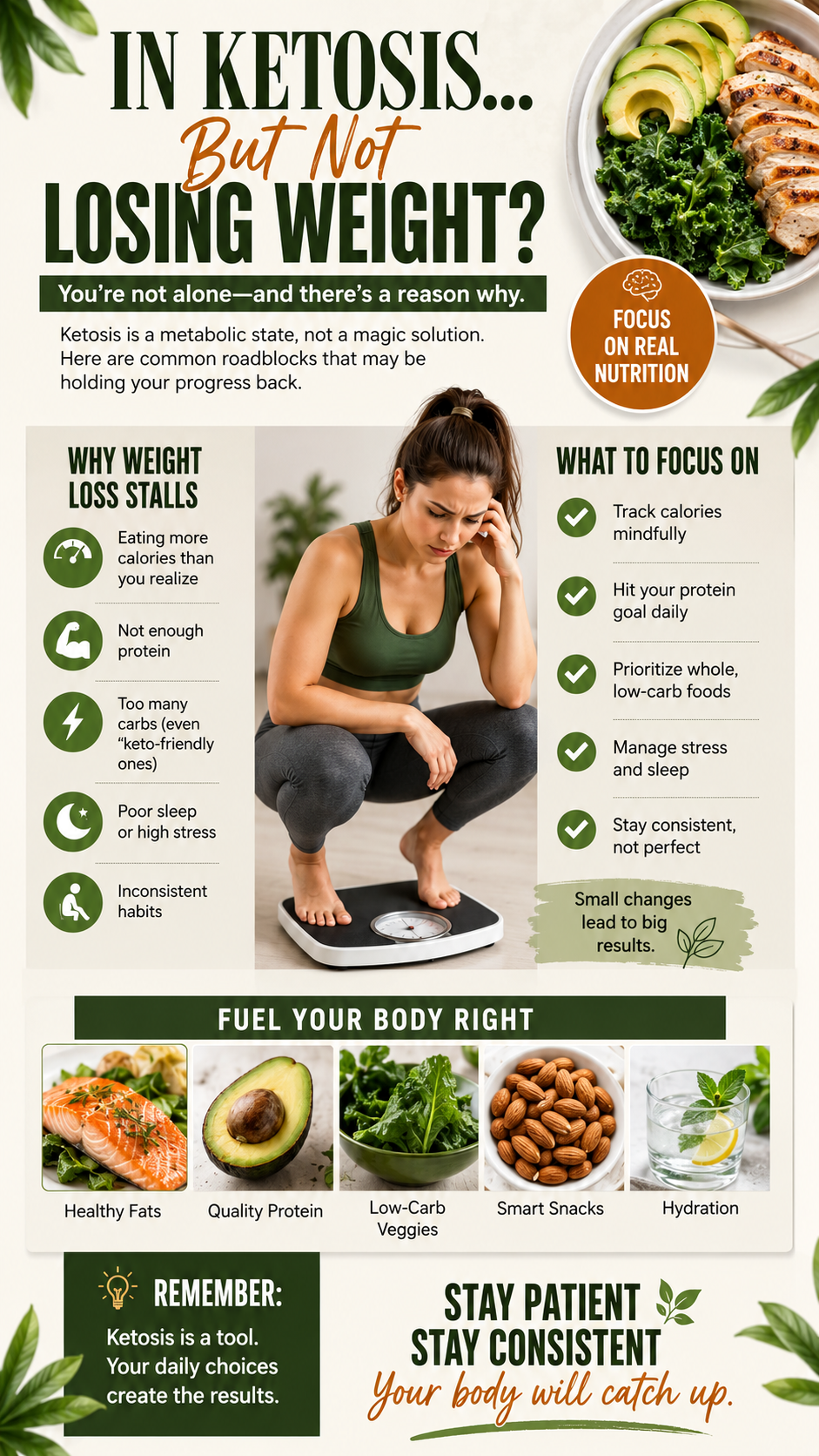
Ketosis is often viewed as the ultimate sign that a low carb lifestyle is working. Seeing elevated ketone levels can certainly feel encouraging, but many people are surprised when the scale refuses to move despite staying in ketosis. The truth is that ketosis and fat loss are related, but they are not the same thing. Reaching ketosis means your body is using more fat for fuel, yet sustainable weight loss still depends on several nutrition and lifestyle factors working together.
Understanding what may be slowing your progress can help you make smarter adjustments instead of becoming frustrated. Small changes to eating habits, activity levels, sleep, and stress management often produce better long term results than chasing higher ketone readings alone.
Key Takeaways
- Ketosis does not automatically guarantee fat loss.
- Calorie intake still plays an important role.
- Protein, sleep, and stress all affect progress.
- Whole foods usually support better results than processed options.
- Consistency is more effective than perfection.
Understanding the Difference Between Ketosis and Fat Loss
Ketosis is a natural metabolic state where the body primarily uses fat and ketones for energy because carbohydrate intake is significantly reduced. Fat loss, however, occurs when your body consistently uses more energy than it receives from food over time.
Important: Being in ketosis simply means your body has shifted its primary fuel source. It does not guarantee that stored body fat is being reduced if overall energy intake remains too high.
This distinction explains why two people can both be following a ketogenic eating plan while experiencing very different results. One may steadily lose weight, while another maintains or even gains weight because of differences in eating habits, activity levels, and daily routines.
Common Reasons Weight Loss May Stall
Eating More Calories Than Expected
Healthy fats are incredibly satisfying, but they are also calorie dense. Foods such as avocado, cheese, nuts, oils, and nut butters can quickly increase daily calorie intake without making meals appear much larger.
- Measure cooking oils occasionally.
- Watch portion sizes for nuts and seeds.
- Avoid frequent high calorie snacking.
- Focus on balanced meals instead of grazing all day.
Not Eating Enough Protein
Protein supports muscle maintenance, helps manage hunger, and contributes to a satisfying eating pattern. Some people mistakenly reduce protein too much because they fear leaving ketosis. In reality, moderate protein intake fits well into a balanced ketogenic approach for most healthy adults.
Depending Too Much on High Fat Convenience Foods
Many packaged keto products can fit into a low carb lifestyle, but relying on them regularly may reduce overall diet quality. Whole foods typically provide more nutrients and greater satiety.
Expert Insight
Prioritize meals built around lean proteins, healthy fats, and non starchy vegetables. This combination often improves fullness while providing important vitamins, minerals, and fiber that support overall wellness.
Lifestyle Factors That Influence Results
Sleep Quality
Poor sleep may increase hunger, reduce motivation, and make healthy choices more difficult. Creating a consistent bedtime routine can support better recovery and healthier eating habits.
Stress Management
Long periods of stress can influence eating behaviors and make sticking to healthy routines more challenging. Relaxation techniques, regular movement, and enjoyable hobbies can all contribute to better consistency.
Pro Tip: Before changing your entire meal plan, review your sleep, hydration, daily movement, and stress levels. These simple habits often have a greater impact than making drastic dietary adjustments.
Building Better Keto Friendly Meals
A balanced ketogenic meal should provide satisfying nutrition while supporting long term adherence. Instead of focusing only on fat intake, think about creating meals that combine quality ingredients.
Choose Nutrient Dense Foods
- Salmon and other fatty fish
- Eggs
- Avocados
- Leafy green vegetables
- Olive oil
- Nuts in moderate portions
- Seeds
These foods provide healthy fats while also supplying protein, vitamins, minerals, and other nutrients that support overall health.
Simple Habits That Support Sustainable Progress
- Plan meals before hunger becomes overwhelming.
- Drink enough water throughout the day.
- Include protein with every meal.
- Track portions occasionally if progress slows.
- Stay physically active through walking and strength training.
- Be patient with normal fluctuations in body weight.
Important: Sustainable weight management is built through consistent daily habits rather than chasing perfect ketone numbers. Long term routines usually outperform short term extremes.
How to Measure Progress Beyond the Scale
Body weight tells only part of the story. Consider tracking additional indicators that reflect positive changes.
- Energy levels throughout the day.
- Waist and body measurements.
- Progress photos.
- Workout performance.
- How clothing fits.
- Improved confidence and consistency.
These markers often improve before significant changes appear on the scale.
Quick Points
- Ketosis is a metabolic state, not a guarantee of fat loss.
- Protein and portion awareness matter.
- Sleep and stress influence weight management.
- Whole foods generally support better long term results.
- Consistency leads to lasting progress.
Conclusion
Reaching ketosis can be an encouraging milestone, but it should be viewed as one piece of a much larger picture. Healthy weight loss comes from balancing nutritious food choices, appropriate calorie intake, quality protein, regular movement, adequate sleep, and stress management. Instead of focusing only on ketone readings, aim to build habits that are realistic enough to maintain for months and years. That balanced approach creates a stronger foundation for lasting wellness and sustainable results.
Tags
Healthy Recipes Keto Diet Ketosis Weight Loss Tips Low Carb Meals Healthy Eating Nutrition