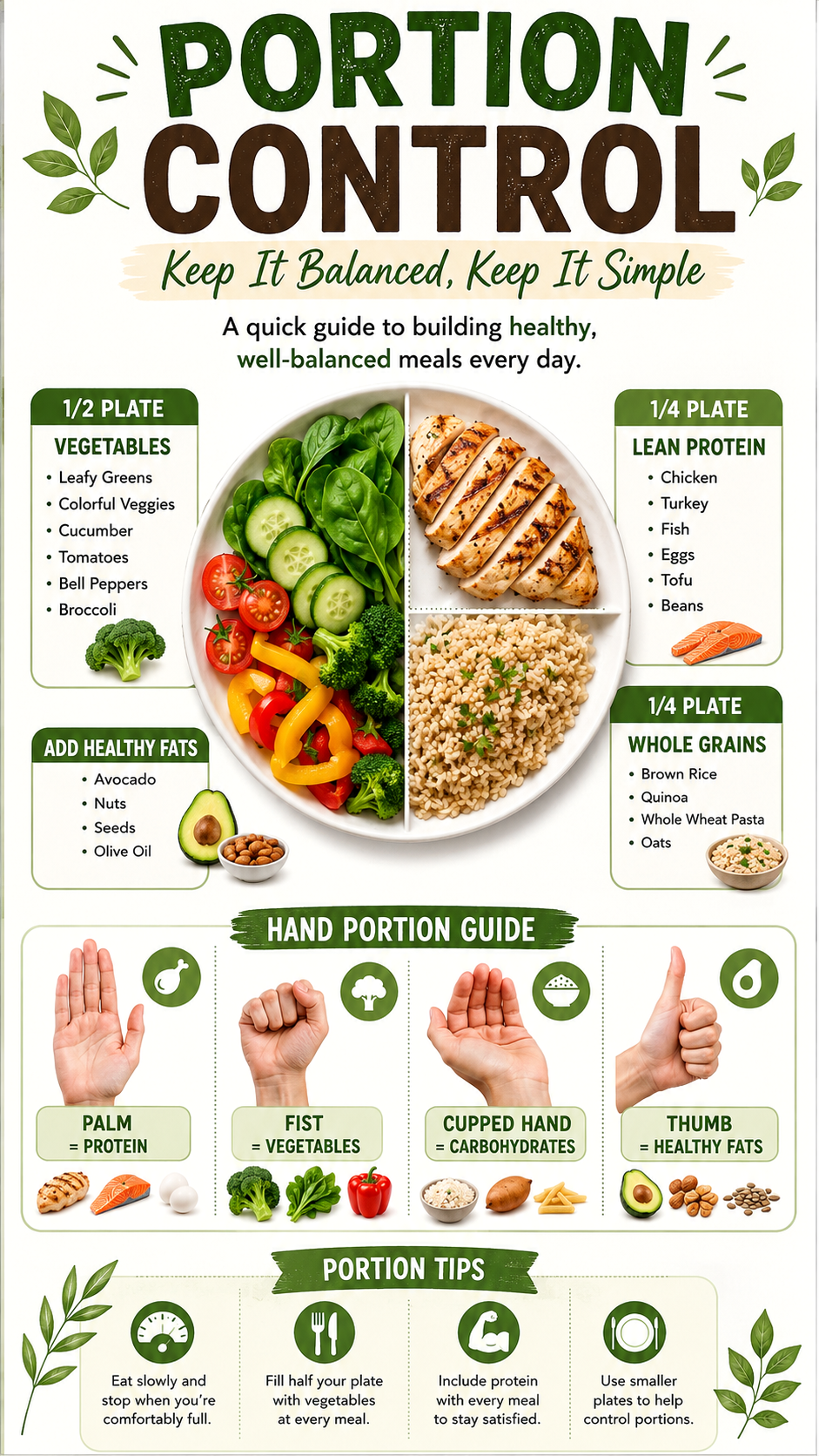
Healthy recipes become even more effective when they are built on balanced portions. Instead of counting every calorie or following complicated meal plans, a simple visual approach can help you create satisfying meals that support your health goals. By combining colorful vegetables, lean proteins, smart carbohydrates, and healthy fats, you can enjoy delicious food while maintaining better portion awareness. This practical method is easy enough for beginners and flexible enough for anyone looking to improve their everyday eating habits.
Key Takeaways
- Use half your plate for vegetables whenever possible.
- Balance meals with lean protein, healthy carbohydrates, and healthy fats.
- Simple portion guides make healthy eating easier to maintain.
- Hand measurements offer a convenient option when plates are unavailable.
- Small daily improvements often create lasting healthy habits.
Why Portion Control Matters
Healthy eating is not only about choosing nutritious foods. The amount you eat plays an equally important role. Portion control helps provide your body with enough energy while reducing unnecessary overeating. It also makes meal planning simpler because you focus on balance rather than restriction.
Important: Portion control is not about eating less at every meal. It is about giving your body the right balance of nutrients so you feel energized, satisfied, and better able to maintain consistent healthy eating habits.
Many people unknowingly serve portions that are much larger than they need. Using a visual guide helps eliminate guesswork and encourages mindful eating without requiring scales or complicated calculations.
The Healthy Plate Method
A balanced plate is one of the easiest ways to prepare nutritious meals. Dividing your plate into simple sections creates a visual reminder of how different food groups work together.
Fill Half Your Plate with Vegetables
Vegetables should take up the largest portion of your meal. Broccoli, spinach, leafy greens, cucumbers, peppers, carrots, tomatoes, and many other colorful vegetables provide vitamins, minerals, antioxidants, and fiber.
- Increase fullness with fewer calories.
- Support digestive health.
- Add color, texture, and variety.
- Boost overall nutrient intake.
Reserve One Quarter for Lean Protein
Protein helps maintain muscle, supports recovery, and contributes to longer-lasting fullness after meals. Excellent choices include chicken breast, turkey, salmon, eggs, tofu, beans, and other lean protein sources.
Including protein with each meal can also help stabilize hunger throughout the day, making healthy eating feel more satisfying.
Choose Smart Carbohydrates
The remaining quarter of your plate can be filled with nutrient-rich carbohydrates. Whole grains and starchy vegetables provide lasting energy while delivering valuable fiber.
- Brown rice
- Quinoa
- Sweet potatoes
- Whole grain pasta
- Other minimally processed grains
Expert Insight
- Focus on balance rather than perfection.
- Aim for colorful vegetables at every meal.
- Small adjustments repeated daily often produce the biggest long-term results.
Do Not Forget Healthy Fats
Healthy fats complete a balanced meal and contribute to overall wellness. Foods such as avocado, olive oil, nuts, and seeds provide essential fatty acids while improving flavor and satisfaction.
Although these foods are highly nutritious, they are naturally energy dense. Moderate portions help keep meals balanced without eliminating their valuable nutritional benefits.
Pro Tip: Adding a small serving of healthy fats alongside vegetables often improves both flavor and satisfaction, making healthy meals easier to enjoy consistently.
Using Your Hand as a Portion Guide
One of the simplest ways to estimate serving sizes is by using your own hand. Since hand size generally matches body size, this approach offers a practical reference almost anywhere.
Palm for Protein
A palm-sized serving works well for most lean protein choices such as grilled chicken, fish, tofu, or lean meat.
Fist for Vegetables
Your fist provides an easy estimate for vegetables. Many people benefit from enjoying even more than one fist of non-starchy vegetables.
Cupped Hand for Carbohydrates
A cupped hand offers a practical serving size for rice, pasta, quinoa, oats, or similar carbohydrate-rich foods.
Thumb for Healthy Fats
A thumb-sized serving is often suitable for foods like peanut butter, olive oil, nuts, or seeds.
Simple Habits That Support Healthy Eating
Healthy recipes become even more effective when paired with mindful eating habits. Small daily behaviors can make balanced meals easier to maintain over time.
- Eat slowly and enjoy each bite.
- Pause halfway through meals to assess your hunger.
- Use smaller plates if they help with portion awareness.
- Prepare vegetables before you become hungry.
- Include protein at every meal.
- Drink water regularly throughout the day.
Important: Consistency matters more than perfection. One balanced meal will not change everything, but repeating healthy choices every day creates meaningful progress over time.
Making Healthy Recipes Work for Your Lifestyle
Healthy eating should fit naturally into your routine. Whether you cook at home every night or prepare meals for the week ahead, the healthy plate method adapts easily to different cuisines and personal preferences.
Try experimenting with seasonal vegetables, different whole grains, and various protein sources to keep meals interesting. Building variety into your weekly menu reduces boredom while helping you enjoy a wider range of nutrients.
Remember that healthy recipes do not have to be expensive or complicated. Simple ingredients prepared thoughtfully can create delicious, nourishing meals that support your long-term wellness goals.
At a Glance
- Half your plate should feature vegetables.
- Include lean protein with every meal.
- Choose whole food carbohydrates whenever possible.
- Add moderate portions of healthy fats.
- Practice mindful eating every day.
Conclusion
Balanced nutrition becomes much easier when you rely on simple visual habits instead of complicated rules. Using a healthy plate approach encourages nutritious choices, supports portion awareness, and creates meals that are satisfying without feeling restrictive. Combined with mindful eating and consistent daily habits, these practical strategies can help you enjoy healthy recipes while building a sustainable lifestyle. Every balanced plate is another step toward better energy, improved wellness, and long-term healthy eating success.
Tags
Healthy Recipes Portion Control Balanced Meals Healthy Eating Meal Prep Nutrition Tips Clean Eating Healthy Lifestyle