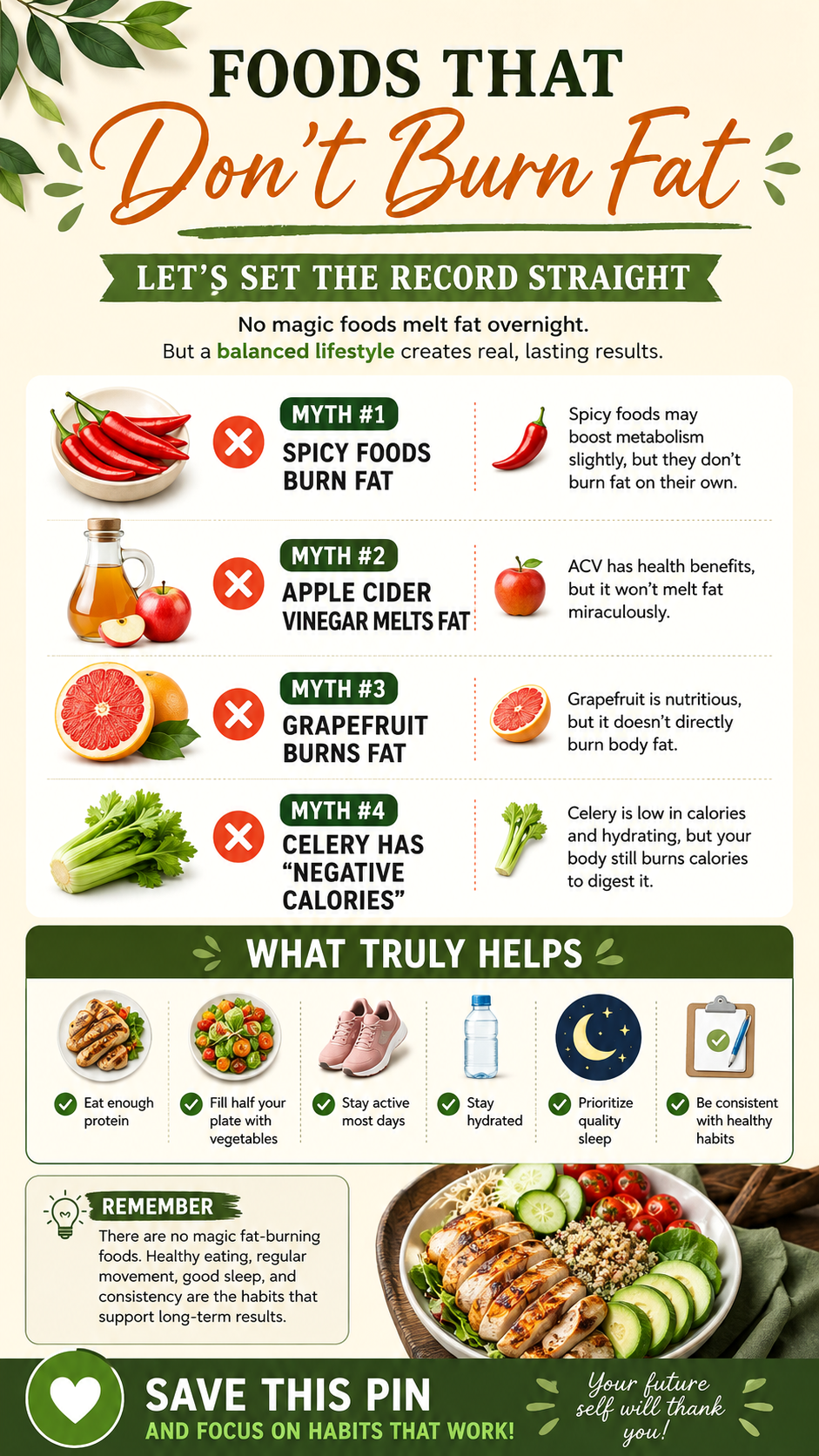
Many people search for foods that burn fat, hoping there is a simple ingredient that can speed up weight loss. While certain foods can support a healthy metabolism or help you feel satisfied for longer, there is no single food that magically melts away body fat. Lasting results come from balanced nutrition, regular physical activity, quality sleep, and healthy daily habits. Understanding the difference between popular myths and evidence-based nutrition can help you make smarter choices that support long-term wellness.
Key Takeaways
- No single food directly burns body fat.
- Balanced meals help support healthy weight management.
- Protein, vegetables, and hydration promote fullness and overall health.
- Regular movement and quality sleep are essential lifestyle habits.
- Consistency produces better long-term results than quick fixes.
Why the Idea of Fat Burning Foods Is So Popular
The promise of effortless weight loss has always attracted attention. Social media, advertisements, and trending diet plans often promote individual foods as miracle solutions. From spicy peppers to citrus fruits, countless ingredients have earned a reputation for supposedly burning fat faster.
Although some foods may slightly increase calorie expenditure during digestion or temporarily affect metabolism, these changes are generally small. Sustainable weight management depends far more on overall eating patterns than on any individual ingredient.
Important: A healthy eating pattern built around nutritious whole foods consistently delivers better results than relying on one so-called fat-burning ingredient. Small daily habits often outperform dramatic short-term diet strategies.
Common Weight Loss Myths Explained
Myth 1: Spicy Foods Burn Body Fat
Spicy foods containing compounds like capsaicin may cause a temporary increase in calorie burning and body temperature. However, this effect is modest and does not create significant fat loss by itself.
Enjoy spicy meals because you like the flavor, not because they promise dramatic weight loss. Pairing spices with balanced meals can make healthy eating more enjoyable, making it easier to stay consistent.
Myth 2: Apple Cider Vinegar Melts Belly Fat
Apple cider vinegar is often promoted as a quick fix for stubborn belly fat. While some people use it as part of their diet, current evidence does not support the idea that it directly melts body fat.
Instead, focus on eating nutritious meals, maintaining portion awareness, and building habits you can follow for months and years.
Myth 3: Grapefruit Directly Burns Fat
Grapefruit is a delicious fruit packed with vitamin C, water, and fiber. These nutrients support overall health and can contribute to a filling snack, but the fruit itself does not target or burn body fat.
Including fruits in your daily routine is an excellent choice because they provide vitamins, minerals, and antioxidants while helping satisfy sweet cravings naturally.
Myth 4: Celery Has Negative Calories
The idea of negative calorie foods suggests your body burns more calories digesting certain foods than those foods contain. Although digestion requires energy, celery does not create a calorie deficit simply through digestion.
Celery remains a nutritious vegetable because it is low in calories, rich in water, and easy to include in healthy meals and snacks.
Expert Insight
Instead of searching for a miracle food, think about your entire plate. Meals that combine lean protein, vegetables, whole grains, healthy fats, and fruit are much more effective for supporting long-term health and healthy weight management.
What Actually Supports Healthy Weight Loss
Prioritize Protein
Protein helps maintain muscle while promoting fullness after meals. Including quality protein sources throughout the day may help reduce unnecessary snacking and improve meal satisfaction.
- Chicken and turkey
- Fish and seafood
- Eggs
- Greek yogurt
- Beans and lentils
- Tofu and tempeh
Fill Half Your Plate with Vegetables
Vegetables provide fiber, vitamins, minerals, and volume without excessive calories. Colorful vegetables can help create satisfying meals while supporting digestive health.
Try mixing leafy greens, broccoli, carrots, peppers, cucumbers, tomatoes, zucchini, and cauliflower into your weekly meal plan.
Pro Tip: Building meals around vegetables first often makes healthy eating feel easier because your plate becomes naturally more filling and nutrient dense.
Stay Hydrated
Water plays an important role in overall health. Drinking enough fluids throughout the day supports normal body functions and may help distinguish thirst from hunger.
Keeping a reusable water bottle nearby makes hydration easier whether you are working, exercising, or relaxing at home.
Move Your Body Regularly
Exercise supports heart health, muscle strength, energy levels, and calorie balance. The best activity is one you genuinely enjoy because you are more likely to continue doing it.
- Walk regularly.
- Include strength training each week.
- Stretch to improve mobility.
- Choose enjoyable activities like cycling, swimming, or dancing.
Get Quality Sleep
Sleep influences hormones involved in appetite, energy, and recovery. Consistently getting enough rest supports better decision making and healthy lifestyle habits throughout the day.
Building Healthy Recipes That Support Your Goals
Healthy recipes do not have to be complicated. Focus on combining nutrient-rich ingredients into satisfying meals.
- Lean protein for fullness.
- Fiber-rich vegetables for volume.
- Whole grains for lasting energy.
- Healthy fats like avocado, nuts, or olive oil.
- Fresh fruit for natural sweetness.
Simple meal combinations are often easier to maintain than highly restrictive diets. The more enjoyable your meals are, the more likely you are to stick with your healthy eating routine.
Important: Consistency matters more than perfection. Missing one healthy meal does not undo your progress. Focus on making the next meal balanced and nutritious instead of chasing quick fixes.
Long-Term Habits Beat Short-Term Diet Trends
Healthy weight management is not about eliminating entire food groups or relying on miracle ingredients. It is about creating habits that fit your lifestyle.
Planning meals, staying active, drinking enough water, sleeping well, and eating balanced recipes consistently are practical strategies that deliver meaningful results over time.
Quick Points
- There are no magical fat-burning foods.
- Protein and vegetables help create satisfying meals.
- Hydration, exercise, and sleep work together.
- Balanced eating patterns support lasting success.
Conclusion
Healthy recipes are valuable because they nourish your body, provide lasting energy, and support sustainable lifestyle habits. Rather than chasing myths about foods that supposedly burn fat, focus on creating balanced meals filled with wholesome ingredients. Combined with regular movement, quality sleep, proper hydration, and consistency, these everyday choices can help you build a healthier future. Small improvements repeated every day often lead to the biggest long-term rewards.
Tags
Healthy Recipes Weight Loss Tips Healthy Eating Balanced Nutrition Meal Planning Healthy Lifestyle Nutrition Tips Wellness