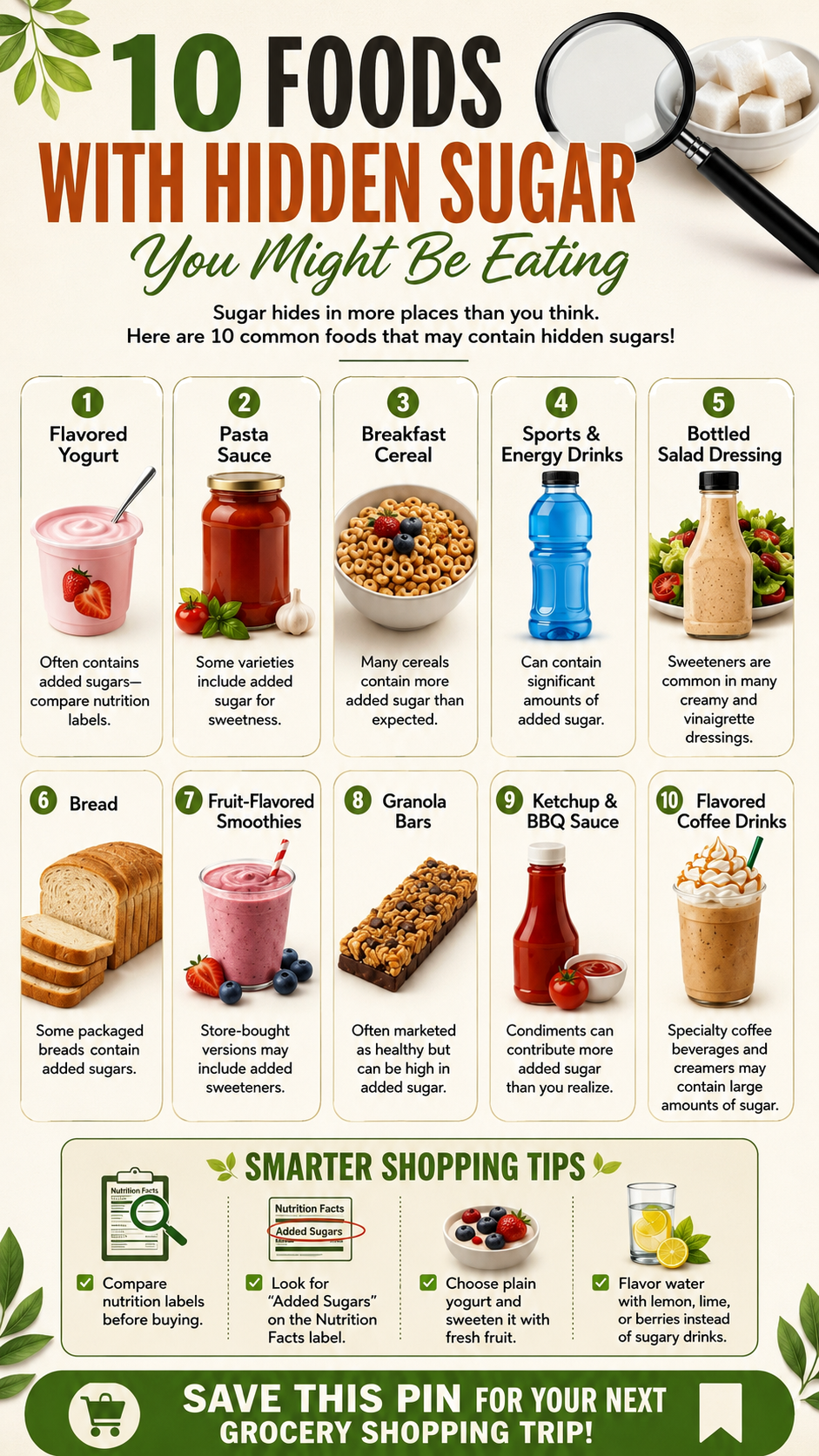
Hidden sugar is one of the biggest challenges for anyone trying to follow healthy recipes and maintain a balanced lifestyle. Many everyday foods that seem nutritious at first glance can contain surprising amounts of added sugar. From breakfast staples to savory sauces, these hidden sources can quickly add up and impact your overall health.
Understanding where sugar hides is the first step toward making smarter food choices. Whether you’re meal prepping, cooking at home, or shopping for ingredients, knowing what to look for helps you stay aligned with your health goals while still enjoying delicious meals.
Key Takeaways
- Hidden sugars are common in both sweet and savory foods
- Reading nutrition labels is essential for healthier choices
- Many “healthy” foods can still contain added sugars
- Simple swaps can significantly reduce daily sugar intake
- Whole, minimally processed foods are often the best option
What Is Hidden Sugar and Why It Matters
Hidden sugar refers to added sugars that are included in foods where you might not expect them. These sugars enhance flavor, extend shelf life, and improve texture, but they can also contribute to excess calorie intake without providing nutritional benefits.
Important: Even foods labeled as “natural,” “low-fat,” or “healthy” can contain added sugars. Always check ingredient lists and nutrition labels to stay informed.
Consuming too much added sugar regularly can affect energy levels, weight management, and overall wellness. That’s why it’s essential to recognize these hidden sources, especially when building a collection of healthy recipes.
Common Foods with Hidden Sugar
Breakfast Favorites
Breakfast is often considered the healthiest meal of the day, but many popular options can be loaded with sugar.
- Flavored yogurt: Often contains added sweeteners to enhance taste
- Breakfast cereals: Even “whole grain” options may include high sugar levels
- Granola bars: Marketed as healthy but can be surprisingly sugary
Choosing plain versions and adding fresh fruit is a simple way to enjoy these foods while keeping sugar intake in check.
Sauces and Condiments
Savory foods can also be significant sources of hidden sugar.
- Pasta sauce: Many varieties include added sugar for balance
- Ketchup and BBQ sauce: Common condiments with high sugar content
- Salad dressings: Especially creamy or sweet vinaigrettes
Pro Tip: Look for sauces labeled “no added sugar” or make your own at home for better control over ingredients.
Beverages and Drinks
Drinks are one of the easiest ways to consume excess sugar without realizing it.
- Sports and energy drinks
- Flavored coffee beverages
- Store-bought smoothies
Switching to water infused with fruits like lemon or berries can help reduce sugar intake while keeping things refreshing.
Everyday Staples
Even basic pantry items can contain added sugars.
- Bread and baked goods
- Packaged snacks
- Processed spreads
Important: Ingredients like corn syrup, dextrose, and maltose are all forms of sugar. Recognizing these names can help you make smarter decisions.
Why This Matters
Reducing hidden sugar intake can improve energy levels, support weight management, and enhance overall well-being. Small daily choices can lead to long-term benefits.
How to Spot Hidden Sugar on Labels
Learning to read nutrition labels is one of the most effective ways to avoid hidden sugar.
- Check the “Added Sugars” section
- Review ingredient lists carefully
- Be cautious of marketing claims like “low fat”
The closer a food is to its natural state, the less likely it is to contain added sugars. Whole foods like fruits, vegetables, and grains are always a reliable choice.
Healthy Recipe Swaps to Reduce Sugar
Smart Ingredient Choices
- Use fresh fruit instead of syrups or sweetened toppings
- Choose unsweetened dairy or plant-based alternatives
- Opt for whole grains over processed options
Cooking at Home
Preparing meals at home gives you full control over ingredients. You can adjust sweetness levels and experiment with natural flavors like spices and herbs.
Pro Tip: Cinnamon, vanilla, and citrus zest can enhance flavor naturally without adding sugar.
Balanced Meal Planning
Incorporating a mix of protein, healthy fats, and fiber helps reduce cravings and stabilize energy levels throughout the day.
Quick Points
- Hidden sugar is common in everyday foods
- Simple swaps can make a big difference
- Whole foods are the healthiest option
- Reading labels helps you stay informed
Building a Healthier Lifestyle with Better Choices
Creating healthy recipes doesn’t mean giving up flavor. It’s about making mindful decisions and choosing ingredients that support your goals. By becoming more aware of hidden sugar, you can enjoy meals that are both delicious and nourishing.
Small changes like switching to unsweetened products, cooking more at home, and reading labels can have a powerful impact over time. These habits make it easier to maintain a balanced diet without feeling restricted.
Conclusion
Hidden sugar can be found in many foods you eat daily, but with the right knowledge, it’s easy to avoid. By understanding where sugar hides and making simple swaps, you can create healthier recipes that align with your lifestyle.
Focus on whole ingredients, stay mindful of labels, and enjoy the process of building meals that truly support your well-being. Healthy eating becomes much more achievable when you know exactly what goes into your food.
Tags
Healthy Recipes Hidden Sugar Clean Eating Low Sugar Diet Nutrition Tips Meal Prep