Healthy eating does not have to feel restrictive or complicated. Small, intentional changes can make a meaningful difference in how you feel, how much energy you have throughout the day, and how easy it becomes to maintain balanced eating habits. Instead of eliminating favorite foods, a smarter approach is to replace them with more nutritious alternatives that satisfy cravings while providing better nutritional value.
Healthy recipes often begin with simple ingredient swaps. Choosing whole foods, adding more fiber, increasing protein intake, and reducing highly processed ingredients can help create meals that are both delicious and nourishing. These practical food swaps fit naturally into everyday life and are easy enough for beginners while still offering plenty of inspiration for experienced home cooks.
Key Takeaways
- Replace processed foods with wholesome alternatives whenever possible.
- Focus on foods rich in protein, fiber, vitamins, and healthy fats.
- Simple ingredient swaps can reduce added sugar and unhealthy fats.
- Healthy recipes can still be flavorful and satisfying.
- Building sustainable habits is more effective than following strict diets.
Why Healthy Food Swaps Matter
One of the biggest misconceptions about healthy eating is that it requires giving up comfort foods forever. In reality, making thoughtful substitutions allows you to enjoy familiar meals while improving their overall nutritional quality. Healthy recipes are often built around these simple adjustments.
Important: Healthy eating is about progress, not perfection. Replacing just one or two less nutritious ingredients each day can lead to lasting improvements without making meals feel restrictive.
When healthier alternatives become part of your routine, they eventually feel just as satisfying as the foods they replace. Over time, these small decisions can help support better digestion, improved energy levels, and more balanced eating habits.
10 Healthy Food Swaps Worth Trying
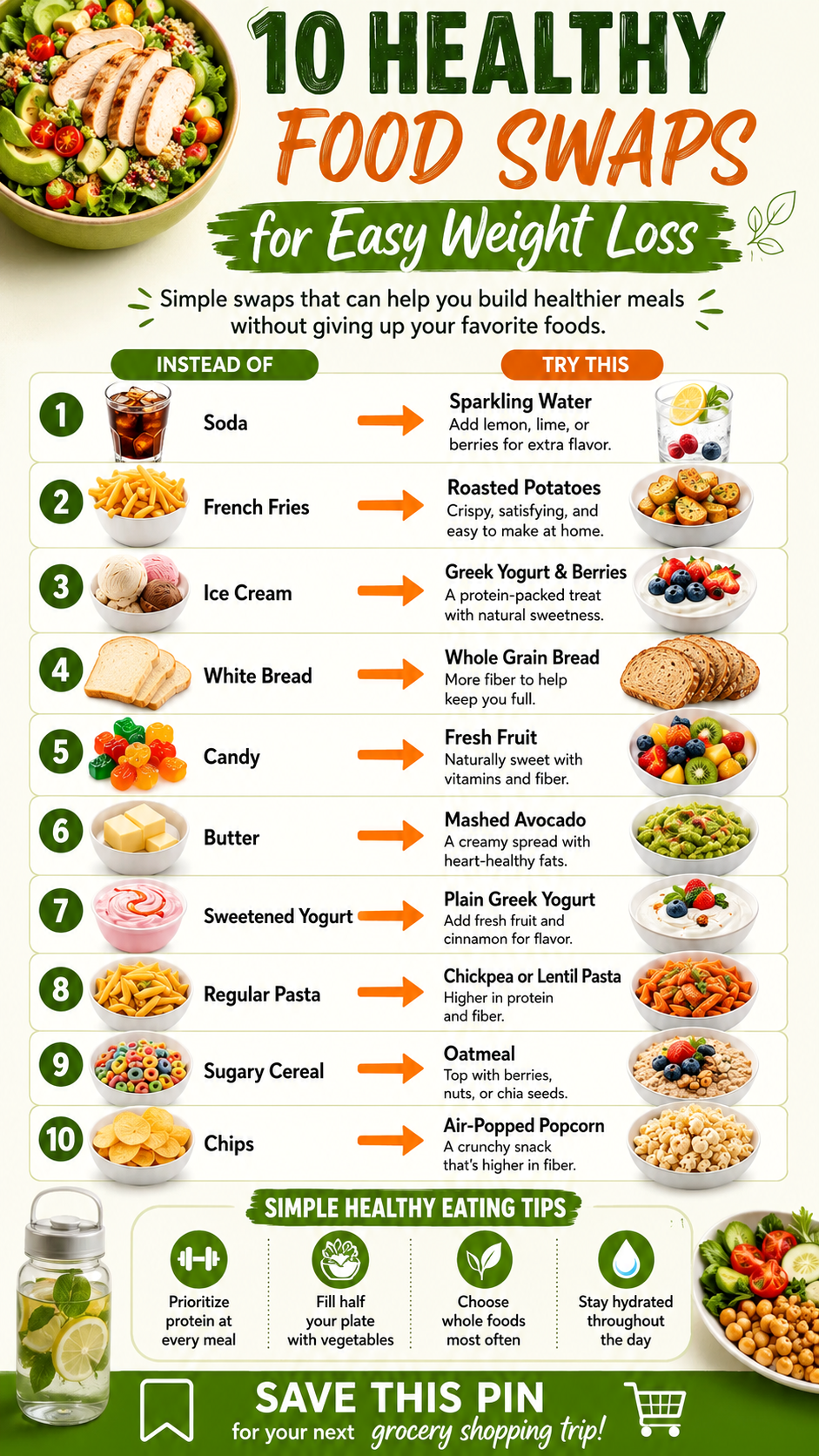
1. Replace Soda with Sparkling Water
Many soft drinks contain large amounts of added sugar. Sparkling water provides refreshing bubbles without excess sugar. Add slices of lemon, lime, cucumber, berries, or fresh mint to create naturally flavored drinks.
2. Swap French Fries for Roasted Potatoes
Roasted potatoes prepared with olive oil and herbs deliver a crispy texture while using far less oil than deep frying. Season with garlic powder, paprika, rosemary, or black pepper for extra flavor.
3. Choose Greek Yogurt Instead of Ice Cream
Plain Greek yogurt topped with fresh berries offers protein, calcium, and natural sweetness. Add cinnamon, chopped nuts, or a drizzle of honey if desired.
4. Trade White Bread for Whole Grain Bread
Whole grain bread typically provides more fiber and nutrients than refined white bread. The extra fiber helps support fullness and can contribute to steadier energy throughout the day.
5. Replace Candy with Fresh Fruit
Fruit satisfies sweet cravings while providing vitamins, minerals, antioxidants, and dietary fiber. Apples, grapes, berries, oranges, and melon make excellent snack choices.
Expert Insight
Healthy recipes become easier to maintain when they include foods you genuinely enjoy. Instead of changing everything at once, focus on replacing one ingredient each week until healthier choices become your normal routine.
6. Use Mashed Avocado Instead of Butter
Mashed avocado creates a creamy spread while supplying heart-healthy unsaturated fats. It pairs well with toast, sandwiches, wraps, and grain bowls.
7. Pick Plain Greek Yogurt Over Sweetened Yogurt
Many flavored yogurts contain significant amounts of added sugar. Plain Greek yogurt lets you control sweetness by adding fresh fruit, cinnamon, vanilla extract, or chopped nuts.
8. Swap Regular Pasta for Chickpea or Lentil Pasta
Legume-based pasta often contains more protein and fiber than traditional pasta, helping create filling meals that support balanced nutrition.
9. Replace Sugary Cereal with Oatmeal
Oatmeal is a versatile breakfast that can be customized with berries, bananas, nuts, seeds, or natural nut butter. It provides fiber that helps keep you satisfied longer.
10. Choose Air-Popped Popcorn Instead of Chips
Air-popped popcorn offers a crunchy snack with more fiber and fewer added fats when compared with many traditional chips. Sprinkle with herbs or nutritional yeast for extra flavor.
Building Healthy Recipes Around Whole Foods
Creating nutritious meals becomes much easier when most ingredients come from whole food sources. Fresh vegetables, fruits, lean proteins, whole grains, beans, legumes, nuts, seeds, and healthy fats provide the foundation for balanced recipes.
- Fill half your plate with colorful vegetables.
- Include lean protein at every meal.
- Select whole grains whenever possible.
- Add healthy fats in moderate portions.
- Drink water throughout the day.
Pro Tip: Meal planning makes healthy eating much easier. Preparing ingredients ahead of time reduces last-minute decisions and encourages nutritious choices during busy weekdays.
Easy Healthy Recipe Ideas
Breakfast
- Greek yogurt with berries and walnuts.
- Whole grain toast topped with mashed avocado.
- Oatmeal with fresh fruit and chia seeds.
Lunch
- Grilled chicken salad with mixed vegetables.
- Turkey sandwich on whole grain bread.
- Quinoa bowl with roasted vegetables.
Dinner
- Roasted salmon with sweet potatoes and broccoli.
- Lentil pasta topped with tomato sauce and vegetables.
- Grilled chicken served with roasted potatoes and green beans.
Healthy Snacks
- Fresh fruit.
- Air-popped popcorn.
- Mixed nuts.
- Vegetable sticks with hummus.
- Plain Greek yogurt with cinnamon.
Tips for Long Term Healthy Eating
Consistency is far more valuable than perfection. Healthy eating should fit comfortably into your lifestyle rather than becoming a temporary challenge. Gradually replacing processed foods with nutrient-rich ingredients allows healthy habits to become sustainable.
Focus on balanced meals instead of strict food rules. Enjoy favorite treats occasionally while making wholesome foods the foundation of your daily routine. This flexible approach is often easier to maintain over the long term.
Important: Sustainable nutrition comes from creating habits you can continue for years. Small improvements made consistently often produce better long-term results than dramatic short-lived changes.
At a Glance
- Prioritize whole foods whenever possible.
- Increase fiber and protein with simple ingredient swaps.
- Reduce added sugars through healthier alternatives.
- Plan meals ahead to make healthy choices easier.
Conclusion
Healthy recipes become far more approachable when you focus on simple food swaps instead of complete dietary overhauls. Replacing sugary drinks, refined grains, highly processed snacks, and excess added sugars with wholesome alternatives creates meals that are flavorful, satisfying, and nourishing. Every positive choice contributes to healthier eating habits that can last for years.
Start with one swap today, experiment with new ingredients, and gradually build meals filled with colorful vegetables, lean proteins, whole grains, healthy fats, and naturally sweet fruits. These small changes can make healthy living enjoyable, practical, and easy to maintain.
Tags
Healthy Recipes Healthy Food Swaps Clean Eating Weight Loss Tips Meal Prep Whole Foods Nutrition Tips Healthy Lifestyle