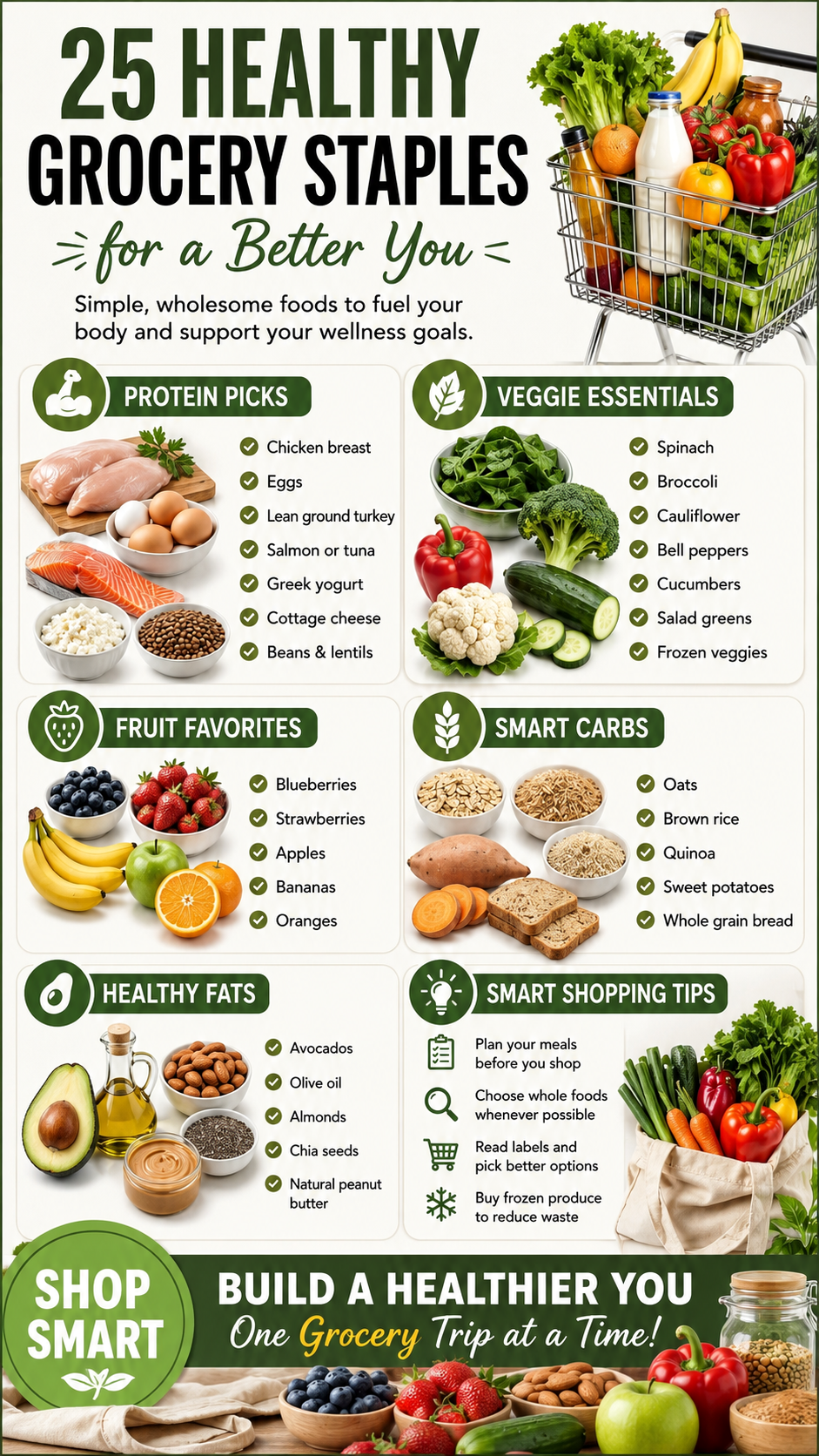
Healthy eating becomes much easier when your kitchen is stocked with the right ingredients. Instead of wondering what to cook every day, a well planned grocery list gives you the flexibility to prepare nutritious breakfasts, balanced lunches, satisfying dinners, and wholesome snacks without unnecessary stress. Keeping a variety of healthy staples on hand encourages better food choices, simplifies meal planning, and helps reduce food waste.
Whether your goal is to eat more whole foods, prepare meals ahead of time, or simply make grocery shopping more efficient, building your shopping list around nutrient rich basics is one of the smartest habits you can develop. From lean proteins and colorful vegetables to whole grains and healthy fats, these everyday essentials create the foundation for countless healthy recipes.
Key Takeaways
- Keep versatile ingredients available for quick healthy meals.
- Balance proteins, vegetables, fruits, grains, and healthy fats.
- Meal planning saves both time and money.
- Frozen produce can be just as convenient and nutritious.
- A smart grocery list helps reduce food waste.
Why Healthy Grocery Staples Matter
Healthy recipes start long before cooking begins. Success often comes down to what is already sitting in your refrigerator, freezer, and pantry. When nutritious ingredients are readily available, preparing balanced meals becomes much more convenient than ordering takeout or reaching for heavily processed foods.
Important: Building healthy habits does not require complicated recipes or expensive ingredients. Consistently stocking your kitchen with simple, wholesome foods makes nutritious cooking feel natural and sustainable.
A thoughtfully stocked kitchen also gives you greater flexibility. One grocery trip can provide ingredients for salads, stir fries, soups, grain bowls, wraps, pasta dishes, smoothies, and many other healthy recipes throughout the week.
Protein Staples That Build Satisfying Meals
Protein is one of the most important components of a balanced diet because it helps support muscle maintenance while promoting fullness after meals.
Excellent Protein Choices
- Chicken breast for grilling, baking, or meal prep.
- Eggs for breakfasts, sandwiches, and salads.
- Lean ground turkey for tacos, pasta sauces, and bowls.
- Salmon or tuna for heart friendly meals.
- Greek yogurt for breakfast, snacks, and smoothies.
- Cottage cheese for high protein snacks.
- Beans and lentils for affordable plant based meals.
Rotating different protein sources throughout the week keeps meals interesting while providing a wide variety of nutrients.
Expert Insight
Choose ingredients that work in multiple recipes. A single package of chicken, a container of Greek yogurt, and cooked beans can become lunches, dinners, salads, wraps, and healthy snacks over several days.
Fill Your Plate with Colorful Vegetables
Vegetables bring vitamins, minerals, antioxidants, and fiber to nearly every meal. A colorful selection also keeps meals visually appealing and adds different textures and flavors.
Vegetables Worth Keeping on Hand
- Spinach for salads, smoothies, and omelets.
- Broccoli for roasting or steaming.
- Cauliflower for soups or side dishes.
- Bell peppers for stir fries and snacks.
- Cucumbers for salads and sandwiches.
- Mixed salad greens for quick lunches.
- Frozen vegetables for convenient weeknight meals.
Fresh vegetables are wonderful, but frozen varieties are equally practical because they last longer and make it easier to prepare balanced meals on busy days.
Fresh Fruits for Everyday Nutrition
Fruit provides natural sweetness along with vitamins, fiber, and hydration. Keeping several varieties available makes healthy snacking simple.
- Blueberries
- Strawberries
- Apples
- Bananas
- Oranges
Enjoy fruit on its own, mix it into yogurt, blend it into smoothies, or add it to oatmeal for a naturally delicious breakfast.
Pro Tip: Purchase fruits that ripen at different speeds. This gives you fresh options throughout the week while helping reduce unnecessary waste.
Choose Smart Carbohydrates
Carbohydrates provide energy for daily activities, especially when you choose minimally processed options rich in fiber.
Healthy Carbohydrate Staples
- Oats
- Brown rice
- Quinoa
- Sweet potatoes
- Whole grain bread
These ingredients pair well with lean proteins and vegetables, making it easy to create complete meals that are satisfying and balanced.
Do Not Forget Healthy Fats
Healthy fats contribute flavor, texture, and satisfaction while supporting overall nutrition. Even small portions can make meals more enjoyable.
- Avocados
- Extra virgin olive oil
- Almonds
- Chia seeds
- Natural peanut butter
These foods work well in salads, grain bowls, smoothies, overnight oats, and wholesome snacks.
Important: Balance is the key to healthy eating. Combining protein, fiber rich carbohydrates, vegetables, and healthy fats creates meals that are filling, flavorful, and nutritionally complete.
Simple Grocery Shopping Tips
Shopping with a plan makes healthy eating much easier while helping you stay within your budget.
- Create a meal plan before visiting the grocery store.
- Write a shopping list based on planned meals.
- Select ingredients that can be used in multiple recipes.
- Keep easy protein options available.
- Buy frozen produce to extend shelf life.
- Check your pantry before shopping to avoid duplicates.
- Store fresh produce properly to maximize freshness.
Healthy Meal Ideas Using Basic Staples
Breakfast
- Greek yogurt topped with berries and almonds.
- Oatmeal with banana and chia seeds.
- Vegetable omelet with spinach.
Lunch
- Grilled chicken salad with mixed greens.
- Quinoa bowl with vegetables and avocado.
- Tuna sandwich on whole grain bread.
Dinner
- Baked salmon with broccoli and brown rice.
- Turkey and vegetable stir fry.
- Lentil soup with whole grain toast.
Healthy Snacks
- Apple slices with natural peanut butter.
- Cottage cheese with berries.
- Greek yogurt with fresh fruit.
- Almonds and an orange.
At a Glance
- Prioritize whole foods whenever possible.
- Keep versatile ingredients ready for busy days.
- Plan meals before shopping.
- Mix fresh and frozen produce for convenience.
- Build every meal around balance and variety.
Conclusion
Creating healthy recipes becomes much easier when your kitchen is stocked with nutritious essentials that work together in countless combinations. Lean proteins, colorful vegetables, fresh fruits, whole grains, and healthy fats provide everything needed to prepare delicious meals throughout the week. With a thoughtful grocery list, a little planning, and versatile ingredients, you can save time, reduce waste, simplify meal preparation, and make healthy eating a sustainable part of everyday life.
Tags
Healthy Recipes Healthy Grocery List Meal Prep Clean Eating Healthy Eating Nutrition Tips Grocery Shopping Whole Foods